
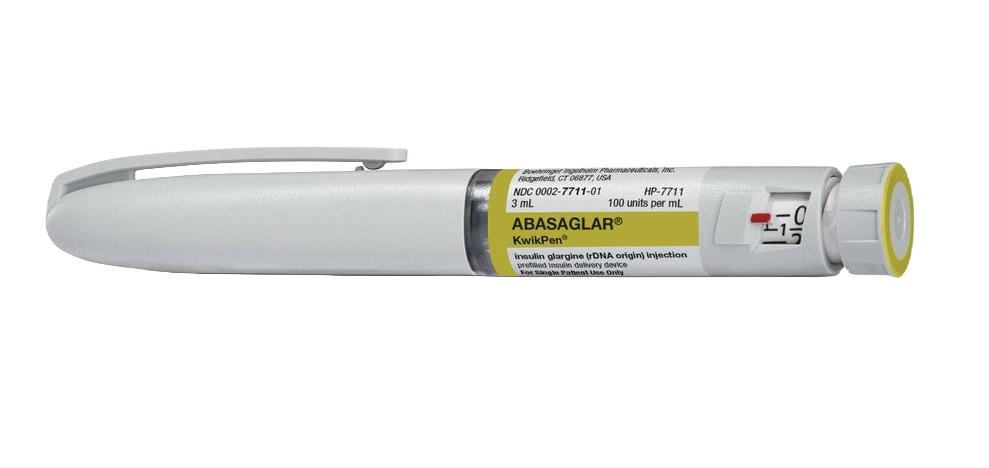
Abasaglar KwikPen 100 TV 5 vnt
This website provides general information about medicines for educational purposes only. Always consult your doctor or pharmacist before taking any medication.
Choose Your Medicine
Select dosage and quantity
Online Consultation
Reviewed by a qualified physician
Fast, Discreet Delivery
Delivered to your door
Medical Information
About This Medicine
Abasaglar is a biosimilar of insulin glargine, the long-acting basal insulin that transformed diabetes management when it first appeared as Lantus. Because it is a biosimilar rather than a generic, Abasaglar underwent rigorous comparative clinical trials demonstrating equivalent blood-glucose lowering, safety profile, and immunogenicity to the reference product.
When is Abasaglar prescribed?
Abasaglar is prescribed for adults and children over the age of two who need basal insulin to manage type 1 or type 2 diabetes. In type 1 diabetes it forms the background insulin component of a basal-bolus regimen, while in type 2 diabetes it is typically added when oral glucose-lowering medicines and lifestyle measures no longer maintain adequate control on their own.
How does Abasaglar work?
Insulin glargine is modified so that it forms micro-precipitates under the skin after injection, releasing insulin slowly and steadily over roughly 24 hours. This flat, peakless profile reduces the risk of nocturnal hypoglycaemia compared with older intermediate-acting insulins such as NPH. Abasaglar is administered once daily, at the same time each day, and the dose is adjusted individually according to blood glucose monitoring results.
Usage & Dosage
How to Use Abasaglar
Inject Abasaglar (insulin glargine) subcutaneously once daily at the same time each day. Rotate the injection site between the abdomen, thighs, and upper arms to prevent lipodystrophy. Never inject into a vein or muscle, and do not mix Abasaglar with any other insulin in the same syringe.
Preparing the Injection
Prime the KwikPen before each use by dialling two units and pressing the injection button until insulin appears at the needle tip. Attach a new needle for every injection and remove it immediately afterwards. Allow refrigerated pens to reach room temperature before injecting to reduce discomfort.
The dose is entirely individualised. Patients switching from Lantus can transfer on a unit-for-unit basis. Those switching from twice-daily NPH insulin may need to reduce the total daily dose by roughly 20% when moving to once-daily Abasaglar, then titrate upwards based on fasting blood glucose readings. Typical starting doses in type 2 diabetes range from 10 to 20 units once daily.
Side Effects
Common side effects
- Hypoglycaemia
- Injection site reactions such as redness, swelling, or itching
- Lipodystrophy at frequently used injection sites
- Weight gain
Less common side effects
Allergic reactions including localised skin changes and, very rarely, generalised allergy with rash, swelling, or breathing difficulty may occur. Visual disturbances can happen when blood glucose control changes rapidly, but these are usually temporary.
Warnings & Precautions
Never share an Abasaglar KwikPen between patients, even with a new needle, because of the risk of blood-borne infection. Hypoglycaemia is the most important risk and may be worsened by changes in meal pattern, exercise, or concomitant medications. Illness, emotional stress, and other insulins or glucose-lowering agents can all alter insulin requirements unpredictably.
Driving and machinery
Hypoglycaemia impairs concentration and reaction time. Check blood glucose before driving, and do not drive if levels are low or falling.
Contraindications
Abasaglar must not be used during episodes of hypoglycaemia. It is also contraindicated in anyone with a known allergy to insulin glargine or any of the excipients in the formulation.
Frequently Asked Questions
Is Abasaglar exactly the same as Lantus?
Dr. Ross Elledge
General Practitioner · General & Family Medicine
Verified Healthcare Professional
TopDoctors Profile