
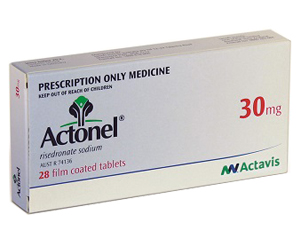
Actonel
View Options
This website provides general information about medicines for educational purposes only. Always consult your doctor or pharmacist before taking any medication.
Choose Your Medicine
Select dosage and quantity
Online Consultation
Reviewed by a qualified physician
Fast, Discreet Delivery
Delivered to your door
Medical Information
About This Medicine
Actonel is a prescription medicine containing risedronate sodium, a bisphosphonate used primarily for the prevention and treatment of osteoporosis in postmenopausal women, men at increased risk of fracture, and individuals taking long-term corticosteroids. It is also used to treat Paget's disease of bone. Actonel is available in several dosing formulations, including 5mg daily tablets, 35mg weekly tablets, and 75mg tablets taken on two consecutive days per month, providing flexibility in dosing schedules to suit individual patient preferences.
Osteoporosis and Bone Health
Osteoporosis is a condition in which bones lose density and become fragile, making them more susceptible to fractures from minor falls or even everyday activities. Postmenopausal women are at particularly high risk because the fall in oestrogen levels after the menopause accelerates bone loss. Actonel works by slowing the activity of osteoclasts, the cells responsible for breaking down old bone tissue, allowing bone-forming cells (osteoblasts) to rebuild and maintain a stronger bone matrix. Clinical trials have demonstrated that risedronate significantly reduces the risk of vertebral fractures in postmenopausal women and also reduces the risk of hip fractures in older women with established osteoporosis.
Corticosteroid-Induced Osteoporosis and Paget's Disease
For patients who must take oral corticosteroids such as prednisolone long-term, Actonel can prevent the bone loss that these medicines commonly cause. In Paget's disease, a chronic condition causing abnormal and disorganised bone remodelling, Actonel helps normalise bone turnover, reduce bone pain, and prevent complications. Regular monitoring of bone density and relevant blood markers guides treatment decisions and allows clinicians to assess the long-term effectiveness of bisphosphonate therapy.
Duration of Treatment
Bisphosphonate therapy is typically continued for three to five years in most patients with osteoporosis, after which a treatment review and possible "drug holiday" may be considered. The decision depends on the individual's fracture risk, bone density measurements, and overall clinical picture.
Usage & Dosage
How to Take Actonel Correctly
Actonel must be taken on a strictly empty stomach to allow adequate absorption. For the weekly 35 mg tablet, choose the same day each week and take the tablet first thing in the morning before eating or drinking anything other than plain water. Swallow the tablet whole with a full glass (at least 200 mL) of plain water. Do not take it with mineral water, coffee, tea, juice, milk, or any other liquid, as these significantly reduce absorption.
After taking Actonel, remain upright (sitting, standing, or walking) for at least 30 minutes. Do not lie down during this period. This is essential because the tablet can cause oesophageal irritation or ulceration if it does not pass quickly into the stomach. Do not take any other medicines, food, or drink during this 30-minute window.
Missed Dose Advice
For the weekly formulation, if you miss your dose day, take the missed tablet the morning after you remember, then return to your original chosen day the following week. Do not take two tablets on the same day. For the monthly two-day regimen, if you miss a day, take the missed tablet as soon as you remember, then continue with the next scheduled day as planned.
The dose of Actonel depends on the indication and the prescribed formulation.
For postmenopausal osteoporosis and corticosteroid-induced osteoporosis: 35mg once weekly or 5mg daily. For men with osteoporosis: 35mg once weekly. For Paget's disease: 30mg daily for two months, which may be repeated after a rest period if necessary.
Calcium and vitamin D supplementation is recommended alongside Actonel if dietary intake is insufficient, particularly in patients at risk of deficiency. Supplementation should not be taken within two hours of the Actonel dose, as it will impair absorption.
Renal impairment: Actonel is not recommended in patients with a creatinine clearance below 30 mL/min due to insufficient clinical data and the risk of accumulation. In patients with mild to moderate renal impairment, no dose adjustment is generally required, but renal function should be monitored. Hepatic impairment does not affect risedronate pharmacokinetics significantly, so dose adjustment is not needed for liver disease. Elderly patients may use standard adult doses, as risedronate pharmacokinetics are not substantially altered by age alone.
Side Effects
Common Side Effects
Actonel is generally well tolerated, but some patients experience the following side effects, particularly in the early weeks of treatment:
- Gastrointestinal symptoms including nausea, abdominal pain, indigestion (dyspepsia), and constipation or diarrhoea
- Oesophageal irritation or heartburn, especially if the tablet is not taken correctly with sufficient water and in an upright position
- Headache or mild flu-like symptoms
- Musculoskeletal pain including bone pain, joint ache, and muscle discomfort
- Mild skin reactions such as rash
- Mild hypocalcaemia (low blood calcium), usually asymptomatic when calcium and vitamin D intake is adequate
Serious Side Effects
Although uncommon, the following serious adverse events have been associated with bisphosphonate therapy and require prompt medical evaluation:
- Osteonecrosis of the jaw (ONJ), characterised by exposed or necrotic bone in the jaw, pain, swelling, or non-healing ulcers in the mouth, particularly in patients who have had dental procedures or are on high-dose therapy
- Atypical femoral fracture, a rare stress fracture of the thigh bone that may present as groin or thigh pain before an actual fracture occurs
- Severe oesophageal reactions including oesophageal ulceration, stricture, or perforation
- Uveitis or iritis (inflammation in the eye) presenting as eye pain or visual disturbance
- Severe hypocalcaemia in patients with pre-existing vitamin D deficiency
Warnings & Precautions
Dental and Surgical Precautions
Before starting Actonel, inform your dentist that you will be taking a bisphosphonate. Dental work, including tooth extractions and implant procedures, carries a small but recognised risk of triggering osteonecrosis of the jaw (ONJ) in patients on bisphosphonate therapy. It is advisable to complete any necessary dental treatment before starting Actonel where possible, and to maintain excellent oral hygiene throughout treatment. During treatment, inform any new dental practitioner of your bisphosphonate use before any invasive dental procedures are carried out.
Precautions for Specific Groups
Actonel should not be used during pregnancy, as bisphosphonates may affect foetal bone development and can remain in the maternal skeleton for years. Women of childbearing potential should use effective contraception during treatment. Breastfeeding is not recommended during Actonel therapy. Alcohol can worsen osteoporosis by reducing bone density and impairing calcium absorption; reducing alcohol intake is advisable for all patients with this condition.
Actonel does not impair driving ability. Patients should ensure adequate intake of calcium (at least 1,000mg per day) and vitamin D (at least 800 IU per day) throughout treatment, either from diet or supplements. Low calcium levels should be corrected before starting therapy.
Contraindications
Actonel is contraindicated or should be avoided in the following situations:
- Known hypersensitivity to risedronate sodium or any excipient in the formulation
- Hypocalcaemia (low blood calcium levels), which must be corrected before treatment begins
- Severe renal impairment (creatinine clearance below 30 mL/min)
- Inability to stand or sit upright for at least 30 minutes after taking the tablet
- Abnormalities of the oesophagus or other conditions that delay oesophageal emptying, such as stricture or achalasia
- Pregnancy and breastfeeding
- Children and adolescents under 18 years of age (safety and efficacy not established)
- Patients with active upper gastrointestinal disorders including active oesophagitis, gastritis, or duodenal ulcers, until these are adequately treated
- Concurrent use with antacids, calcium supplements, or iron within two hours of the dose (due to significant reduction in absorption)
Frequently Asked Questions
Why must I stay upright for 30 minutes after taking Actonel?
How long will I need to take Actonel for osteoporosis?
Can I take calcium supplements at the same time as Actonel?
What is osteonecrosis of the jaw and should I be worried about it with Actonel?
Does Actonel interact with other medicines?
Dr. Ross Elledge
General Practitioner · General & Family Medicine
Verified Healthcare Professional
TopDoctors Profile