
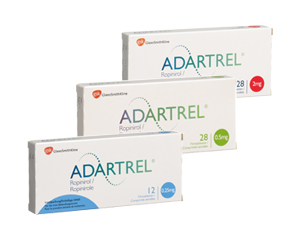
Adartrel
View Options
This website provides general information about medicines for educational purposes only. Always consult your doctor or pharmacist before taking any medication.
Choose Your Medicine
Select dosage and quantity
Online Consultation
Reviewed by a qualified physician
Fast, Discreet Delivery
Delivered to your door
Medical Information
About This Medicine
Adartrel is a prescription medicine containing ropinirole hydrochloride, a dopamine agonist used to treat moderate to severe restless legs syndrome (RLS), also known as Willis-Ekbom disease. It is one of the most widely prescribed pharmacological treatments for this debilitating neurological condition, which affects a significant proportion of the adult population and can severely impair sleep quality and daytime functioning.
Understanding Restless Legs Syndrome
Restless legs syndrome is characterised by an irresistible urge to move the legs, typically accompanied by uncomfortable sensations described as crawling, creeping, tingling, burning, or aching. These symptoms occur predominantly during periods of rest or inactivity, particularly in the evening and at night, and are temporarily relieved by movement such as walking or stretching. The condition is classified as moderate to severe when symptoms occur at least twice a week and significantly disrupt sleep and quality of life. RLS may be primary (idiopathic) or secondary to conditions such as iron deficiency, pregnancy, or chronic kidney disease.
How Adartrel Helps
Adartrel is thought to work by stimulating dopamine receptors in the brain and spinal cord, helping to correct an underlying dysfunction in the dopaminergic pathways that contribute to the sensory and motor disturbances of RLS. Clinical trials have demonstrated that ropinirole significantly reduces the severity of RLS symptoms, improves sleep quality, and enhances overall daytime functioning. It does not cure RLS but provides effective symptomatic relief for the duration of treatment.
Suitability for Patients
Adartrel is prescribed for adults with moderate to severe idiopathic RLS where non-pharmacological measures such as sleep hygiene, limiting caffeine, and regular exercise have proved insufficient. Before starting treatment, secondary causes of RLS, particularly iron deficiency, should be excluded and treated. Adartrel is taken once daily in the evening and is available in 0.25mg, 0.5mg, 1mg, and 2mg tablet strengths to allow flexible dose titration.
Usage & Dosage
Starting Adartrel and Dose Titration
Adartrel is started at a low dose and gradually increased over several weeks to find the minimum effective dose. Treatment typically begins with 0.25 mg once daily for two days, then 0.5 mg once daily for the rest of the first week. The dose is then increased weekly in 0.5 mg increments according to response and tolerability. Most patients achieve good symptom control at doses between 0.5 mg and 4 mg per day.
Take Adartrel once daily in the evening, approximately one to three hours before bedtime, as this is when restless legs symptoms typically peak. It may be taken with or without food, though food can help reduce nausea during the titration phase.
Stopping Adartrel
Do not stop Adartrel suddenly. Abrupt discontinuation can cause a rapid return of symptoms and sometimes a rebound worsening worse than the original condition. When stopping, the dose should be tapered gradually over one to two weeks under medical supervision.
The starting dose is 0.25mg once daily for two days, increased to 0.5mg once daily for the rest of the first week. The dose is then titrated upward in 0.5mg steps at weekly intervals according to response, up to a maximum of 4mg once daily for restless legs syndrome.
Renal impairment: No dose adjustment is required in patients with mild to moderate renal impairment. Adartrel is not recommended in patients with severe renal impairment (creatinine clearance below 30 mL/min) or in those on dialysis, as there is insufficient clinical experience in this population.
Hepatic impairment: Adartrel should be used with caution in patients with significant hepatic impairment, as ropinirole clearance may be reduced. Dose titration should proceed slowly with careful monitoring.
Elderly patients (over 65) may metabolise ropinirole more slowly and are more susceptible to neurological side effects, including confusion, hallucinations, and excessive daytime sleepiness. Starting at the lowest dose and titrating slowly is recommended. Smokers may require higher doses due to increased CYP1A2 activity, while dose reduction should be considered if a patient stops smoking during treatment.
Side Effects
Common Side Effects
Adartrel is generally tolerated well by most patients, though side effects are more common during dose titration. The following are the most frequently reported:
- Nausea, which is particularly common early in treatment and usually improves as the body adjusts
- Somnolence (drowsiness) and fatigue, which may be significant in some patients
- Dizziness, including orthostatic hypotension (a drop in blood pressure on standing)
- Headache
- Vomiting, particularly at higher doses
- Abdominal pain or discomfort
- Peripheral oedema (ankle swelling)
- Hot flushes or sweating
Serious Side Effects
Some patients experience more serious effects that require medical attention or dose review:
- Sudden onset of sleep: Ropinirole has been associated with sudden, irresistible episodes of sleep without prior warning, including while driving. This is a critical safety concern and patients should not drive or operate machinery until they know how Adartrel affects them.
- Impulse control disorders, including compulsive gambling, hypersexuality, compulsive eating, or excessive shopping, which may develop insidiously and patients may not recognise them without prompting
- Hallucinations, particularly in elderly patients
- Augmentation of RLS symptoms (a paradoxical worsening where symptoms become more severe, start earlier in the day, or spread to other limbs), which may require dose adjustment or a change of medication
- Severe hypotension, particularly after starting treatment or increasing the dose
Warnings & Precautions
Driving and Operating Machinery
Patients taking Adartrel must exercise extreme caution regarding driving and operating heavy machinery. Ropinirole can cause sudden onset of sleep without prior warning, even in patients who do not feel unusually drowsy. Patients who have experienced episodes of sudden sleep onset must not drive. Those who have not yet experienced this side effect should still be cautious and discuss their individual risk with their doctor. Alcohol and sedative medicines significantly increase this risk.
Impulse Control Disorders
Patients and their carers should be specifically counselled about the risk of impulse control disorders, including pathological gambling, compulsive spending, binge eating, and hypersexuality. These behaviours can develop at any time during treatment and may not be recognised by the patient. Regular monitoring during appointments is recommended, and patients should be encouraged to inform their doctor if they or a family member notice any unusual behaviours or urges.
Adartrel should be used with caution in patients with a history of psychiatric illness. It should not be used during pregnancy without careful specialist assessment, as dopamine agonists may impair prolactin secretion and foetal development. Breastfeeding is not recommended during treatment.
Contraindications
Adartrel is contraindicated or should be avoided in the following situations:
- Known hypersensitivity to ropinirole or any excipient in the formulation
- Severe renal impairment (creatinine clearance below 30 mL/min) or patients on dialysis
- Pregnancy, unless the benefit is considered to outweigh the risk under specialist supervision
- Breastfeeding, as ropinirole may suppress lactation and its transfer to breast milk is unknown
- Co-administration with antipsychotic drugs that are dopamine antagonists (e.g., haloperidol, chlorpromazine), as these may diminish the therapeutic effect of ropinirole
- Patients with a history of compulsive or addictive behaviours who have not been fully counselled on the risk of impulse control disorders
- Patients who cannot commit to avoiding driving or machinery use until the effects of the medicine are established
- Significant hepatic impairment (use with caution and close monitoring)
- Children and adolescents under 18 years of age (not licensed for this age group)
Frequently Asked Questions
How long does it take for Adartrel to work for restless legs syndrome?
Can Adartrel cause compulsive behaviours?
Is it safe to drive while taking Adartrel?
What is augmentation and how will I know if it is happening to me?
What happens if I stop taking Adartrel suddenly?
Dr. Ross Elledge
General Practitioner · General & Family Medicine
Verified Healthcare Professional
TopDoctors Profile