
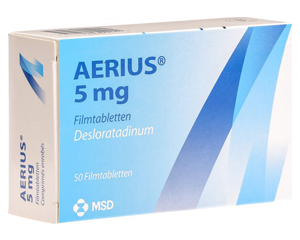
AERIUS
This website provides general information about medicines for educational purposes only. Always consult your doctor or pharmacist before taking any medication.
Choose Your Medicine
Select dosage and quantity
Online Consultation
Reviewed by a qualified physician
Fast, Discreet Delivery
Delivered to your door
Medical Information
About This Medicine
Aerius contains desloratadine, an active metabolite of loratadine and a potent second-generation antihistamine. It relieves symptoms of allergic rhinitis and chronic urticaria without causing the drowsiness associated with older antihistamines.
What makes desloratadine different from other antihistamines?
Desloratadine has one of the highest receptor binding affinities among second-generation antihistamines and provides consistent 24-hour symptom control with a single daily dose. It also has modest anti-inflammatory properties beyond simple histamine blockade, reducing the release of cytokines and chemokines from mast cells and basophils.
What conditions does Aerius treat?
Aerius is licensed for the symptomatic relief of allergic rhinitis (both seasonal and perennial) and chronic idiopathic urticaria. For hay fever sufferers, it eases sneezing, nasal congestion, itching, runny nose, and itchy or watery eyes. For urticaria, it reduces the frequency and severity of hives and associated itching.
Usage & Dosage
How to Take Aerius
Take one Aerius (desloratadine) 5 mg tablet once daily, with or without food. The effect typically begins within one hour and lasts a full 24 hours. For seasonal allergies, starting treatment a few days before the pollen season begins helps establish protection before symptoms start. Continue throughout the season.
Aerius can be taken at any time of day — morning or evening — whichever fits your routine best. Consistency is more important than timing.
Long-term Use
Aerius is safe for long-term daily use and does not lose its effectiveness with continued treatment. Patients with perennial allergic rhinitis, year-round allergy symptoms, or chronic urticaria can take it continuously for months or years as needed.
Adults and adolescents over 12 years: 5 mg once daily. The tablet is also available as an orodispersible formulation and oral solution for younger patients or those who have difficulty swallowing tablets.
Side Effects
Common Side Effects
Aerius is a second-generation antihistamine and has very low sedating potential. Side effects are uncommon and usually mild:
- Headache
- Dry mouth
- Fatigue
Drowsiness can occur in rare individuals, but Aerius is classified as non-sedating for most people as it does not cross the blood-brain barrier in significant amounts. If you are one of the small number of people who notice drowsiness, avoid driving or operating machinery until you know how the medicine affects you.
Warnings & Precautions
Dose reduction may be needed in severe renal impairment. Caution is advised in patients with a history of seizures. While desloratadine is classed as non-sedating, patients should be aware of their individual response before driving or operating machinery during the first few days of treatment.
Contraindications
Contraindicated in known hypersensitivity to desloratadine, loratadine, or any excipient in the formulation.
Frequently Asked Questions
Is Aerius the same as Neoclarityn?
Dr. Ross Elledge
General Practitioner · General & Family Medicine
Verified Healthcare Professional
TopDoctors Profile