
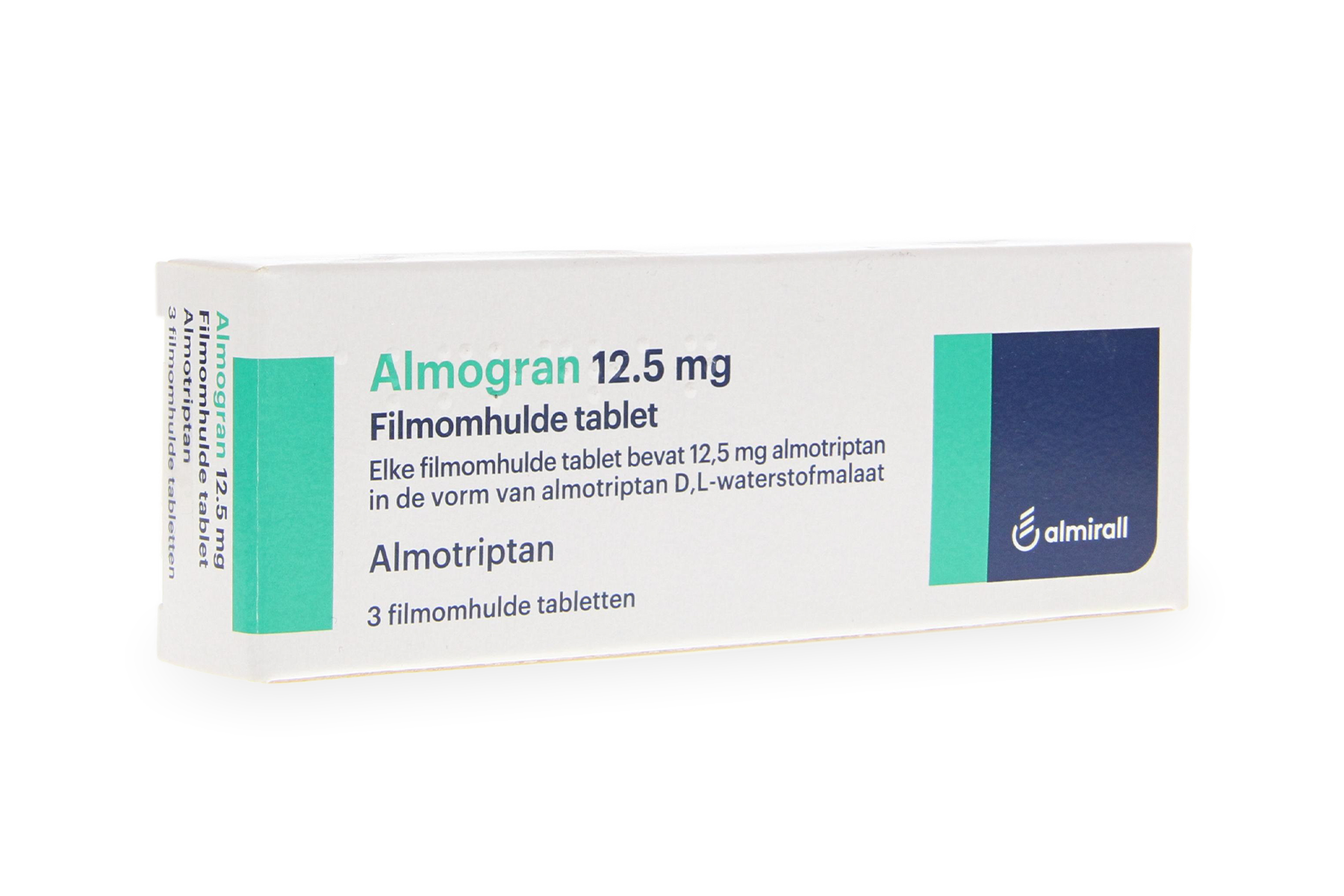
Almogran
This website provides general information about medicines for educational purposes only. Always consult your doctor or pharmacist before taking any medication.
Choose Your Medicine
Select dosage and quantity
Online Consultation
Reviewed by a qualified physician
Fast, Discreet Delivery
Delivered to your door
Medical Information
About This Medicine
Almogran contains almotriptan, a selective serotonin (5-HT1B/1D) receptor agonist developed for the acute treatment of migraine attacks. Among the triptans, almotriptan is notable for its favourable tolerability profile and consistent efficacy, with clinical trials demonstrating headache relief rates comparable to sumatriptan but with fewer side effects.
How does Almogran work?
Almotriptan constricts dilated cranial blood vessels and inhibits the release of pro-inflammatory neuropeptides from trigeminal nerve endings, addressing the two key mechanisms believed to generate migraine pain. It also blocks pain signal transmission in the trigeminal nucleus caudalis.
When should Almogran be taken?
Almogran should be taken as soon as the headache phase of a migraine begins. It is not effective when taken during the aura before headache onset and is not intended for migraine prevention. Patients who respond well to one dose but experience headache recurrence within 24 hours may take a second dose, provided at least two hours have elapsed.
Usage & Dosage
How to Take Almogran
Take one Almogran (almotriptan) tablet with water at the onset of a migraine headache. If the headache improves but then returns, a second tablet may be taken at least two hours after the first. If the first dose has no effect at all on the same attack, do not take a second dose.
Almogran can be taken with or without food, though nausea during a migraine may delay absorption. If vomiting makes oral treatment difficult, discuss alternative triptan formulations with your prescriber.
One 12.5 mg tablet at the onset of migraine headache. A second 12.5 mg tablet may be taken after two hours if the headache recurs. Maximum: two tablets (25 mg) in 24 hours.
Side Effects
Common Side Effects
Almogran is one of the best-tolerated triptans. Side effects are usually mild and short-lived:
- Nausea
- Dizziness
- Drowsiness
- Dry mouth
- Chest tightness or pressure (the "triptan sensation", usually benign and brief)
- Fatigue
Chest tightness caused by triptans is usually a transient, non-cardiac sensation. However, if chest pain is severe, prolonged, or spreads to the arm or jaw, seek emergency medical attention and do not take another dose.
Warnings & Precautions
Do not use for hemiplegic or basilar migraine. Triptan chest sensation (tightness or pressure) is common and usually harmless, but patients with undiagnosed cardiovascular risk factors should have cardiac evaluation before starting triptans.
Medication overuse headache
Using any acute migraine treatment, including triptans, on more than ten days per month risks triggering medication overuse headache. If you find yourself needing treatment this frequently, discuss preventive therapy with your prescriber.
Contraindications
Contraindicated in uncontrolled hypertension, coronary artery disease, history of stroke or TIA, peripheral vascular disease, severe hepatic impairment, concurrent use of ergotamine or other triptans within 24 hours, and concurrent or recent MAO inhibitor use.
Frequently Asked Questions
How does almotriptan compare to sumatriptan?
Dr. Ross Elledge
General Practitioner · General & Family Medicine
Verified Healthcare Professional
TopDoctors Profile