
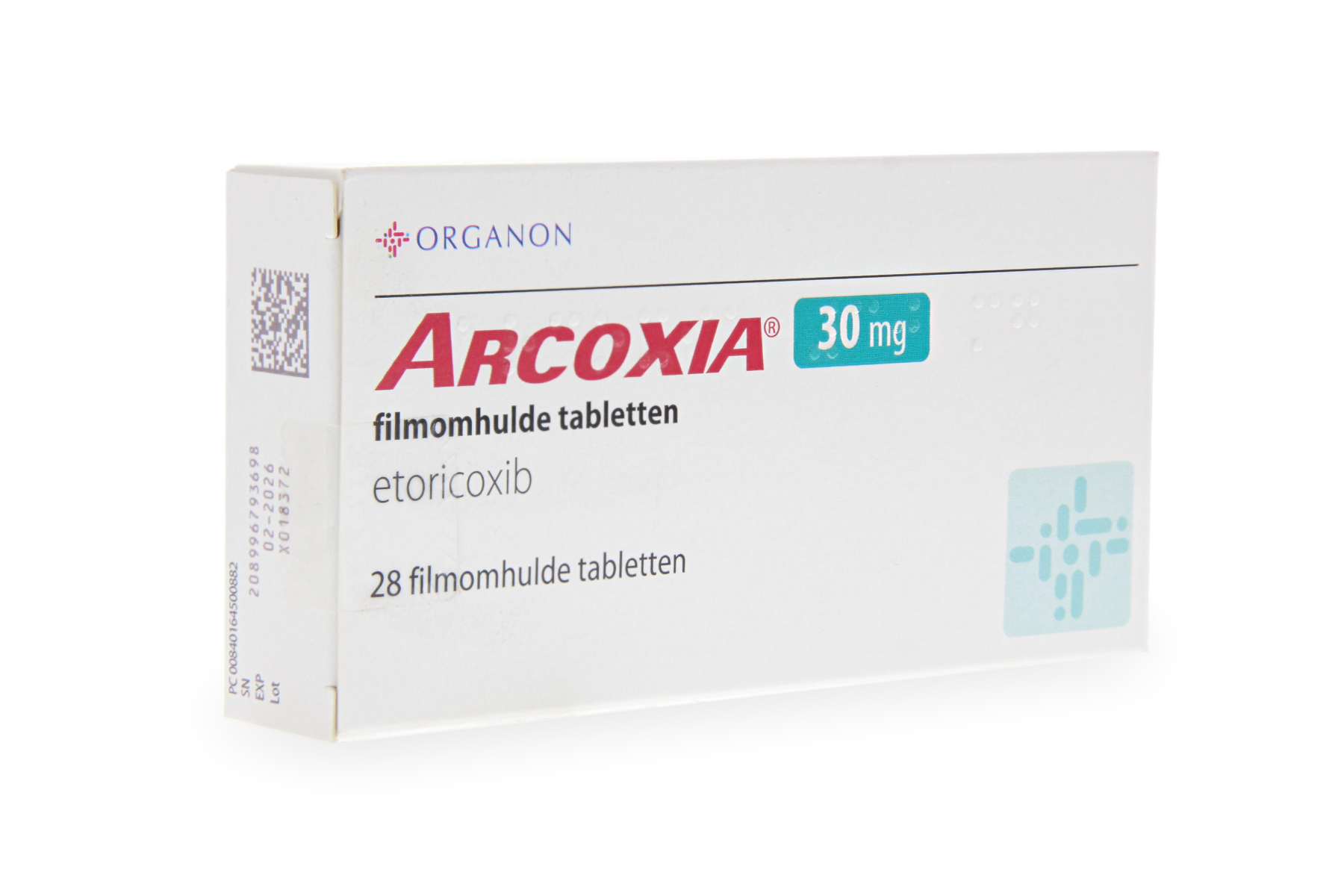
Arcoxia
View Options
This website provides general information about medicines for educational purposes only. Always consult your doctor or pharmacist before taking any medication.
Choose Your Medicine
Select dosage and quantity
Online Consultation
Reviewed by a qualified physician
Fast, Discreet Delivery
Delivered to your door
Medical Information
About This Medicine
Arcoxia is a prescription anti-inflammatory medicine containing etoricoxib, a selective cyclo-oxygenase-2 (COX-2) inhibitor belonging to the class of medicines known as non-steroidal anti-inflammatory drugs (NSAIDs). It is used to relieve pain and reduce inflammation in a range of musculoskeletal and arthritic conditions. Arcoxia is available in tablet form in doses of 30 mg, 60 mg, 90 mg, and 120 mg, with the appropriate dose depending on the specific condition being treated.
Conditions Treated by Arcoxia
Arcoxia is indicated for the symptomatic treatment of osteoarthritis, rheumatoid arthritis, ankylosing spondylitis, and acute gout. It is also used for the short-term relief of acute musculoskeletal pain. In osteoarthritis, Arcoxia reduces joint pain and stiffness, improving physical function. In rheumatoid arthritis and ankylosing spondylitis, it helps manage chronic joint inflammation and morning stiffness. During acute gout attacks, the 120 mg dose can significantly reduce the severe joint pain and swelling associated with this condition within hours of administration.
How Arcoxia Differs from Traditional NSAIDs
Unlike traditional NSAIDs, which inhibit both COX-1 and COX-2 enzymes, Arcoxia selectively inhibits COX-2, the enzyme responsible for the production of prostaglandins that mediate inflammation and pain. By selectively targeting COX-2 while sparing COX-1, which plays a protective role in the stomach lining, Arcoxia produces fewer gastrointestinal side effects such as stomach ulcers and bleeding compared with traditional NSAIDs. However, this gastrointestinal advantage comes with a recognised increased risk of cardiovascular events, including heart attack and stroke, particularly with high doses or prolonged use. Arcoxia must therefore be prescribed at the lowest effective dose for the shortest possible time, and its use requires careful patient selection and cardiovascular risk assessment.
Usage & Dosage
How to Take Arcoxia
Swallow Arcoxia (etoricoxib) tablets whole with a glass of water, with or without food. Take once daily at approximately the same time each day. Do not take more than one dose per day.
The dose depends on your condition. For osteoarthritis, the usual starting dose is 30 mg once daily, increasing to 60 mg if needed. For rheumatoid arthritis and ankylosing spondylitis, the dose is 60 mg or 90 mg once daily. For acute gout, 120 mg once daily is used for a short period (maximum eight days). Your doctor will always prescribe the lowest effective dose for the shortest time necessary.
Arcoxia dose varies by indication. For osteoarthritis, the recommended dose is 30 mg once daily, with a maximum of 60 mg if the lower dose is insufficient. For rheumatoid arthritis and ankylosing spondylitis, the recommended dose is 60 mg once daily, increasing to 90 mg if necessary. For acute gout, 120 mg once daily is used for up to eight days only. For acute musculoskeletal pain, 60 mg once daily for up to eight days is recommended.
In elderly patients, no dose adjustment is required, but caution is advised given the increased cardiovascular and renal risks in this population. The lowest effective dose should be used.
Arcoxia is not recommended for patients with moderate-to-severe renal impairment (creatinine clearance below 30 ml/min). For mild renal impairment, standard doses may be used with monitoring.
In patients with mild hepatic impairment (Child-Pugh score 5-6), standard doses can be used. For moderate hepatic impairment (Child-Pugh score 7-9), the dose must not exceed 60 mg daily. Arcoxia is contraindicated in severe hepatic impairment.
Arcoxia is not indicated in children and adolescents under 16 years of age.
Side Effects
Arcoxia is associated with a range of side effects, some of which reflect its COX-2 inhibitor pharmacology and its cardiovascular risk profile.
Common Side Effects
The following side effects have been reported in patients taking Arcoxia:
- Oedema (fluid retention), particularly in the legs and ankles
- Hypertension (raised blood pressure)
- Headache
- Dizziness
- Dyspepsia (indigestion), abdominal pain, nausea
- Diarrhoea or constipation
- Elevated liver enzymes (usually asymptomatic)
- Upper respiratory tract infection
Serious Side Effects
The following serious adverse effects require immediate medical attention:
- Cardiovascular events: heart attack (myocardial infarction) or stroke, particularly with higher doses or prolonged use; seek emergency care if you develop chest pain, shortness of breath, facial drooping, or sudden arm weakness
- Gastrointestinal bleeding or perforation: although less common than with non-selective NSAIDs, serious GI bleeding can occur; symptoms include vomiting blood, black tarry stools, or severe abdominal pain
- Severe allergic reactions: rash, angioedema, anaphylaxis
- Severe skin reactions: Stevens-Johnson syndrome (rare but life-threatening skin blistering)
- Serious liver injury: jaundice, dark urine, abdominal pain, fatigue
- Renal failure: oliguria, peripheral oedema, confusion
Warnings & Precautions
Cardiovascular and Renal Risks
Arcoxia increases the risk of serious cardiovascular events, including heart attack and stroke, particularly when used at higher doses or for prolonged periods. This risk applies to patients with or without pre-existing cardiovascular disease, though the absolute risk is higher in those with established heart disease, hypertension, or multiple cardiovascular risk factors. Arcoxia is contraindicated in patients with established coronary artery disease, peripheral arterial disease, cerebrovascular disease, or uncontrolled hypertension. All patients should have their blood pressure monitored during treatment. Renal function should be monitored in susceptible individuals including the elderly, those with pre-existing renal impairment, and patients taking diuretics or ACE inhibitors, as NSAIDs can reduce renal blood flow and precipitate acute kidney injury.
Gastrointestinal, Pregnancy, and Drug Interactions
Despite its COX-2 selectivity, Arcoxia can still cause gastrointestinal ulceration and bleeding, particularly in patients with a history of peptic ulcer disease, those taking aspirin, anticoagulants, or corticosteroids, and the elderly. Concomitant use with aspirin, other NSAIDs, anticoagulants (including warfarin), lithium, and certain antihypertensives requires careful monitoring. Arcoxia is contraindicated during pregnancy, especially in the third trimester, as NSAIDs can cause premature closure of the ductus arteriosus and impair foetal renal function. It should not be used during breastfeeding. Alcohol consumption during Arcoxia therapy may increase the risk of gastrointestinal bleeding.
Contraindications
Arcoxia is contraindicated in the following circumstances:
- Established ischaemic heart disease, peripheral arterial disease, or cerebrovascular disease
- Uncontrolled hypertension (persistent blood pressure above 140/90 mmHg despite treatment)
- Congestive heart failure (NYHA class II-IV)
- Active peptic ulcer or gastrointestinal bleeding
- Severe hepatic impairment (Child-Pugh score 10 or above)
- Severe renal impairment (creatinine clearance below 30 ml/min) not requiring dialysis
- Inflammatory bowel disease (Crohn's disease or ulcerative colitis)
- Hypersensitivity to etoricoxib or any excipient in the formulation
- Known hypersensitivity to aspirin or other NSAIDs (including aspirin-exacerbated respiratory disease)
- Pregnancy (especially the third trimester) and breastfeeding
- Children and adolescents under 16 years of age
Frequently Asked Questions
How quickly does Arcoxia work for gout?
Is Arcoxia safer on the stomach than ibuprofen?
Can I take Arcoxia with blood pressure medication?
Can I drink alcohol while taking Arcoxia?
How long can I take Arcoxia for?
Dr. Ross Elledge
General Practitioner · General & Family Medicine
Verified Healthcare Professional
TopDoctors Profile