
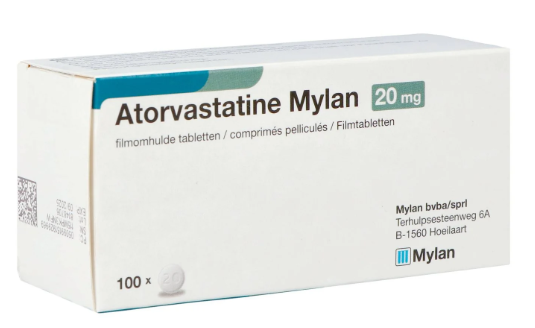
Atorvastatin
View Options
This website provides general information about medicines for educational purposes only. Always consult your doctor or pharmacist before taking any medication.
Choose Your Medicine
Select dosage and quantity
Online Consultation
Reviewed by a qualified physician
Fast, Discreet Delivery
Delivered to your door
Medical Information
About This Medicine
Atorvastatin is the most widely prescribed statin worldwide and one of the most potent HMG-CoA reductase inhibitors available. It reduces LDL cholesterol by up to 50% at higher doses and has an extensive evidence base for the prevention of cardiovascular events in both primary and secondary prevention settings.
Why is atorvastatin so widely used?
Atorvastatin combines high potency with a long duration of action (active metabolites with a half-life of 20 to 30 hours), meaning it can be taken at any time of day, unlike shorter-acting statins such as simvastatin that must be taken in the evening. Its clinical evidence base includes landmark trials such as ASCOT-LLA, CARDS, TNT, and PROVE-IT, covering diabetic patients, patients with acute coronary syndromes, and those at moderate cardiovascular risk.
How does atorvastatin lower cholesterol?
By competitively inhibiting HMG-CoA reductase, the rate-limiting enzyme in hepatic cholesterol synthesis, atorvastatin reduces intracellular cholesterol production. The liver compensates by upregulating LDL receptors on its surface, pulling more LDL cholesterol out of the bloodstream. This receptor-mediated clearance is the primary mechanism of LDL reduction.
Usage & Dosage
How to Take Atorvastatin
Take one atorvastatin tablet once daily at any time of day, with or without food. Taking it at the same time each day helps build a habit and reduces the chance of missing a dose.
Long-term Use
Atorvastatin works by continuously reducing cholesterol production in the liver. Stopping treatment allows cholesterol levels to return to pre-treatment levels within weeks. For most patients, it is intended as a long-term or lifelong medication. Do not stop without speaking to your doctor, even if you feel well.
Primary prevention: usually 20 mg once daily. Secondary prevention (established cardiovascular disease): 80 mg once daily. The dose range is 10 to 80 mg daily, adjusted according to LDL cholesterol response and tolerability.
Side Effects
Common side effects
- Headache
- Gastrointestinal disturbance
- Myalgia (muscle pain)
- Nasopharyngitis
- Elevated liver transaminases (usually mild)
Muscle-related effects
Myalgia affects approximately 5 to 10% of patients. True statin-induced myopathy (with elevated CK) is rare, and rhabdomyolysis is extremely rare. Muscle symptoms should be reported, but the nocebo effect (expectation of side effects) accounts for a significant proportion of reported muscle pain in clinical studies.
Warnings & Precautions
Liver function tests should be checked before starting and periodically thereafter. Report unexplained muscle pain, tenderness, or weakness, particularly if accompanied by malaise or fever.
Drug interactions
Atorvastatin is metabolised by CYP3A4. Strong CYP3A4 inhibitors (clarithromycin, itraconazole, HIV protease inhibitors) can increase atorvastatin levels and the risk of myopathy. Grapefruit juice in large quantities should be avoided.
Contraindications
Contraindicated in active liver disease or unexplained persistent elevations of serum transaminases, pregnancy, breastfeeding, and known hypersensitivity to atorvastatin.
Frequently Asked Questions
Can I take atorvastatin at any time of day?
Dr. Ross Elledge
General Practitioner · General & Family Medicine
Verified Healthcare Professional
TopDoctors Profile