
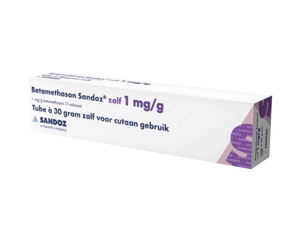
Betamethasone
View Options
This website provides general information about medicines for educational purposes only. Always consult your doctor or pharmacist before taking any medication.
Choose Your Medicine
Select dosage and quantity
Online Consultation
Reviewed by a qualified physician
Fast, Discreet Delivery
Delivered to your door
Medical Information
About This Medicine
Betamethasone is a potent synthetic corticosteroid with powerful anti-inflammatory, anti-pruritic, and vasoconstrictive properties. It is one of the most widely used corticosteroids in clinical medicine and is available in numerous formulations for different routes of administration, including topical creams, ointments, scalp applications, eye drops, ear drops, and injectable preparations. Betamethasone is a group III (potent) corticosteroid when applied topically and is marketed under the brand name Betnovate in the UK, among others.
Topical Use for Skin Conditions
The most common clinical application of betamethasone is topical treatment of inflammatory skin conditions such as eczema (atopic dermatitis), psoriasis, contact dermatitis, seborrhoeic dermatitis, and lichen planus. These conditions involve abnormal immune activation and inflammation in the skin, leading to redness, itching, scaling, and discomfort. Betamethasone rapidly suppresses this inflammatory response, providing swift relief from symptoms and allowing the skin to heal. It is available as betamethasone valerate (Betnovate) and betamethasone dipropionate in varying concentrations that span the range from moderate to very potent.
Ear and Eye Preparations
Betamethasone is also used as ear drops to treat otitis externa (inflammation of the outer ear canal), often in combination with a topical antibiotic. Ophthalmic preparations containing betamethasone are used for inflammatory conditions of the eye, including post-surgical inflammation and uveitis, and are typically prescribed by ophthalmologists.
Systemic and Injectable Forms
In specialist hospital settings, betamethasone is given by injection for severe allergic reactions, inflammatory joint conditions, and to accelerate foetal lung maturation in women at risk of preterm delivery. Antenatal betamethasone given to mothers between 23 and 34 weeks of gestation significantly reduces the risk of neonatal respiratory distress syndrome.
Usage & Dosage
How to Apply Betamethasone
Apply betamethasone cream or ointment in a thin layer to the affected skin once or twice daily as prescribed. Massage gently until absorbed. Use only the minimum amount needed to cover the area, thicker application does not increase effectiveness and raises the risk of skin thinning. The fingertip unit (FTU) method is a helpful guide: one FTU (fingertip to first joint) covers roughly the area of two adult palms. Wash hands after application unless treating the hands.
Limits on Duration and Body Sites
Do not apply betamethasone to the same area for more than four consecutive weeks without a clinical review. On the face, groin, armpits, or under dressings, limit use to five to seven days, as skin thinning occurs more quickly in these areas.
Betamethasone topical preparations are available in several strengths. Betnovate (betamethasone valerate 0.1%) is the standard potent formulation used for most dermatological conditions. Betnovate-RD (0.025%) is a diluted formulation used when a less potent preparation is required, particularly for maintenance therapy. Betamethasone dipropionate 0.05% is equivalent in potency to Betnovate 0.1%.
The recommended amount for adults is the smallest quantity that provides clinical benefit. As a guide, a 30g tube of cream is sufficient to treat the hands and arms twice daily for approximately two weeks.
For ear drops containing betamethasone (such as Betnesol), the usual dose is two to three drops into the affected ear two to four times daily. For eye drops, the dose is typically one to two drops every one to two hours during waking hours, reducing as the condition improves, under ophthalmological supervision.
Elderly patients may have thinner skin with greater vulnerability to steroid-induced thinning; lower-strength preparations and shorter treatment courses are preferred. In children, the lowest potency and shortest duration appropriate for the condition should always be used.
Side Effects
Betamethasone is effective but carries a risk of side effects that increases with potency, quantity used, duration of treatment, and site of application.
Common Side Effects
The following are reported with topical betamethasone use:
- Skin thinning (atrophy) with prolonged use, particularly in thin-skinned areas
- Stretch marks (striae), permanent and most common in flexural areas
- Easy bruising of treated skin
- Increased hair growth (hypertrichosis) at the application site
- Skin pallor or depigmentation at the site of application
- Burning, stinging, or irritation when first applied
- Perioral dermatitis or acne-like rash on the face
Serious Side Effects
The following require medical attention:
- Hypothalamic-pituitary-adrenal (HPA) axis suppression: significant absorption, particularly in children or with extensive application, can suppress natural cortisol production
- Cushing's syndrome features: weight gain, central obesity, moon face, with prolonged excessive use
- Worsening of skin infections: betamethasone suppresses the immune response and can mask or worsen bacterial, fungal, or viral skin infections; if an infection develops, the steroid should be stopped and appropriate treatment started
- Glaucoma or cataracts with eye drop formulations
- Growth retardation in children with excessive or prolonged use
Warnings & Precautions
Skin Thinning and Restricted Body Areas
Betamethasone must not be applied to the face, groin, or armpits without explicit medical advice, as these areas are particularly susceptible to skin thinning, stretch marks, and steroid rosacea. Use on the face should be strictly limited in duration (typically no more than five days) and avoided in perioral dermatitis or rosacea, as steroids can dramatically worsen these conditions. The skin around the eyes should be avoided due to the risk of increased intraocular pressure and glaucoma.
Infections and Occlusion
Betamethasone should not be applied to skin that is infected with bacteria, fungi (such as tinea/ringworm or candida), or viruses (such as herpes simplex or chickenpox). Applying a potent corticosteroid to an infected area can mask the signs of infection, allow it to worsen, and lead to significant complications. Occlusive dressings (including tight bandages and nappies in infants) greatly increase absorption and should not be used with betamethasone without medical supervision.
Pregnancy, Children, and Drug Interactions
Betamethasone should be used with caution in pregnancy, particularly in the first trimester, and should be applied to the smallest area for the shortest time necessary. In children, the risk of systemic absorption is higher due to greater skin surface area relative to body weight, and the lowest potency preparation effective for the condition should always be chosen. There are no significant systemic drug interactions from topical use, but concomitant use of other steroids should be disclosed to the prescriber.
Contraindications
Betamethasone topical preparations must not be used in the following circumstances:
- Untreated bacterial skin infections (impetigo, cellulitis)
- Skin infections caused by fungi (ringworm, candida)
- Viral skin infections (herpes simplex, chickenpox, shingles)
- Rosacea or perioral dermatitis (topical steroids worsen both conditions)
- Acne vulgaris
- Perianal or genital itching without diagnosis
- Known hypersensitivity to betamethasone or any excipient in the formulation
- Application around the eyes without specific ophthalmological supervision (risk of glaucoma)
- Application to skin ulcers or open wounds
Frequently Asked Questions
How long can I use betamethasone cream on my skin?
Can betamethasone cream be used on children?
What is the difference between betamethasone valerate and betamethasone dipropionate?
Can I put betamethasone cream on my face?
Dr. Ross Elledge
General Practitioner · General & Family Medicine
Verified Healthcare Professional
TopDoctors Profile