
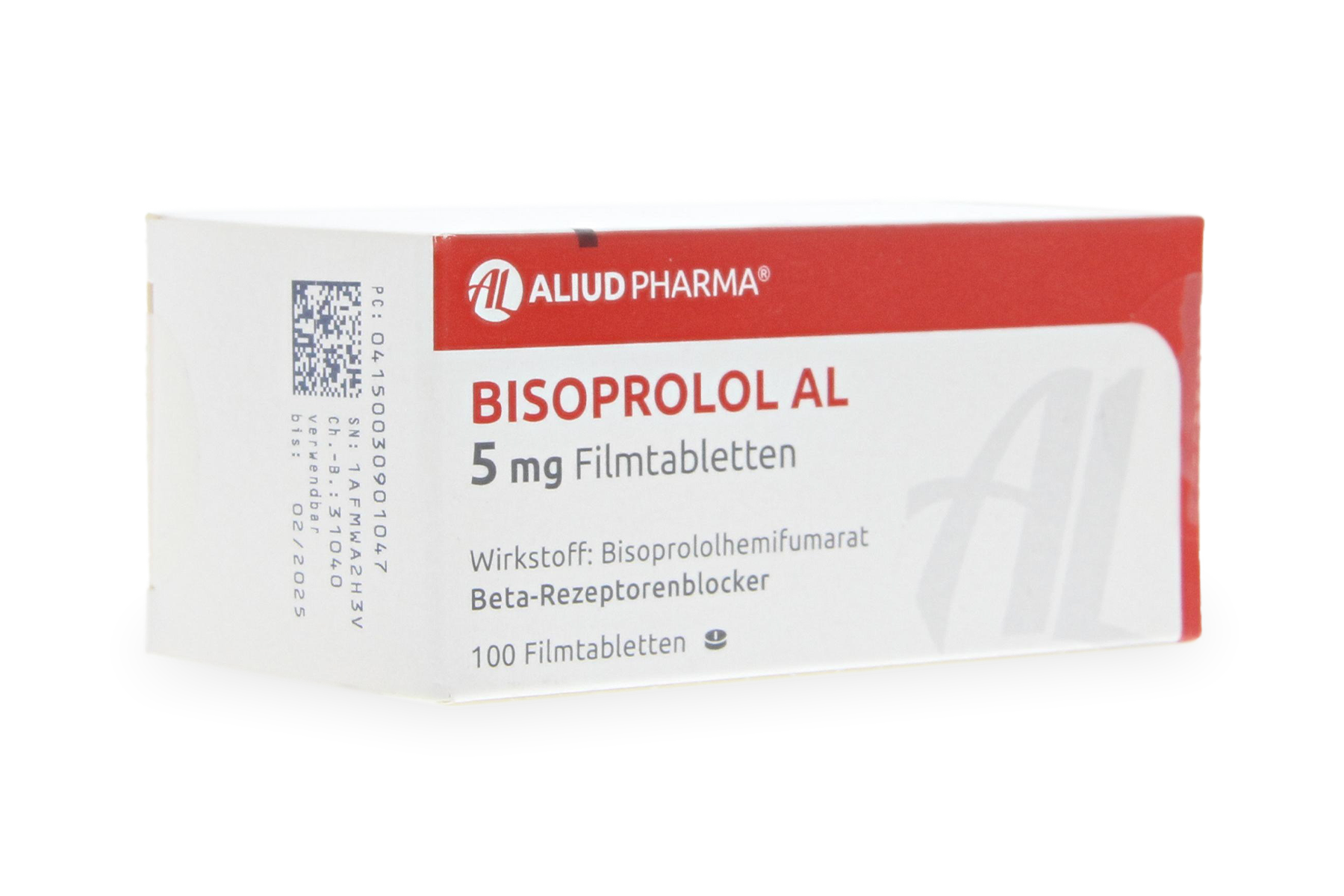
Bisoprolol
View Options
This website provides general information about medicines for educational purposes only. Always consult your doctor or pharmacist before taking any medication.
Choose Your Medicine
Select dosage and quantity
Online Consultation
Reviewed by a qualified physician
Fast, Discreet Delivery
Delivered to your door
Medical Information
About This Medicine
Bisoprolol is a cardioselective beta-1 adrenoceptor blocker widely used in the management of several common cardiovascular conditions, including hypertension (high blood pressure), stable angina (chest pain due to coronary artery disease), chronic heart failure, and rate control in atrial fibrillation. It is available as bisoprolol fumarate in tablet strengths ranging from 1.25 mg to 10 mg and is typically taken once daily, making it a convenient long-term treatment. Bisoprolol is one of the most prescribed medicines in the UK and has a well-established safety and efficacy profile supported by extensive clinical trial evidence.
Mechanism and Cardiovascular Effects
Bisoprolol works by selectively blocking beta-1 adrenoceptors, which are found predominantly in heart muscle cells. Stimulation of these receptors by adrenaline and noradrenaline normally increases heart rate and the force of cardiac contractions. By blocking these receptors, bisoprolol slows the heart rate (a negative chronotropic effect), reduces the force of contraction (negative inotropic effect), and lowers the speed of electrical conduction through the atrioventricular node of the heart. Together, these actions reduce the workload on the heart and lower blood pressure.
Use in Heart Failure
In chronic heart failure with reduced ejection fraction, bisoprolol is a cornerstone of medical therapy alongside ACE inhibitors and diuretics. Although historically beta-blockers were thought to be harmful in heart failure (because of their negative inotropic effect), large randomised controlled trials including the CIBIS-II study have demonstrated that bisoprolol significantly reduces mortality, hospitalisations, and symptoms in patients with stable chronic heart failure. Treatment is started at a very low dose (1.25 mg daily) and titrated slowly upwards under medical supervision.
Atrial Fibrillation Rate Control
In atrial fibrillation, where the heart beats in a rapid and irregular fashion, bisoprolol controls the ventricular rate by slowing conduction through the AV node, reducing the number of impulses that reach the ventricles. This improves cardiac efficiency and relieves symptoms such as palpitations, breathlessness, and fatigue.
Usage & Dosage
Taking Bisoprolol
Bisoprolol is taken orally once daily, usually in the morning. It can be taken with or without food and should be swallowed whole with a glass of water. Taking it at the same time each day helps to maintain consistent blood drug levels and establishes a routine that reduces the risk of missed doses.
Bisoprolol must never be stopped suddenly without medical advice. Abrupt discontinuation of beta-blockers can cause a rebound effect, leading to a rapid increase in heart rate, worsening angina, and in patients with ischaemic heart disease, a potentially dangerous increase in the risk of heart attack. If bisoprolol needs to be stopped, the dose should be tapered gradually over one to two weeks under medical supervision.
Missed Doses and Lifestyle
If a dose is missed and it is still more than 12 hours before the next scheduled dose, take it as soon as remembered. If it is less than 12 hours before the next dose, skip the missed dose and continue with the regular schedule. Do not take two doses at once to compensate.
Patients taking bisoprolol for heart failure should weigh themselves daily and report any sudden increase in weight (more than 2 kg in 24 to 48 hours) to their heart failure nurse or GP, as this may indicate worsening fluid retention requiring treatment adjustment.
The dose of bisoprolol varies significantly depending on the indication.
For hypertension and angina: the usual starting dose is 5 mg once daily, with a maximum dose of 10 mg daily in most patients. Some patients with mild hypertension may be adequately controlled on 2.5 mg daily.
For chronic heart failure: treatment must be initiated at the very low dose of 1.25 mg once daily and titrated slowly at two-weekly intervals (to 2.5 mg, 3.75 mg, 5 mg, 7.5 mg, and then 10 mg) as tolerated. The target dose is 10 mg daily, but the maximum tolerated dose may be lower in individual patients. Dose titration must occur under medical supervision.
For atrial fibrillation rate control: doses of 2.5 to 10 mg daily are used, titrated to achieve a target resting heart rate typically of 60 to 80 beats per minute.
In patients with severe hepatic impairment (Child-Pugh Class C) or severe renal impairment (eGFR below 20 mL/min), the maximum dose should not exceed 10 mg and a cautious approach to titration is recommended. Elderly patients generally tolerate bisoprolol well and do not require routine dose adjustment, but lower starting doses may be prudent.
Side Effects
Bisoprolol is generally well tolerated, particularly at lower doses. Side effects most commonly reflect the pharmacological actions of beta-blockade.
Common Side Effects
The following are frequently reported:
- Fatigue and tiredness, the most common complaint, often improving with time
- Cold hands and feet (peripheral vasoconstriction)
- Bradycardia (slow heart rate), generally asymptomatic if resting rate remains above 50-55 bpm
- Dizziness or light-headedness, particularly on standing
- Sleep disturbances, vivid dreams, or insomnia
- Nausea or mild gastrointestinal discomfort
Serious Side Effects
The following require urgent medical assessment:
- Severe bradycardia: heart rate persistently below 50 beats per minute, particularly if accompanied by dizziness, syncope, or breathlessness, requires urgent dose review
- Bronchospasm: worsening of asthma or COPD symptoms; even at therapeutic doses, bisoprolol can precipitate bronchospasm in susceptible individuals
- Worsening heart failure: ankle swelling, rapid weight gain, increasing breathlessness at rest, requires urgent heart failure team review
- Hypotension: persistently very low blood pressure causing symptoms such as fainting
- Masking of hypoglycaemia: in diabetic patients using insulin, bisoprolol may blunt the tachycardia warning sign of low blood sugar
Warnings & Precautions
Never Stop Bisoprolol Suddenly
Stopping bisoprolol abruptly is dangerous, particularly in patients with coronary artery disease. Sudden cessation can provoke rebound hypertension, severe angina, and myocardial infarction. If the decision is made to discontinue bisoprolol, the dose must be reduced gradually over one to two weeks. Even patients stopping because of side effects should taper the dose rather than stopping immediately.
Asthma and COPD
Although bisoprolol is the most cardioselective of the commonly used beta-blockers, cardioselectivity is not absolute, and bisoprolol can still cause bronchoconstriction in patients with asthma or COPD. It should be used with extreme caution in patients with reactive airways disease and only when the cardiovascular benefit (particularly in heart failure) clearly outweighs the respiratory risk. If prescribed for a patient with asthma, the lowest effective dose should be used, with close respiratory monitoring.
Diabetes and Drug Interactions
Bisoprolol can mask the warning signs of hypoglycaemia (particularly tachycardia) in insulin-dependent diabetic patients, making hypoglycaemia harder to recognise. Blood glucose should be monitored more frequently when starting bisoprolol. Important drug interactions include verapamil and diltiazem (concurrent use with bisoprolol can cause severe bradycardia or heart block), class I antiarrhythmics (increased risk of bradycardia), and adrenaline (epinephrine) -- severe hypertension can occur if adrenaline is administered to a patient taking a beta-blocker.
Contraindications
Bisoprolol must not be used in the following circumstances:
- Acute decompensated heart failure requiring intravenous inotropic therapy
- Cardiogenic shock
- Second- or third-degree atrioventricular (AV) block without a permanent pacemaker
- Sick sinus syndrome (unless pacemaker fitted)
- Sinoatrial block
- Severe bradycardia (resting heart rate below 60 beats per minute before starting treatment)
- Severe hypotension (systolic blood pressure below 90 mmHg)
- Severe asthma or severe chronic obstructive pulmonary disease
- Severe peripheral arterial disease or Raynaud's phenomenon
- Phaeochromocytoma not treated with alpha-blocker
- Known hypersensitivity to bisoprolol or any excipient
Frequently Asked Questions
Can I drink alcohol while taking bisoprolol?
Why should I not stop bisoprolol suddenly?
Does bisoprolol cause weight gain?
Can bisoprolol be used for anxiety?
Is bisoprolol safe to take during pregnancy?
Dr. Ross Elledge
General Practitioner · General & Family Medicine
Verified Healthcare Professional
TopDoctors Profile