
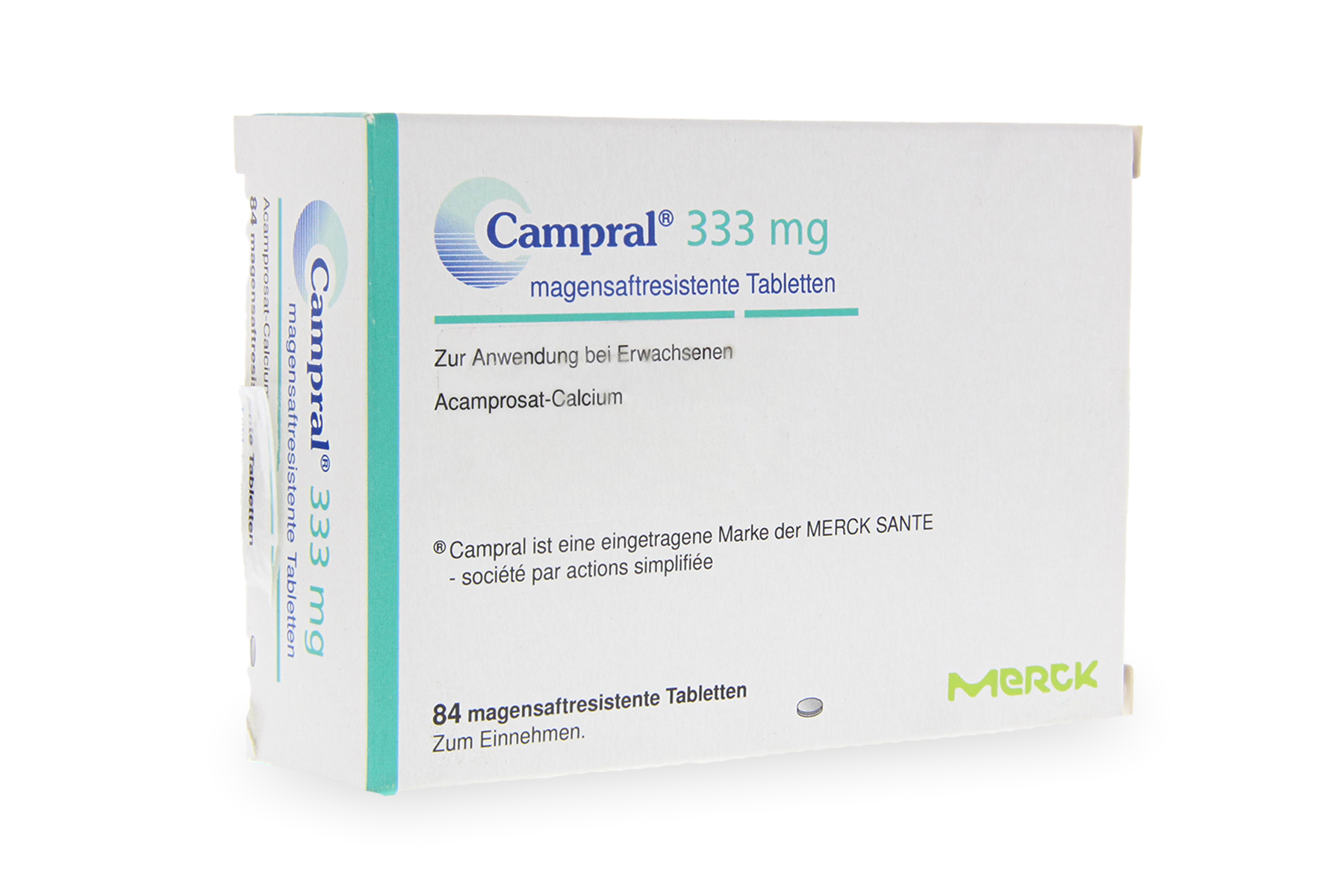
Campral
View Options
This website provides general information about medicines for educational purposes only. Always consult your doctor or pharmacist before taking any medication.
Choose Your Medicine
Select dosage and quantity
Online Consultation
Reviewed by a qualified physician
Fast, Discreet Delivery
Delivered to your door
Medical Information
About This Medicine
Campral (acamprosate calcium) is a prescription medicine used to help people who are dependent on alcohol maintain abstinence after they have successfully completed withdrawal. It is designed to reduce the persistent craving and discomfort that many people experience in the weeks and months after stopping alcohol, thereby supporting long-term recovery when used as part of a comprehensive treatment programme.
How Campral Works
Alcohol dependence profoundly alters the balance of neurotransmitters in the brain, particularly the inhibitory neurotransmitter gamma-aminobutyric acid (GABA) and the excitatory neurotransmitter glutamate. During periods of heavy alcohol use, the brain adapts to the constant presence of alcohol by upregulating glutamate activity and downregulating GABA activity. When alcohol is suddenly removed, this imbalance creates the restlessness, anxiety, insomnia, and craving that characterise protracted abstinence syndrome. Campral works by modulating both the GABA-A receptor and the NMDA (N-methyl-D-aspartate) glutamate receptor, restoring something closer to normal neurological equilibrium and reducing the neurological discomfort that drives relapse.
Who Benefits from Campral
Campral is indicated for adults who are alcohol-dependent and who have achieved abstinence. It is important to understand that Campral is not effective in people who are still drinking alcohol, and it is not a treatment for acute alcohol withdrawal symptoms. It should always be used as one component of a broader treatment plan that includes psychological support, counselling, and often participation in mutual aid groups such as Alcoholics Anonymous.
Clinical studies have shown that patients who take acamprosate consistently and combine it with behavioural support have significantly higher rates of sustained abstinence compared with those receiving placebo or behavioural support alone. Campral does not produce a sedative or euphoric effect and has no dependence potential, making it a safe and well-tolerated option for long-term use in the recovery process.
Usage & Dosage
How and When to Take Campral
Campral (acamprosate) tablets are enteric-coated and must be swallowed whole with water. Do not crush or chew them, as this destroys the coating that protects the tablets from stomach acid. The standard dose is two tablets (666 mg) three times daily, ideally taken with meals, though they can be taken independently of food if needed. Taking them at mealtimes helps build a regular routine.
Treatment with Campral should begin as soon as possible after you have stopped drinking and completed any medically supervised detox. It works best when combined with counselling or a support programme.
How Long to Take It
Campral is usually taken for one year, though your doctor may adjust this depending on how you respond. Do not stop early without speaking to your doctor first. If you relapse and drink alcohol, continue taking Campral and tell your doctor — it is still active during a relapse and can support your next attempt at abstinence.
The standard adult dose of Campral is two tablets (666mg of acamprosate calcium) taken three times daily, giving a total daily dose of 1998mg. For patients weighing less than 60kg, a reduced regimen of one tablet in the morning and two tablets at lunchtime and in the evening (totalling 1332mg per day) is recommended.
Campral should be initiated promptly after alcohol detoxification is complete. The recommended duration of treatment is one year, though some patients may benefit from longer courses at the discretion of their prescribing physician.
Campral is contraindicated in patients with severe renal impairment (creatinine clearance below 30ml/min). In patients with moderate renal impairment (creatinine clearance 30-60ml/min), the dose should be halved to one tablet taken three times daily. Renal function should be assessed before starting treatment. No dose adjustment is required in patients with hepatic (liver) impairment, as Campral is not metabolised by the liver.
Side Effects
Common Side Effects
The most frequently reported side effects of Campral affect the digestive system, particularly in the early weeks:
- Diarrhoea (the most common, tends to improve over time)
- Nausea
- Abdominal discomfort or pain
- Flatulence
- Vomiting
- Skin rash or itching
Mood and Mental Health
Some patients report changes in mood, anxiety, or sleep during early recovery. It is not always easy to separate the effects of Campral from the effects of alcohol withdrawal itself. If you experience low mood, thoughts of self-harm, or significant anxiety, speak to your doctor or support team promptly.
Warnings & Precautions
Mental Health and Suicidality
Patients with alcohol dependence have an elevated risk of depression, anxiety, and suicidal ideation, both during active drinking and in the early months of recovery. Campral itself is not known to cause depression, but it is important that patients and their families remain vigilant for any worsening of mood, feelings of hopelessness, or thoughts of self-harm during treatment. Any such concerns should be reported promptly to a doctor.
Renal Function and Drug Interactions
Because acamprosate is eliminated entirely through the kidneys, renal function must be assessed before starting treatment and monitored periodically thereafter. Campral is contraindicated in severe renal impairment and requires dose reduction in moderate impairment.
Unlike many other medicines used in addiction treatment, Campral has few clinically significant drug interactions. It does not interact with alcohol (no disulfiram-like reaction), benzodiazepines, or antidepressants at standard doses. However, patients should always inform their doctor of all medicines they are taking. Campral should not be used in pregnancy unless the benefit clearly outweighs the risk, and it is not recommended during breastfeeding.
Contraindications
Campral must not be used in patients with any of the following conditions:
- Severe renal impairment (creatinine clearance below 30ml/min)
- Known hypersensitivity to acamprosate calcium or any excipient in the tablet
- Pregnancy (unless absolutely necessary under specialist supervision)
- Breastfeeding
- Patients who have not yet completed alcohol withdrawal (Campral is not effective in those still drinking)
- Patients under 18 years of age (safety and efficacy not established in children or adolescents)
Frequently Asked Questions
Can I drink alcohol while taking Campral?
How long does it take for Campral to start working?
What is the difference between Campral and Antabuse (disulfiram)?
Can Campral be used alongside antidepressants?
Dr. Ross Elledge
General Practitioner · General & Family Medicine
Verified Healthcare Professional
TopDoctors Profile