
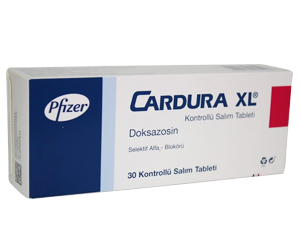
Cardura
View Options
This website provides general information about medicines for educational purposes only. Always consult your doctor or pharmacist before taking any medication.
Choose Your Medicine
Select dosage and quantity
Online Consultation
Reviewed by a qualified physician
Fast, Discreet Delivery
Delivered to your door
Medical Information
About This Medicine
Cardura (doxazosin) is a prescription medicine belonging to the class of drugs known as alpha-1 adrenoceptor blockers (alpha-blockers). It is used to treat two distinct medical conditions: high blood pressure (hypertension) and the urinary symptoms associated with benign prostatic hyperplasia (BPH), a non-cancerous enlargement of the prostate gland that is common in older men. Cardura is available in both an immediate-release tablet formulation and a modified-release (XL) formulation.
Treating Hypertension with Cardura
By blocking alpha-1 adrenoceptors in the walls of peripheral blood vessels, doxazosin causes the smooth muscle in vessel walls to relax, reducing vascular resistance and lowering blood pressure. This makes Cardura effective as an antihypertensive agent, and it is often used in combination with other blood pressure medicines such as ACE inhibitors, calcium channel blockers, or diuretics when blood pressure is not adequately controlled with a single agent. It offers additional benefits in patients who also have BPH, as a single medicine can treat both conditions simultaneously.
Treating Benign Prostatic Hyperplasia
In men with BPH, the enlarged prostate gland can press against the urethra and cause difficulty in starting urination, a weak or interrupted urinary stream, a frequent urge to urinate (particularly at night), and a feeling that the bladder has not fully emptied. Doxazosin blocks alpha-1 receptors in the smooth muscle of both the prostate gland and the bladder neck, causing these muscles to relax. This reduces the mechanical obstruction to urine flow and typically leads to a significant improvement in urinary symptoms within one to two weeks of starting treatment. Cardura XL (the modified-release formulation) is particularly used for BPH, as its once-daily dosing and gradual drug release reduce the risk of the postural hypotension that can occur with the standard tablet.
Usage & Dosage
How to Take Cardura
Cardura (doxazosin) standard-release tablets can be taken with or without food. Swallow them whole. Cardura XL (the modified-release version) must also be swallowed whole and must not be crushed, chewed, or broken, as this would destroy the controlled-release mechanism. Take Cardura XL with breakfast or the first meal of the day.
Treatment is started at a low dose to minimise the risk of dizziness on standing. The usual starting dose is 1 mg daily, increasing over several weeks to the dose that best controls your symptoms, typically 2 to 8 mg daily.
First-Dose Effect
Cardura can cause a significant drop in blood pressure with the first dose, particularly in people who are dehydrated or also taking other blood pressure-lowering medicines. Take the first dose at bedtime to reduce the chance of dizziness or fainting. After the first few doses, your body adjusts and this effect becomes much less likely. Sit or stand up slowly when getting out of bed or a chair, especially in the early days of treatment.
For hypertension, the initial dose of Cardura is 1mg once daily, taken at bedtime to reduce the risk of first-dose postural hypotension. The dose may be increased at intervals of one to two weeks to 2mg, then 4mg, and up to a maximum of 16mg once daily, depending on the blood pressure response.
For benign prostatic hyperplasia, the recommended starting dose is 1mg once daily. The dose may be doubled at intervals of one to two weeks to a maximum of 8mg once daily. Cardura XL is started at 4mg once daily, with a possible increase to 8mg once daily after four weeks if symptoms are insufficiently controlled.
No specific dose adjustment is required in patients with hepatic (liver) impairment, though caution is advised, as doxazosin is extensively metabolised by the liver. Elderly patients should start on the lowest available dose and be titrated slowly due to their increased sensitivity to postural hypotension. Dose adjustment is not required in patients with renal impairment.
Side Effects
Common Side Effects
- Dizziness or light-headedness, particularly on standing (postural hypotension)
- Headache
- Fatigue or weakness
- Swelling of the ankles or feet (peripheral oedema)
- Nausea
- Runny nose (rhinitis)
In Men Treated for Prostate Symptoms
Cardura can sometimes cause retrograde ejaculation (semen passing into the bladder during orgasm rather than out through the urethra). This is harmless but should be discussed with your doctor if it concerns you. Tell your doctor before any eye surgery, as alpha-blockers like doxazosin can cause a condition called intraoperative floppy iris syndrome (IFIS), which the surgeon needs to know about in advance.
Warnings & Precautions
Postural Hypotension
The most clinically significant risk with Cardura is postural hypotension - a sudden drop in blood pressure on standing. This is most pronounced with the first dose and after any dose increase. Patients at highest risk include the elderly, those who are dehydrated or on diuretics, and those with underlying cardiovascular disease. Starting at the lowest dose, taking the first dose at bedtime, and rising slowly from seated or lying positions are important measures to minimise this risk.
Cataract Surgery Warning
Patients who take or have taken doxazosin are at risk of Intraoperative Floppy Iris Syndrome (IFIS) during cataract surgery. IFIS occurs when the iris becomes floppy and poorly dilated during surgery, increasing the risk of complications. This risk persists even after stopping doxazosin. It is essential to inform your ophthalmologist and cataract surgeon that you take Cardura before any planned eye surgery. Do not stop Cardura without medical advice in anticipation of surgery.
Pregnancy and Breastfeeding
Cardura is not recommended during pregnancy or breastfeeding. The safety of doxazosin in human pregnancy has not been established, and it has been shown to cause adverse effects in animal studies. Women of childbearing potential who require treatment for hypertension should use a medicine with a more established safety profile in pregnancy.
Contraindications
Cardura must not be used in patients with any of the following:
- Known hypersensitivity to doxazosin, other quinazoline derivatives (such as prazosin or terazosin), or any excipient in the formulation
- Hypotension (low blood pressure) or a history of orthostatic hypotension
- Urinary incontinence or overflow incontinence associated with BPH
- Upper urinary tract obstruction, including unilateral or bilateral upper urinary tract dilatation
- History of gastrointestinal obstruction, oesophageal obstruction, or any degree of gastrointestinal lumen narrowing (relevant for the XL formulation due to its non-deformable matrix)
- Benign prostatic hyperplasia with associated renal impairment (relative contraindication requiring specialist assessment)
- Monotherapy for hypertension in patients with BPH when another antihypertensive is still required
Frequently Asked Questions
How long does it take for Cardura to improve urinary symptoms from BPH?
Is it safe to drink alcohol while taking Cardura?
Can I take Cardura alongside medicines for erectile dysfunction such as sildenafil?
Why do I need to tell my eye surgeon about Cardura before cataract surgery?
Dr. Ross Elledge
General Practitioner · General & Family Medicine
Verified Healthcare Professional
TopDoctors Profile