
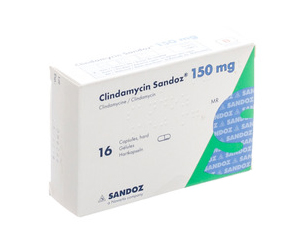
Clindamycin
View Options
This website provides general information about medicines for educational purposes only. Always consult your doctor or pharmacist before taking any medication.
Choose Your Medicine
Select dosage and quantity
Online Consultation
Reviewed by a qualified physician
Fast, Discreet Delivery
Delivered to your door
Medical Information
About This Medicine
Clindamycin is a lincosamide antibiotic with excellent activity against Gram-positive cocci and anaerobic bacteria. It is used for skin and soft tissue infections, bone and joint infections, dental infections, and bacterial vaginosis. Its exceptional bone penetration makes it particularly valuable in osteomyelitis.
How does clindamycin work?
Clindamycin inhibits bacterial protein synthesis by binding to the 50S ribosomal subunit, in a mechanism similar to macrolides. It achieves high concentrations in bone, abscess cavities, and skin, which explains its effectiveness in infections at these sites. It is bacteriostatic at standard doses but can be bactericidal at higher concentrations.
The C. difficile concern
Clindamycin carries a well-recognised risk of Clostridioides difficile infection, which can cause severe pseudomembranous colitis. This risk has limited its use compared with other antibiotics, though it remains an important option when specifically indicated.
Usage & Dosage
How to Take Clindamycin
Take clindamycin with a full glass of water and stay upright for at least 30 minutes afterwards to reduce the risk of oesophageal irritation or ulceration. Capsules can be taken with or without food, though taking them with a meal can help if you experience nausea.
Space doses evenly throughout the day. For oral infections, the standard adult dose is 150 to 300 mg every six hours. For more serious infections, doses up to 450 mg every six hours may be prescribed. Always take exactly what your doctor has prescribed.
Completing the Course
Always complete the full prescribed course of clindamycin, even if you start to feel better before it is finished. Stopping early risks the infection returning and contributing to antibiotic resistance. Continue to watch for signs of gut upset (diarrhoea) during the course and for several weeks after finishing, as delayed bowel complications can occur.
150 to 450 mg four times daily depending on infection severity. Serious infections: 300 to 450 mg four times daily. Duration depends on the infection type. Topical clindamycin (for acne): applied once or twice daily.
Side Effects
Common Side Effects
- Diarrhoea (very common)
- Nausea and stomach discomfort
- Abdominal pain or cramps
- Skin rash
- Oesophageal irritation if not taken with enough water
Serious Risk: Clostridioides difficile Colitis
The most important risk with clindamycin is Clostridioides difficile (C. diff) colitis. This is a potentially severe gut infection that can develop during treatment or up to several weeks after finishing the course. Symptoms include persistent watery diarrhoea (sometimes bloody), abdominal cramping, and fever. Stop clindamycin immediately and contact your doctor if these symptoms develop — C. diff colitis requires specific treatment and can become serious if left untreated.
Clindamycin carries one of the higher risks of C. diff among commonly used antibiotics, which is why it is typically reserved for situations where other antibiotics are not suitable.
Warnings & Precautions
Stop clindamycin and seek medical attention if significant diarrhoea develops. Do not take anti-diarrhoeal agents such as loperamide if C. difficile is suspected, as they can worsen the condition. Avoid lying down for 30 minutes after taking oral clindamycin to prevent oesophageal ulceration.
Monitoring
Monitor liver and kidney function during prolonged courses. Periodic blood counts are recommended for courses exceeding ten days.
Contraindications
Contraindicated in known hypersensitivity to clindamycin or lincomycin, and in diarrhoeal states not caused by infection.
Frequently Asked Questions
Is clindamycin safe despite the diarrhoea risk?
Dr. Ross Elledge
General Practitioner · General & Family Medicine
Verified Healthcare Professional
TopDoctors Profile