
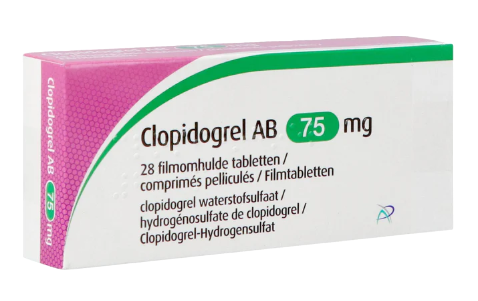
Clopidogrel
View Options
This website provides general information about medicines for educational purposes only. Always consult your doctor or pharmacist before taking any medication.
Choose Your Medicine
Select dosage and quantity
Online Consultation
Reviewed by a qualified physician
Fast, Discreet Delivery
Delivered to your door
Medical Information
About This Medicine
Clopidogrel is an antiplatelet medication used to prevent blood clots forming in arteries, thereby reducing the risk of heart attack, stroke, and other serious cardiovascular events in patients with established atherosclerotic disease. It belongs to the thienopyridine class of antiplatelet drugs and is one of the most widely prescribed medicines in the world for secondary prevention of cardiovascular events.
Indications for Clopidogrel
Clopidogrel is indicated for several overlapping cardiovascular indications. In acute coronary syndrome (ACS) - encompassing unstable angina, NSTEMI, and STEMI - it is used in combination with aspirin (dual antiplatelet therapy, DAPT) to reduce the risk of recurrent ischaemic events and stent thrombosis in patients who have undergone percutaneous coronary intervention (PCI). Following a myocardial infarction or ischaemic stroke, clopidogrel 75 mg once daily may be used as monotherapy or in combination with aspirin. It is also used in peripheral arterial disease to reduce the risk of ischaemic events. The duration of dual antiplatelet therapy is determined by the clinical indication, the type of stent implanted, and the patient's individual bleeding risk.
CYP2C19 Genetic Variation and Efficacy
An important pharmacogenomic consideration with clopidogrel is the role of the hepatic enzyme CYP2C19 in its activation. Clopidogrel is a prodrug that requires conversion to its active thiol metabolite by CYP2C19. Patients who carry loss-of-function variants in the CYP2C19 gene (so-called "poor metabolisers") cannot effectively convert clopidogrel to its active form, resulting in reduced platelet inhibition and a higher risk of cardiovascular events. Genetic testing for CYP2C19 status is available and may influence the choice of antiplatelet therapy - in poor metabolisers, alternative agents such as prasugrel or ticagrelor may be preferred.
Bleeding Risk
The major clinical risk associated with clopidogrel is bleeding, which can range from minor bruising to life-threatening haemorrhage. The benefit-risk balance should be carefully considered in each patient, and any planned invasive procedure or surgery requires temporary discontinuation under specialist guidance.
Usage & Dosage
How to Take Clopidogrel
Clopidogrel 75 mg tablets are taken once daily, with or without food. Swallow the tablet whole with a glass of water. Taking it at the same time each day helps you remember and maintains consistent blood levels.
Clopidogrel is often prescribed alongside low-dose aspirin (75 mg daily) as dual antiplatelet therapy after a heart attack, stent procedure, or stroke. Take both medicines as prescribed and do not stop either without speaking to your doctor first — stopping antiplatelet therapy early after a stent procedure significantly increases the risk of stent thrombosis, which can be life-threatening.
Before Procedures
Tell your doctor, dentist, or surgeon that you are taking clopidogrel before any procedure, operation, or dental extraction. You may be advised to stop it temporarily beforehand to reduce bleeding risk, but this decision must always be made by the prescribing doctor, not decided independently.
Standard maintenance dose: Clopidogrel 75 mg once daily. This is the dose used for long-term secondary prevention in patients with established atherosclerotic cardiovascular disease.
Loading dose in acute coronary syndrome or PCI: A single loading dose of 300 mg (four 75 mg tablets) is commonly used to achieve rapid platelet inhibition, followed by 75 mg once daily. In some settings (particularly for patients undergoing PCI), a higher loading dose of 600 mg may be used to achieve faster and more complete platelet inhibition.
Dual antiplatelet therapy (DAPT): Clopidogrel 75 mg once daily is used alongside aspirin 75 mg once daily. The duration of DAPT depends on the indication (typically 12 months after ACS or drug-eluting stent implantation, or a shorter period for bare metal stents), the risk of bleeding, and the risk of ischaemic events. Duration should be guided by the specialist managing the patient.
Renal and hepatic impairment: No dose adjustment is required for mild to moderate renal or hepatic impairment. Caution is advised in severe hepatic impairment due to potential impairment of prodrug conversion and increased bleeding risk.
Side Effects
Common Side Effects
Bleeding is the most clinically significant side effect of clopidogrel, as it is the expected consequence of its antiplatelet action:
- Bruising more easily than usual
- Prolonged bleeding from cuts or small wounds
- Nosebleeds (epistaxis)
- Gastrointestinal bleeding (stomach or gut bleeding — can present as dark or blood-streaked stools)
Serious Bleeding
Seek immediate medical attention if you notice: blood in your urine or stools, vomiting blood, unusual or prolonged bleeding that does not stop, or sudden severe headache (which may indicate bleeding in the brain). A rare but serious condition called thrombotic thrombocytopenic purpura (TTP) has been reported — symptoms include unexplained bruising, small red or purple spots on the skin, fever, confusion, and reduced urine output.
Warnings & Precautions
Bleeding Precautions
Clopidogrel significantly inhibits platelet function and therefore increases the risk of bleeding from any site. Patients should be advised to seek immediate medical attention if they experience any signs of serious bleeding, including unexplained bruising, blood in the urine, vomit, or stools, or prolonged bleeding from any wound. Concomitant use of other medicines that increase bleeding risk should be carefully reviewed - these include aspirin (used deliberately in DAPT), non-steroidal anti-inflammatory drugs (NSAIDs), warfarin, direct oral anticoagulants (DOACs), and selective serotonin reuptake inhibitors (SSRIs). Before any elective surgery or invasive dental procedure, the prescriber and surgeon should be informed and a management plan agreed.
Drug Interactions: PPIs and CYP2C19
A clinically important interaction exists between clopidogrel and proton pump inhibitors (PPIs), particularly omeprazole and esomeprazole. These PPIs are inhibitors of CYP2C19 and can reduce the conversion of clopidogrel to its active metabolite, potentially diminishing its antiplatelet effect. Clinical guidance recommends using alternative PPIs such as pantoprazole or rabeprazole when a PPI is required alongside clopidogrel. Additionally, patients identified as CYP2C19 poor metabolisers through genetic testing may not respond adequately to clopidogrel and may benefit from alternative antiplatelet therapy such as prasugrel or ticagrelor.
Contraindications
Clopidogrel is contraindicated in the following situations:
- Known hypersensitivity to clopidogrel or any component of the formulation
- Active pathological bleeding such as peptic ulcer or intracranial haemorrhage
- Severe hepatic impairment where impaired prodrug metabolism may result in unpredictable antiplatelet effects
- Pregnancy and breastfeeding (insufficient safety data; seek specialist advice)
- Concurrent use of strong CYP2C19 inhibitors (particularly omeprazole or esomeprazole) where a safer alternative PPI is available
- Patients with a history of hypersensitivity to thienopyridines (there may be cross-reactivity between clopidogrel, ticlopidine, and prasugrel)
Frequently Asked Questions
Can I take ibuprofen while on clopidogrel?
Why should I avoid omeprazole with clopidogrel?
How long do I need to take clopidogrel for?
What should I do if I need surgery while taking clopidogrel?
Does clopidogrel interact with alcohol?
Dr. Ross Elledge
General Practitioner · General & Family Medicine
Verified Healthcare Professional
TopDoctors Profile