
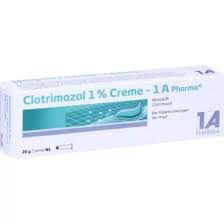
Clotrimazol Creme/g 20 gr
This website provides general information about medicines for educational purposes only. Always consult your doctor or pharmacist before taking any medication.
Choose Your Medicine
Select dosage and quantity
Online Consultation
Reviewed by a qualified physician
Fast, Discreet Delivery
Delivered to your door
Medical Information
About This Medicine
Clotrimazole is an imidazole antifungal available as cream, pessary, and solution for the treatment of fungal skin infections and vaginal thrush. It is one of the most widely used topical antifungals and is available without prescription for many indications.
How does clotrimazole work?
Clotrimazole inhibits the synthesis of ergosterol, an essential component of the fungal cell membrane. Without ergosterol, the membrane becomes leaky and loses its structural integrity, killing the fungal cell. It is effective against dermatophytes (the fungi causing ringworm, athlete's foot, and jock itch), yeasts including Candida species, and some moulds.
Range of uses
Clotrimazole cream is used for athlete's foot, ringworm, fungal nappy rash, and cutaneous candidiasis. Vaginal pessaries and cream treat vulvovaginal candidiasis (thrush). Ear drops treat otomycosis (fungal ear infections). The solution formulation is used for oral thrush in patients who cannot use systemic antifungals.
Usage & Dosage
Skin Infections
For fungal skin infections such as athlete's foot, ringworm, or candida skin infections, apply a thin layer of clotrimazole cream to the affected area and a small margin of surrounding skin two to three times daily. Gently rub in. Continue for at least two weeks and for several days after symptoms have cleared, to prevent recurrence. Athlete's foot often needs four weeks of treatment.
Vaginal Thrush
For vaginal candida infection, use one 500 mg pessary as a single dose at bedtime, or one 200 mg pessary at bedtime for three consecutive nights. External clotrimazole cream can also be applied to the vulva for relief of itching and irritation. Treatment during menstruation is fine and can be continued if a period starts.
Wash your hands before and after use. Clotrimazole cream and pessaries can damage latex condoms and diaphragms — use alternative contraception for at least five days after using the cream or pessary vaginally.
Skin cream: apply two to three times daily for two to four weeks. Vaginal pessary: 500 mg as a single dose, or 200 mg for three nights. Vaginal cream: one applicatorful at bedtime for seven days.
Side Effects
Common Side Effects
Side effects are uncommon and localised to the area of application:
- Mild burning or stinging on first application
- Skin irritation or redness
- Itching at the application site
- Vaginal discomfort, mild burning, or increased discharge (with pessary use)
When to Seek Advice
These effects are usually brief and settle quickly. If irritation worsens or a rash spreads beyond the treatment area, stop using the cream and speak to your doctor — this may indicate an allergic reaction. If vaginal thrush does not improve after completing a course, or if it keeps recurring, see your doctor to confirm the diagnosis and rule out other causes.
Warnings & Precautions
If symptoms do not improve within seven days (skin) or three days (vaginal), reassess the diagnosis. Recurrent vaginal thrush (four or more episodes per year) may indicate an underlying condition and should be investigated.
Condom compatibility
Clotrimazole vaginal preparations can damage latex condoms and diaphragms. Use alternative contraception during treatment and for five days afterwards.
Contraindications
Contraindicated in known hypersensitivity to clotrimazole or any excipient. First episodes of vaginal thrush should be confirmed by a healthcare professional before self-treatment.
Frequently Asked Questions
Can I treat thrush without seeing a doctor?
Dr. Ross Elledge
General Practitioner · General & Family Medicine
Verified Healthcare Professional
TopDoctors Profile