
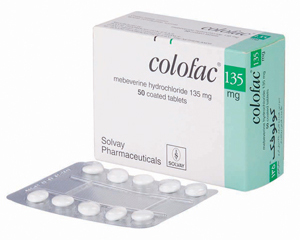
Colofac
View Options
This website provides general information about medicines for educational purposes only. Always consult your doctor or pharmacist before taking any medication.
Choose Your Medicine
Select dosage and quantity
Online Consultation
Reviewed by a qualified physician
Fast, Discreet Delivery
Delivered to your door
Medical Information
About This Medicine
Colofac is an antispasmodic medicine containing mebeverine hydrochloride, used to relieve the symptoms of irritable bowel syndrome (IBS) and other conditions associated with intestinal spasm. Available in both standard-release tablets (135 mg) and modified-release capsules (Colofac MR, 200 mg), it acts directly on the smooth muscle of the intestinal wall to reduce painful cramping and spasm without the systemic anticholinergic effects associated with older antispasmodic medicines.
Irritable Bowel Syndrome
IBS is a common functional gastrointestinal condition characterised by recurrent abdominal pain or discomfort, bloating, and changes in bowel habit (diarrhoea, constipation, or alternating between the two). The exact cause of IBS is multifactorial and incompletely understood, but abnormal gut motility and heightened visceral sensitivity are important features. Mebeverine directly relaxes the intestinal smooth muscle, reducing the abnormal contractile patterns that contribute to IBS-related cramping and pain. It does not affect bowel habit significantly and is therefore suitable for patients with IBS of any subtype.
Advantages Over Older Antispasmodics
Colofac has a distinct advantage over older antispasmodics such as hyoscine butylbromide (Buscopan) in that it does not block muscarinic (anticholinergic) receptors systemically. This means it does not cause the dry mouth, blurred vision, urinary retention, constipation, or tachycardia associated with anticholinergic drugs. This makes it a particularly suitable option for patients who are elderly, have glaucoma, or have urinary problems, where anticholinergic drugs should be avoided.
Long-term Management of IBS
IBS is often a long-term condition requiring ongoing management. Colofac can be used continuously for prolonged periods in patients who find it beneficial, as it has a good safety and tolerability profile. It is most effective when used as part of a broader IBS management strategy that includes dietary modification (low FODMAP diet, adequate hydration, regular meals), stress management, and regular physical activity. Patients who do not respond adequately to mebeverine after 4 to 6 weeks should seek medical review, as other IBS therapies may be more appropriate.
Usage & Dosage
How to Take Colofac Tablets
Colofac 135 mg standard-release tablets are taken three times daily, 20 minutes before meals. This timing is important because mebeverine works best when it is already present in the gut before the meal-triggered wave of activity and spasm begins. Swallow the tablets whole with a glass of water.
Colofac MR 200 mg modified-release capsules are taken twice daily — one capsule in the morning and one in the evening, approximately 20 minutes before breakfast and the evening meal.
Long-term Use
Colofac can be used for as long as needed to manage IBS symptoms. It does not cause dependency or tolerance. If symptoms change significantly or do not respond to treatment, see your doctor to reassess. Colofac works best as part of a broader approach that includes dietary adjustments, stress management, and regular exercise.
Colofac 135 mg standard-release tablets:
Adults (18 years and over): One tablet (135 mg) three times daily, taken 20 minutes before meals. The maximum daily dose is 405 mg (three tablets).
Colofac MR 200 mg modified-release capsules:
Adults (18 years and over): One capsule (200 mg) twice daily, taken 20 minutes before the morning and evening meals.
Children and adolescents: Colofac tablets are not recommended for children under 10 years. Use in children aged 10 to 18 years should be under medical supervision. Colofac MR capsules are not recommended for those under 18 years.
Elderly patients: No specific dose adjustment is required for elderly patients, though the general principle of using the lowest effective dose applies. The absence of anticholinergic effects makes mebeverine particularly useful in elderly patients with IBS.
Renal and hepatic impairment: Limited data are available; use with caution in severe impairment. The predominantly local mechanism of action and minimal systemic exposure suggest significant dose adjustment is unlikely to be needed in mild to moderate impairment, but medical advice should be sought.
Treatment should be reviewed after 4 to 6 weeks if there has been no response.
Side Effects
Common Side Effects
Colofac is one of the best-tolerated medicines used in IBS, with very few side effects. This is because mebeverine has minimal systemic absorption and acts directly and selectively on the gut muscle. Occasionally reported effects include:
- Skin rash, itching, or hives (hypersensitivity reactions — uncommon)
- Facial swelling (very rare allergic reaction)
When to Seek Advice
If you develop a rash, facial swelling, or difficulty breathing after taking Colofac, stop the medicine and seek medical advice, as this may be a rare allergic reaction. If your IBS symptoms worsen rather than improve, or if you develop new symptoms such as rectal bleeding, unexplained weight loss, or persistent severe pain, see your doctor.
Warnings & Precautions
When to Seek Medical Advice
While Colofac is effective for the symptomatic management of IBS, it is important that the diagnosis of IBS has been confirmed by a clinician before starting treatment. Symptoms such as persistent abdominal pain, unexplained weight loss, rectal bleeding, a change in bowel habit lasting more than 6 weeks in patients over 50 years, or a family history of bowel cancer require medical investigation to exclude serious underlying pathology before an antispasmodic is used. Colofac treats symptoms but does not address any underlying organic cause.
Use in Pregnancy and Breastfeeding
The safety of mebeverine in pregnancy has not been established in controlled clinical trials. Animal studies have not suggested teratogenicity, but Colofac should be used in pregnancy only when clearly necessary and after careful discussion with a healthcare professional. Similarly, it is not known whether mebeverine is excreted in breast milk. In the absence of established safety data, breastfeeding women should seek medical advice before using Colofac. For mild IBS symptoms, dietary and lifestyle measures may be preferable to medication during pregnancy and breastfeeding.
Colofac tablets contain lactose as an excipient. Patients with rare hereditary problems of galactose intolerance, Lapp lactase deficiency, or glucose-galactose malabsorption should not take this medicine.
Contraindications
Colofac is contraindicated in the following circumstances:
- Known hypersensitivity or allergy to mebeverine hydrochloride or any excipient in the formulation (including lactose in tablet formulations)
- Paralytic ileus (absence of intestinal movement)
- Use in children under 10 years for standard tablets; Colofac MR is not recommended under 18 years
- Pregnancy should be assessed on an individual benefit-risk basis - not strictly contraindicated but data are limited
- Porphyria (as with many medicines, caution is required in patients with this metabolic disorder)
Frequently Asked Questions
How long does it take for Colofac to work for IBS?
Can I take Colofac every day long term?
Is Colofac the same as Buscopan for IBS?
Can I take Colofac if I am pregnant?
Does Colofac help with bloating and wind as well as cramps?
Dr. Ross Elledge
General Practitioner · General & Family Medicine
Verified Healthcare Professional
TopDoctors Profile