
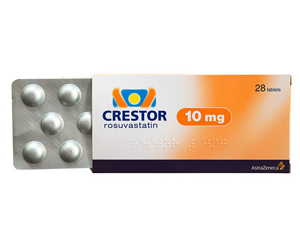
Crestor
View Options
This website provides general information about medicines for educational purposes only. Always consult your doctor or pharmacist before taking any medication.
Choose Your Medicine
Select dosage and quantity
Online Consultation
Reviewed by a qualified physician
Fast, Discreet Delivery
Delivered to your door
Medical Information
About This Medicine
Crestor (rosuvastatin) is a prescription statin medicine used to lower elevated levels of cholesterol and triglycerides in the blood, and to reduce the risk of cardiovascular events such as heart attack and stroke. It belongs to the class of medicines known as HMG-CoA reductase inhibitors, and is one of the most potent statins available, capable of reducing low-density lipoprotein (LDL) cholesterol by up to 55-65% at standard doses. Crestor is available in tablets of 5 mg, 10 mg, 20 mg, and 40 mg.
Indications and Clinical Use
Crestor is indicated for primary hypercholesterolaemia (raised cholesterol without another underlying disease), mixed dyslipidaemia (raised cholesterol and triglycerides), and familial hypercholesterolaemia. It is also licensed for the prevention of major cardiovascular events in patients who have an elevated cardiovascular risk, including those who have already experienced a heart attack or stroke, and in patients with elevated C-reactive protein (CRP) even in the absence of markedly elevated LDL cholesterol (based on the JUPITER trial).
Mechanism of Action
Rosuvastatin works by competitively inhibiting HMG-CoA reductase, the rate-limiting enzyme in the hepatic synthesis of cholesterol. Reducing intracellular cholesterol synthesis within the liver upregulates LDL receptors on hepatocyte surfaces, increasing the uptake and clearance of circulating LDL particles from the bloodstream. This dual mechanism — reducing production and increasing clearance — gives Crestor its particularly potent LDL-lowering effect. Rosuvastatin also reduces VLDL production and modestly raises HDL cholesterol, contributing to a comprehensive improvement in the lipid profile.
Treatment with Crestor is generally long-term and should be combined with lifestyle changes including a heart-healthy diet, regular physical activity, avoidance of smoking, and moderation of alcohol intake. The medicine alone is not a substitute for these measures.
Usage & Dosage
Crestor is taken orally once daily, at any time of day, with or without food. Unlike some other statins, it does not need to be taken in the evening, as cholesterol synthesis in the liver is not as strictly nocturnal-dominant for rosuvastatin given its longer half-life.
Starting Treatment
Before initiating Crestor, a fasting lipid profile should be measured and baseline liver function tests and creatine kinase (CK) levels noted if clinically indicated. Secondary causes of hyperlipidaemia, such as hypothyroidism, diabetes, or excessive alcohol intake, should be identified and managed. Patients should be counselled that Crestor is a long-term treatment and that stopping it will allow cholesterol levels to rise again relatively quickly.
Lifestyle and Dietary Considerations
Dietary modification remains an important adjunct to statin therapy. Patients should be encouraged to reduce saturated fat intake, increase dietary fibre (particularly soluble fibre from oats and pulses), and include plant sterols or stanols from fortified foods if appropriate. Large quantities of grapefruit juice should be avoided, although the interaction is less clinically significant with rosuvastatin than with CYP3A4-metabolised statins. Patients of Asian descent (particularly those of Chinese or Japanese origin) may have higher rosuvastatin plasma levels at equivalent doses and should generally begin at 5 mg.
The usual starting dose of Crestor for most adults is 5 mg to 10 mg once daily, with the dose adjusted after four weeks based on the lipid response and treatment goals. The maximum recommended dose is 40 mg once daily, which is reserved for patients with severe hypercholesterolaemia who have not achieved target LDL levels on lower doses and are under specialist supervision.
In patients of Asian origin, treatment should be started at 5 mg daily due to pharmacokinetic differences resulting in approximately twice the systemic exposure compared with Caucasian patients. The 40 mg dose is not recommended in Asian patients.
For patients with mild to moderate renal impairment, no dose adjustment is usually necessary. In severe renal impairment (creatinine clearance below 30 mL/min), doses above 20 mg are contraindicated. Crestor is not recommended in patients with active liver disease or unexplained persistent elevations in serum transaminases. In elderly patients, no specific dose adjustment is required based on age alone, but clinical judgement should guide starting dose selection.
Side Effects
Crestor is well tolerated by most people, but like all statins, it can cause side effects in some individuals. The risk of muscle-related adverse effects increases with higher doses and with certain drug interactions.
Common Side Effects
- Headache
- Abdominal pain, nausea, constipation, or diarrhoea
- Myalgia (muscle aches or pain without significant CK elevation) — the most commonly reported adverse effect
- Dizziness
- Proteinuria and haematuria (particularly at higher doses, detected on urine dipstick; usually transient and not clinically significant)
Serious Side Effects
Patients should stop taking Crestor and seek immediate medical advice if they develop:
- Myopathy or rhabdomyolysis: unexplained muscle pain, weakness, or tenderness, particularly if accompanied by dark brown urine (myoglobinuria), fever, or malaise; rhabdomyolysis is a rare but serious condition that can cause acute kidney injury and requires urgent treatment
- Raised liver enzymes: significant elevations in transaminases are uncommon but have been reported; jaundice, fatigue, or abdominal discomfort should be investigated
- New-onset diabetes: statins, including rosuvastatin, have been associated with a small increase in the risk of developing type 2 diabetes, particularly in patients with pre-existing risk factors
- Immune-mediated necrotising myopathy (IMNM): a rare autoimmune muscle disorder that may persist even after stopping the statin
Warnings & Precautions
Crestor should be used with caution in several specific patient populations and circumstances, and there are important warnings regarding muscle and liver toxicity.
Myopathy and Rhabdomyolysis Risk
The risk of myopathy and, in severe cases, rhabdomyolysis is a class effect of all statins and is dose-dependent. The risk is higher in patients who are elderly, have low body weight or thyroid disorders, and those taking interacting medicines. Patients should be advised to report any unexplained muscle pain, tenderness, weakness, or dark urine immediately. Predisposing conditions such as hypothyroidism and renal impairment should be corrected before or during treatment. Creatine kinase should be measured if symptoms develop; if CK is markedly elevated, Crestor should be discontinued.
Drug Interactions
Rosuvastatin plasma levels are increased by ciclosporin (contraindicated), certain antiretroviral combinations, and gemfibrozil. Concomitant use with fibrates (particularly gemfibrozil) and niacin at lipid-lowering doses increases the risk of myopathy. Anticoagulation with warfarin may be affected by rosuvastatin, and INR should be monitored when starting or stopping treatment.
Patients should inform their prescriber and pharmacist of all medicines, supplements, and herbal products they are taking before starting Crestor.
Contraindications
Crestor must not be used in the following situations:
- Known hypersensitivity to rosuvastatin or any excipients
- Active liver disease, including unexplained persistent elevated serum transaminases
- Severe renal impairment (creatinine clearance below 30 mL/min) at doses above 20 mg
- Myopathy
- Concomitant use with ciclosporin
- Pregnancy — rosuvastatin is teratogenic and must be stopped before attempting to conceive
- Breastfeeding
- Women of childbearing potential not using adequate contraception
- Patients of Asian origin: doses above 20 mg should be used with extreme caution and are generally avoided
- Unexplained persistent CK elevations more than five times the upper limit of normal
Frequently Asked Questions
Can I take Crestor at any time of day?
Why do people of Asian background need a lower dose of Crestor?
What are the warning signs of a serious muscle problem with Crestor?
Is it safe to take Crestor while trying to conceive?
Can Crestor cause diabetes?
Dr. Ross Elledge
General Practitioner · General & Family Medicine
Verified Healthcare Professional
TopDoctors Profile