
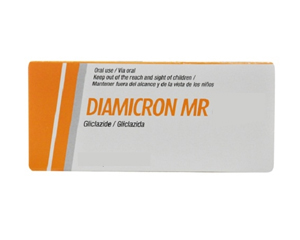
Diamicron MR
View Options
This website provides general information about medicines for educational purposes only. Always consult your doctor or pharmacist before taking any medication.
Choose Your Medicine
Select dosage and quantity
Online Consultation
Reviewed by a qualified physician
Fast, Discreet Delivery
Delivered to your door
Medical Information
About This Medicine
Diamicron (gliclazide) is an oral antidiabetic medicine belonging to the sulphonylurea class, used in the management of type 2 diabetes mellitus in adults when diet, exercise, and lifestyle modifications alone have not achieved adequate blood glucose control. It is available in two formulations: standard-release tablets of 80 mg, typically taken two to three times daily; and Diamicron MR (modified-release) tablets of 30 mg, taken once daily in the morning. Gliclazide is one of the most widely prescribed sulphonylureas in the UK, favoured for its relatively favourable safety profile and the once-daily convenience of the MR formulation.
Mechanism of Action
Gliclazide lowers blood glucose by stimulating the pancreatic beta cells to release more insulin. It does this by binding to and blocking ATP-sensitive potassium channels on the surface of beta cells, leading to membrane depolarisation, calcium influx, and exocytosis of insulin granules. This mechanism is glucose-independent, meaning insulin release occurs irrespective of the prevailing blood glucose concentration, which is why hypoglycaemia is a recognised risk.
Antioxidant Properties
Gliclazide has a unique structural feature compared with other sulphonylureas: an azabicyclo-octyl ring that confers additional antioxidant properties. This may be relevant to the protection of beta cell function over time and could contribute to favourable cardiovascular outcomes observed in some studies.
Diamicron MR tablets use a hydrophilic polymer matrix to provide a gradual, sustained release of gliclazide over 24 hours, which closely mimics the physiological insulin secretion pattern and is associated with a lower frequency of hypoglycaemia than the immediate-release formulation.
Usage & Dosage
Diamicron is indicated as an antidiabetic treatment in adults with type 2 diabetes mellitus, either as monotherapy or in combination with other antidiabetic agents such as metformin, DPP-4 inhibitors, SGLT-2 inhibitors, or insulin, when glycaemic control is insufficient with existing treatment. It is not effective in type 1 diabetes, where endogenous insulin secretion is absent.
How to Take Diamicron
Diamicron standard-release tablets (80 mg) should be taken with or just before meals to reduce the risk of hypoglycaemia. The dose is usually divided across two to three meals per day. Diamicron MR tablets (30 mg) are taken once daily with breakfast; the modified-release mechanism means the dose should always be taken with a meal. Skipping a meal after taking Diamicron MR significantly increases the risk of hypoglycaemia and should be avoided.
Self-Monitoring and Hypoglycaemia Awareness
Patients taking gliclazide should be educated about the recognition and management of hypoglycaemia. Symptoms include sweating, trembling, palpitations, hunger, pallor, and confusion. Patients should carry a source of fast-acting sugar such as glucose tablets, fruit juice, or sugary sweets at all times. Regular blood glucose monitoring, particularly before meals and during periods of increased physical activity or reduced food intake, is important for safe dose titration and ongoing management.
For Diamicron MR, the usual starting dose is 30 mg once daily taken with breakfast. The dose may be increased in increments of 30 mg at intervals of at least four weeks, based on blood glucose and HbA1c response, up to a maximum of 120 mg once daily. Some patients may require 60 mg once daily as an effective maintenance dose.
For Diamicron standard-release tablets, the initial dose is typically 40-80 mg daily, with gradual titration up to a maximum of 320 mg daily in divided doses (usually two to three times daily with meals). When doses exceed 160 mg daily, the dose should be taken in divided portions.
In elderly patients, the starting dose should be lower and titration more cautious, given the increased risk of severe and prolonged hypoglycaemia. In patients with mild to moderate renal impairment, gliclazide may be used with care, and blood glucose should be monitored more frequently. It should generally be avoided in severe renal or hepatic impairment. Diamicron MR should be omitted on the morning of planned surgery under general anaesthesia to reduce hypoglycaemia risk.
Side Effects
Diamicron is generally well tolerated, but sulphonylurea-related side effects do occur and patients should be made aware of them before starting treatment.
Common Side Effects
- Hypoglycaemia — the most clinically important adverse effect; the risk is higher with the standard-release formulation and increases with age, renal impairment, irregular meals, excessive alcohol, and drug interactions; symptoms include sweating, shaking, dizziness, pallor, and confusion
- Weight gain — modest increases in body weight can occur, related to increased insulin secretion
- Gastrointestinal disturbance: nausea, dyspepsia, diarrhoea, or constipation, usually mild and often transient
- Skin reactions: rash, urticaria, or pruritus, which may resolve spontaneously
Serious Side Effects
Patients should seek immediate medical attention for:
- Severe hypoglycaemia: loss of consciousness, seizures, or inability to take oral glucose require emergency medical treatment including intravenous glucose or intramuscular glucagon; severe hypoglycaemia can be life-threatening if not treated promptly
- Hepatic dysfunction: rare cases of cholestatic jaundice and hepatitis have been reported; jaundice, dark urine, or abdominal pain warrant liver function testing
- Haematological disorders: rare cases of leucopenia, thrombocytopenia, or anaemia; persistent unexplained bruising or infection should prompt a blood count
- Hyponatraemia: rare with gliclazide but reported with sulphonylurea class
Warnings & Precautions
Diamicron carries important warnings related primarily to the risk of hypoglycaemia, which is an inherent property of all insulin secretagogues.
Hypoglycaemia Risk
Hypoglycaemia is the most important adverse effect of gliclazide. The risk is greatest in elderly patients, those with irregular meal patterns, those who exercise strenuously without adjusting their dose, patients with renal or hepatic impairment, and those taking interacting medicines. Patients should be counselled explicitly about hypoglycaemia recognition and management before starting treatment. Consumption of alcohol, particularly in large quantities or without food, significantly potentiates the risk.
All patients should carry a source of rapid glucose at all times, and their close contacts should be informed of what to do if the patient becomes hypoglycaemic and cannot manage it themselves. Patients who drive are obligated by DVLA guidance to check blood glucose before and during long journeys if they are using a sulphonylurea, and should not drive if their blood glucose is below 4 mmol/L.
Peri-operative Management
Gliclazide should be withheld on the morning of surgery or procedures requiring fasting. Blood glucose should be monitored closely and short-acting insulin used if needed during the nil-by-mouth period. The standard-release formulation can usually be restarted with the first post-operative meal; the MR formulation should be restarted with breakfast once the patient is eating reliably.
Contraindications
Diamicron must not be used in the following situations:
- Type 1 diabetes mellitus or diabetic ketoacidosis
- Known hypersensitivity to gliclazide, other sulphonylureas, sulphonamides, or any excipients
- Severe renal impairment (creatinine clearance below 30 mL/min)
- Severe hepatic impairment
- Pregnancy — sulphonylureas can cause neonatal hypoglycaemia and are not recommended; insulin is the preferred agent
- Breastfeeding
- Patients treated with miconazole (oral or oromucosal gel) — severe potentiation of hypoglycaemia
- Patients with rare galactose intolerance, total lactase deficiency, or glucose-galactose malabsorption (due to excipient content in some formulations)
Frequently Asked Questions
Why must I eat when taking Diamicron?
What are the signs of low blood sugar and what should I do?
Can I drink alcohol whilst taking Diamicron?
Does Diamicron cause weight gain?
Is Diamicron MR better than standard Diamicron tablets?
Dr. Ross Elledge
General Practitioner · General & Family Medicine
Verified Healthcare Professional
TopDoctors Profile