
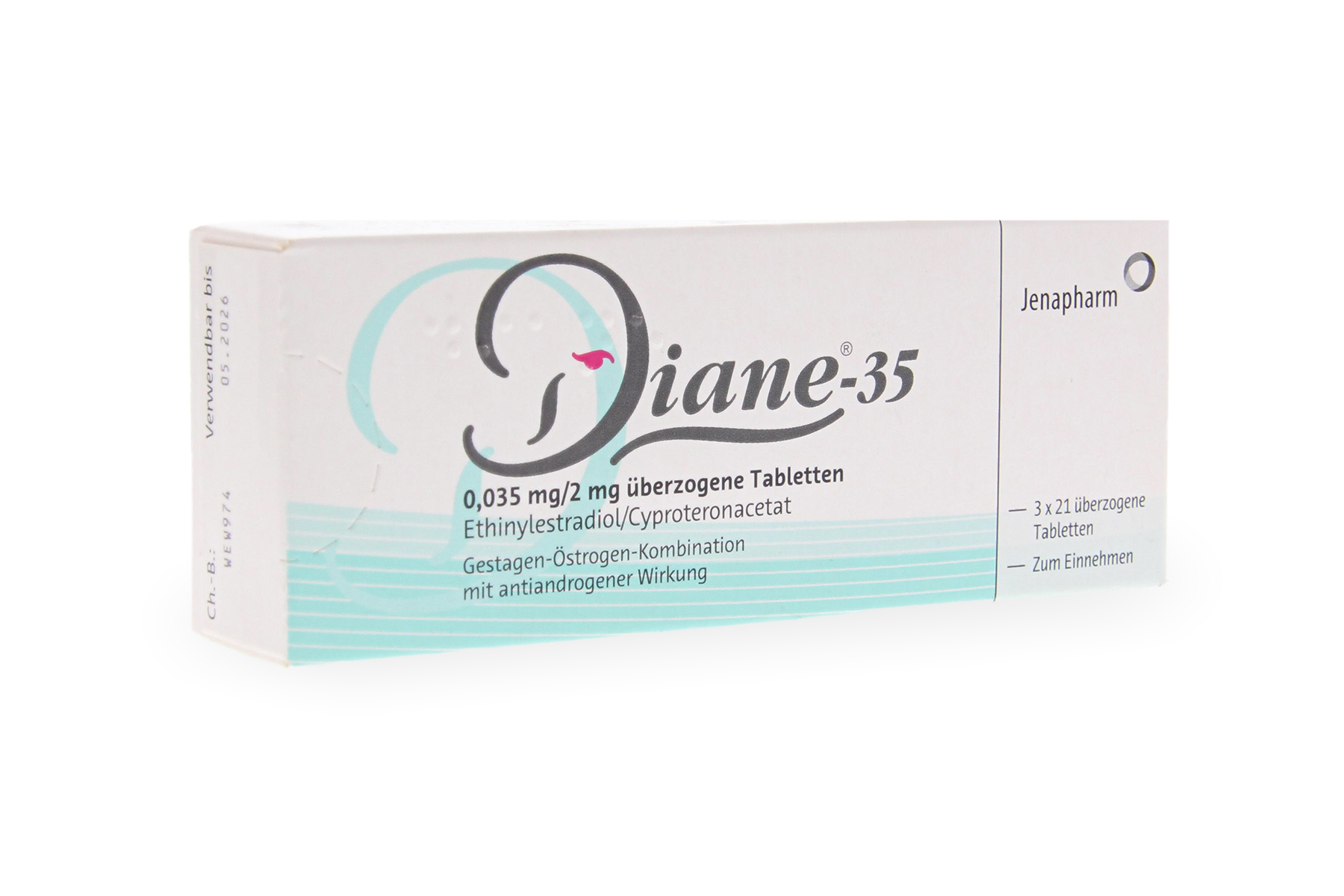
Diane-35
View Options
This website provides general information about medicines for educational purposes only. Always consult your doctor or pharmacist before taking any medication.
Choose Your Medicine
Select dosage and quantity
Online Consultation
Reviewed by a qualified physician
Fast, Discreet Delivery
Delivered to your door
Medical Information
About This Medicine
Dianette (also known as Diane-35) is a hormonal preparation containing co-cyprindiol — a combination of cyproterone acetate 2 mg and ethinylestradiol 35 micrograms — used primarily to treat severe acne and hirsutism (excess hair growth) in women of childbearing age when these conditions have failed to respond adequately to other treatments, including oral antibiotics. Dianette also provides effective contraception and is therefore used in women who require both anti-androgen therapy and birth control simultaneously.
Why Dianette Is Used
Severe acne and hirsutism in women are commonly driven by androgenic hormones, including testosterone and dihydrotestosterone (DHT). Cyproterone acetate, the primary active ingredient in Dianette, is a potent synthetic progestogen with strong anti-androgenic activity. It competes with androgens for binding to androgen receptors in target tissues such as the skin and hair follicles, reducing the stimulation of sebaceous glands (which produce the excess oil that contributes to acne) and reducing the sensitivity of hair follicles to androgens.
Contraceptive Mechanism
Ethinylestradiol, a synthetic oestrogen, is included at a dose of 35 micrograms — higher than many modern combined oral contraceptives. The combined hormonal effect provides reliable contraception through suppression of ovulation, thickening of cervical mucus to prevent sperm penetration, and thinning of the uterine lining to reduce the likelihood of implantation.
Duration of Use
Dianette is not intended as a long-term contraceptive. It should be used only for the treatment of androgen-dependent conditions and discontinued once the skin or hair condition has been controlled for three to four months, at which point patients who need ongoing contraception should switch to a standard combined oral contraceptive pill.
Usage & Dosage
Dianette is indicated for the treatment of severe acne that is not adequately controlled by topical treatments or oral antibiotics, and moderate to severe hirsutism in women. Its use as a contraceptive is incidental to its main therapeutic purpose.
How to Take Dianette
Each pack of Dianette contains 21 active tablets. One tablet should be taken daily for 21 consecutive days, followed by a seven-day tablet-free interval during which a withdrawal bleed (similar to a period) typically occurs. The next pack begins on day eight, regardless of whether bleeding has stopped. Tablets should be taken at approximately the same time each day to maintain consistent hormonal levels and contraceptive reliability.
Starting Dianette
Dianette should ideally be started on the first day of the menstrual cycle (day 1 of bleeding). If started on day 2-5, additional contraceptive precautions (condoms) should be used for the first seven days. If starting after a hormonal contraceptive, follow the standard pill-switching guidance. A pregnancy test should be performed if there is any doubt about pregnancy status before starting.
Reviewing Treatment Response
The anti-androgenic benefits of Dianette, including improvement in acne and reduction in hirsutism, typically take three to six months to become fully apparent. Once the condition has been adequately controlled for three to four cycles, treatment should be stopped and the patient switched to an alternative contraceptive if needed. Acne or hirsutism may recur after discontinuation.
Dianette is taken as one tablet daily for 21 days, followed by a seven-day break, as described for all combined oral contraceptive formulations. There is no dose titration — the fixed-dose combination of cyproterone acetate 2 mg and ethinylestradiol 35 micrograms is the only formulation available.
If a dose is missed, the standard missed pill guidance for combined oral contraceptives applies. If a tablet is missed by fewer than 12 hours, take it as soon as you remember and continue the pack as normal. If more than 12 hours have elapsed since the missed dose, take the most recently missed pill immediately (even if this means taking two in one day), continue the rest of the pack normally, and use additional contraception for the next seven days.
Dianette is not suitable for use in postmenopausal women or girls who have not yet started their periods. It should not be used in women with significant cardiovascular risk factors without careful individual risk assessment and specialist review.
Side Effects
Dianette shares the side effect profile of combined oral contraceptives, with additional considerations related to the anti-androgenic component.
Common Side Effects
- Nausea, particularly in the first weeks of treatment, usually improving with time
- Breast tenderness or enlargement
- Headache or migraine
- Mood changes, including low mood or irritability
- Reduced libido
- Irregular or absent withdrawal bleeds
- Slight weight change
- Contact lens intolerance due to mild corneal changes
Serious Side Effects
Patients should seek urgent medical attention for:
- Venous thromboembolism (VTE): Dianette carries a higher risk of blood clots in the legs (deep vein thrombosis) or lungs (pulmonary embolism) than lower-dose combined oral contraceptives. Symptoms include unilateral leg pain, swelling, redness, breathlessness, chest pain, or coughing up blood
- Arterial thrombosis: stroke or heart attack, though rare, can occur; sudden severe headache, vision loss, one-sided weakness, or chest pain require emergency assessment
- Liver tumours: very rare benign or malignant hepatic tumours have been associated with prolonged use of combined oral contraceptive hormones
- Hypertension: blood pressure may rise during treatment; monitoring is recommended
- Cervical or breast cancer: long-term use is associated with a small increase in risk
Warnings & Precautions
Dianette carries important warnings related to cardiovascular risk and the need for treatment duration limits.
Venous Thromboembolism Risk
The risk of VTE with Dianette is higher than with many standard combined oral contraceptives, estimated at approximately two to four times the baseline risk in healthy non-users. The higher oestrogen dose (35 micrograms ethinylestradiol) compared with modern low-dose pills contributes to this increased risk. Dianette should not be used in women with known thrombophilia, prior VTE, prolonged immobility, or a strong family history of VTE under the age of 45. All women starting Dianette should be assessed for VTE risk factors before initiation.
Duration of Treatment and Switching
Dianette should not be used as a long-term contraceptive and should not be continued beyond what is needed for the underlying skin or hair condition. Once acne or hirsutism is well controlled, typically after three to four months, the medicine should be stopped. Women who require ongoing contraception after stopping Dianette should switch to a standard combined oral contraceptive pill with a lower VTE risk profile.
Women with migraine with aura, uncontrolled hypertension, or diabetes with vascular complications should not use Dianette, as these conditions compound the arterial and venous risk associated with oestrogen-containing contraceptives.
Contraindications
Dianette must not be used in the following situations:
- Current or previous venous thromboembolism (deep vein thrombosis or pulmonary embolism)
- Known thrombophilia (e.g., Factor V Leiden, antiphospholipid syndrome)
- Arterial thromboembolic disease (history of stroke, myocardial infarction, or angina)
- Migraine with aura
- Severe or multiple cardiovascular risk factors
- Uncontrolled hypertension
- Diabetes mellitus with vascular complications
- Severe liver disease or liver tumours
- Active or history of hormone-sensitive malignancies (e.g., breast or endometrial cancer)
- Pregnancy or suspected pregnancy
- Undiagnosed vaginal bleeding
- Women over 35 who smoke
Frequently Asked Questions
How long does Dianette take to improve acne?
How does Dianette's blood clot risk compare to other contraceptive pills?
Can I use Dianette purely as a contraceptive pill?
What should I switch to when I stop Dianette?
Does Dianette treat polycystic ovary syndrome (PCOS)?
Dr. Ross Elledge
General Practitioner · General & Family Medicine
Verified Healthcare Professional
TopDoctors Profile