
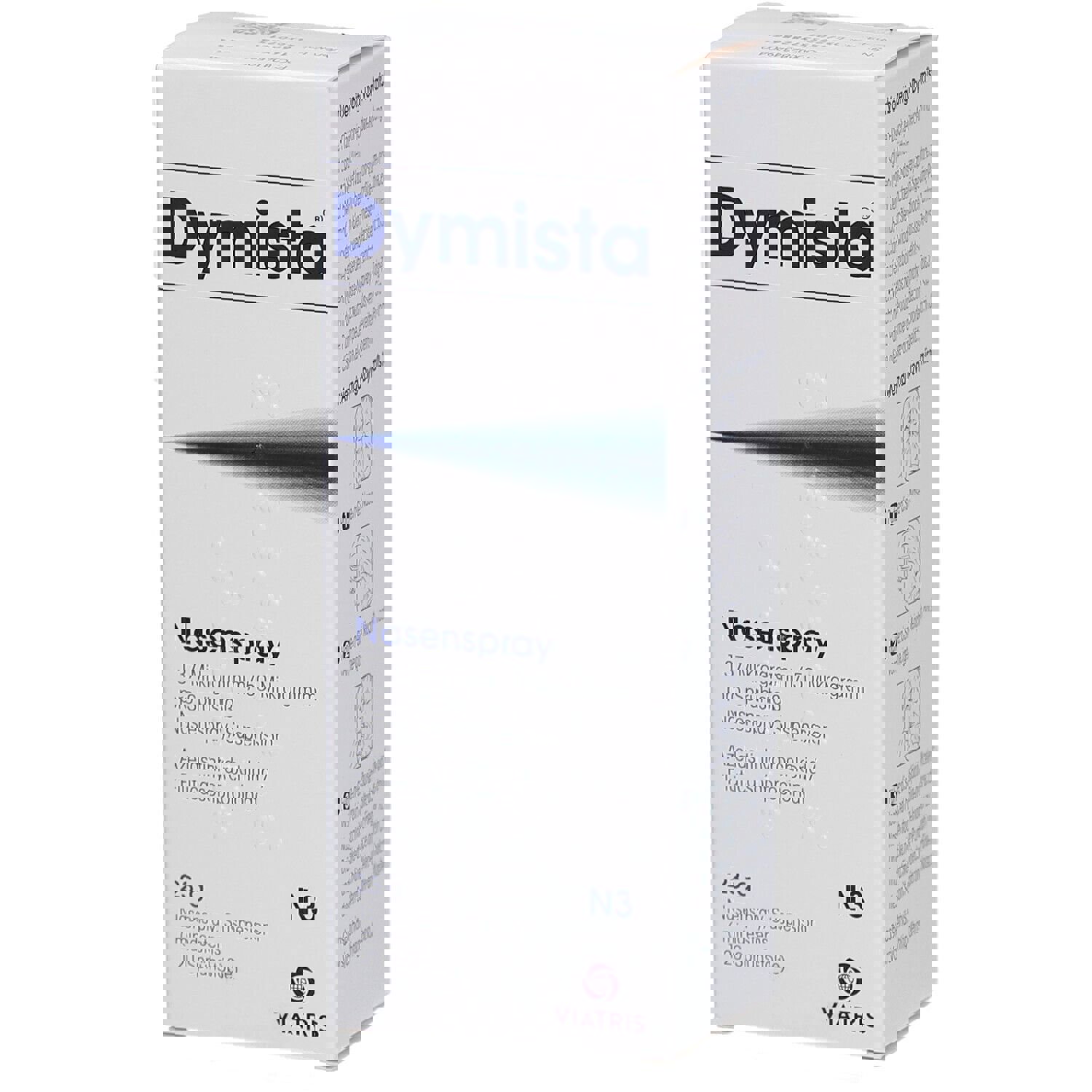
Dymista
View Options
This website provides general information about medicines for educational purposes only. Always consult your doctor or pharmacist before taking any medication.
Choose Your Medicine
Select dosage and quantity
Online Consultation
Reviewed by a qualified physician
Fast, Discreet Delivery
Delivered to your door
Medical Information
About This Medicine
Dymista is a dual-action prescription nasal spray containing two active ingredients: azelastine (a second-generation antihistamine) and fluticasone propionate (an intranasal corticosteroid). This combination targets two key pathways in allergic rhinitis inflammation simultaneously, providing more comprehensive symptom relief than either ingredient alone.
Why the Combination Matters
Allergic rhinitis involves both histamine-mediated immediate reactions (sneezing, itching, watery discharge) and slower corticosteroid-responsive inflammatory processes (congestion, chronic runny nose). Azelastine rapidly blocks histamine receptors and also inhibits other inflammatory mediators, while fluticasone reduces mucosal inflammation and oedema. Clinical studies have shown that Dymista provides greater and faster relief than either fluticasone or azelastine alone, particularly for nasal congestion.
Indications
Dymista is licensed for the treatment of moderate-to-severe seasonal and perennial allergic rhinitis in adults and adolescents aged 12 years and over, particularly when monotherapy with antihistamine or intranasal corticosteroid has not provided adequate control.
Usage & Dosage
How to Use Dymista
Administer one spray into each nostril twice daily (morning and evening). Before first use, prime the pump by actuating it several times until a fine mist appears. Gently blow your nose before each use. Tilt your head slightly forward, insert the nozzle into one nostril, and spray while breathing in gently through the nose. Alternate nostrils and avoid spraying towards the nasal septum.
Practical Tips
Clean the nozzle regularly to prevent blockage. Shake the bottle gently before use. The spray contains a fine, almost odourless mist. Consistent daily use produces the best results — Dymista is most effective when used regularly throughout the allergy season rather than on an as-needed basis only.
Each Dymista actuation delivers azelastine hydrochloride 137 mcg and fluticasone propionate 50 mcg. The recommended dose is one spray per nostril twice daily (total: 548 mcg azelastine + 200 mcg fluticasone daily). The spray bottle contains 120 actuations. Use within 6 months of first opening.
Side Effects
Common Side Effects
The most commonly reported side effect is an unpleasant taste in the mouth following administration, which is a recognised effect of azelastine nasal sprays. Headache and nasal discomfort (dryness, irritation, or epistaxis – nosebleeds) are also reported. These are usually mild and do not require treatment discontinuation.
Corticosteroid-Related Effects
With prolonged use, intranasal corticosteroids can occasionally cause nasal septal perforation and, rarely, systemic effects including adrenal suppression. Candidiasis (thrush) of the nose or throat has been reported with intranasal steroids. If you develop persistent nosebleeds, nasal crusting, or loss of smell, contact your prescriber.
Warnings & Precautions
Avoid spraying into the eyes. Do not share the nasal spray with other people. Use with caution in patients with active or quiescent tuberculosis, untreated fungal or bacterial nasal infections, or herpes simplex ocular infection. Prolonged intranasal corticosteroid use may affect growth in children; growth should be monitored in children on long-term treatment. Systemic corticosteroid effects are unlikely at recommended doses but may occur in susceptible individuals.
Contraindications
Contraindicated in patients with known hypersensitivity to azelastine, fluticasone propionate, or any excipient. Not recommended in children under 12 years. Use in pregnancy should be discussed with a prescriber; short-term use at recommended doses is generally considered acceptable for severe rhinitis in pregnancy.
Frequently Asked Questions
How quickly does Dymista work?
Can I use Dymista and antihistamine tablets at the same time?
Is Dymista safe for children?
Dr. Ross Elledge
General Practitioner · General & Family Medicine
Verified Healthcare Professional
TopDoctors Profile