
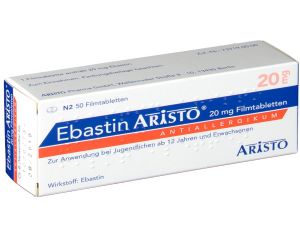
Ebastin
This website provides general information about medicines for educational purposes only. Always consult your doctor or pharmacist before taking any medication.
Choose Your Medicine
Select dosage and quantity
Online Consultation
Reviewed by a qualified physician
Fast, Discreet Delivery
Delivered to your door
Medical Information
About This Medicine
Ebastine is a second-generation, non-sedating antihistamine used for the relief of allergic rhinitis symptoms and chronic urticaria. It is converted in the liver to its active metabolite, carebastine, which provides prolonged H1 receptor blockade. Ebastine has a long duration of action allowing once-daily dosing and minimal anticholinergic effects.
Usage & Dosage
How to Take Ebastine
Take one tablet daily, with or without food. Ebastine is a non-sedating second-generation antihistamine with a 24-hour duration of action, so once-daily dosing provides round-the-clock allergy relief. Take at the same time each day for consistent symptom control. For seasonal allergic rhinitis, begin treatment before the allergy season starts. For perennial rhinitis or chronic urticaria, treatment is taken continuously. If you miss a dose, take it as soon as you remember, but skip it if it is close to your next scheduled dose.
10 mg to 20 mg once daily, depending on symptom severity.
Side Effects
Common Side Effects
Ebastine is a second-generation antihistamine and is classified as non-sedating. It is well tolerated by most patients. The most commonly reported side effects are:
- Headache
- Dry mouth
- Drowsiness (uncommon)
- Abdominal discomfort
- Nausea
Cardiac Considerations
Ebastine and its active metabolite carebastine can prolong the QT interval at high doses. While clinically significant QT prolongation is uncommon at the standard 10 mg dose, ebastine should be used with caution in patients with known QT prolongation, electrolyte imbalances (low potassium or magnesium), or in combination with other QT-prolonging medicines. Seek medical advice if you experience palpitations or an irregular heartbeat.
Warnings & Precautions
Use with caution in hepatic impairment (reduced metabolism to active form). Avoid concurrent use with strong CYP3A4 inhibitors.
Contraindications
Contraindicated in known hypersensitivity to ebastine and severe hepatic impairment.
Frequently Asked Questions
Is ebastine the same as cetirizine?
Dr. Ross Elledge
General Practitioner · General & Family Medicine
Verified Healthcare Professional
TopDoctors Profile