
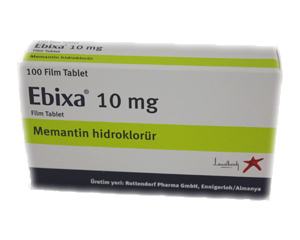
Ebixa
View Options
This website provides general information about medicines for educational purposes only. Always consult your doctor or pharmacist before taking any medication.
Choose Your Medicine
Select dosage and quantity
Online Consultation
Reviewed by a qualified physician
Fast, Discreet Delivery
Delivered to your door
Medical Information
About This Medicine
Ebixa contains memantine, a low-to-moderate affinity, voltage-dependent, uncompetitive N-methyl-D-aspartate (NMDA) receptor antagonist licensed in the UK for the treatment of moderate-to-severe Alzheimer's disease. It is the only licensed treatment in the UK for this stage of dementia, distinct from the cholinesterase inhibitors used for mild-to-moderate disease.
How Memantine Works
In Alzheimer's disease, excitotoxicity — the toxic overstimulation of neurons by the excitatory neurotransmitter glutamate — is believed to contribute to neuronal damage. By blocking NMDA receptors in a voltage-dependent manner, memantine reduces the background noise of excessive glutamate stimulation while preserving normal synaptic transmission needed for learning and memory. This is a fundamentally different mechanism from donepezil, rivastigmine, and galantamine (cholinesterase inhibitors).
Clinical Benefits
In clinical trials, Ebixa has been shown to slow the progression of cognitive decline, improve activities of daily living, and reduce behavioural disturbances in patients with moderate-to-severe Alzheimer's disease. It can be used as monotherapy or in combination with a cholinesterase inhibitor.
Usage & Dosage
How to Take Ebixa
Ebixa (memantine) oral solution or film-coated tablets can be taken once or twice daily, with or without food. Treatment always starts at a low dose and is increased gradually over four weeks to minimise side effects.
Dose Titration Schedule
- Week 1: 5 mg once daily
- Week 2: 10 mg once daily (or 5 mg twice daily)
- Week 3: 15 mg once daily (or 10 mg morning + 5 mg evening)
- Week 4 onwards (maintenance): 20 mg once daily (or 10 mg twice daily)
Take at the same time(s) each day. The oral solution (5 mg per pump actuation) is a useful alternative for patients who have difficulty swallowing tablets. Ebixa is a long-term medication — do not stop without speaking to a doctor, as the benefit depends on continued use.
Ebixa is available as 10 mg film-coated tablets and as an oral solution (5 mg/actuation pump). The maintenance dose is 20 mg once daily. Lower doses are required in patients with moderate renal impairment. Ebixa can be taken with or without food. The oral solution pump delivers an accurate measured dose and may be easier for patients with swallowing difficulties.
Side Effects
Common Side Effects
- Dizziness
- Headache
- Constipation
- Drowsiness
- High blood pressure (hypertension)
These effects are most common during the initial dose escalation phase and usually improve with continued treatment.
When to Seek Advice
If dizziness or drowsiness is significant, take care with activities such as driving or operating machinery until you know how Ebixa affects you. Very rarely, Ebixa can cause seizures, hallucinations, or confusion. Report any significant change in behaviour, new seizures, or sudden confusion to the prescribing doctor promptly — these may indicate the dose needs adjusting or the medicine is not suitable.
Warnings & Precautions
Use with caution in patients with renal tubular acidosis, conditions that raise urinary pH (diets heavy in dairy or certain medications), epilepsy, or a recent history of myocardial infarction. Dose reduction is required in moderate renal impairment. Memantine may interact with other NMDA antagonists (e.g. amantadine, ketamine, dextromethorphan); concurrent use is generally not recommended. The combination of memantine with L-DOPA, dopaminergic agonists, and anticholinergics may enhance their effects.
Contraindications
Contraindicated in patients with known hypersensitivity to memantine or any excipient. Not recommended in severe renal impairment without specialist guidance. Not licensed for mild Alzheimer's disease or other forms of dementia.
Frequently Asked Questions
Can memantine be combined with donepezil or other dementia drugs?
How will I know if Ebixa is working?
Is Ebixa suitable for all types of dementia?
Dr. Ross Elledge
General Practitioner · General & Family Medicine
Verified Healthcare Professional
TopDoctors Profile