
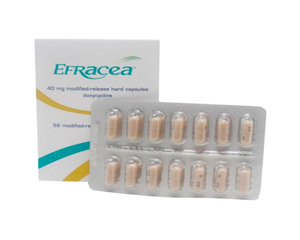
Efracea
View Options
This website provides general information about medicines for educational purposes only. Always consult your doctor or pharmacist before taking any medication.
Choose Your Medicine
Select dosage and quantity
Online Consultation
Reviewed by a qualified physician
Fast, Discreet Delivery
Delivered to your door
Medical Information
About This Medicine
Efracea (known as Oracea in some markets) is a prescription capsule containing a modified-release formulation of doxycycline 40 mg licensed for the treatment of inflammatory lesions (papules and pustules) of rosacea in adults. Unlike the standard antibiotic doses of doxycycline, the 40 mg modified-release dose achieves plasma concentrations that are anti-inflammatory but sub-antimicrobial, meaning it does not exert antibiotic effects and is much less likely to contribute to antibiotic resistance.
Anti-Inflammatory Mechanism
At 40 mg, doxycycline inhibits matrix metalloproteinases (MMPs) and reduces the production of inflammatory cytokines including reactive oxygen species. It also modulates the activity of demodex mites, which are thought to play a role in the inflammatory response in rosacea. This unique mechanism makes Efracea a valuable treatment that separates the anti-inflammatory benefits of doxycycline from the antimicrobial effects.
Who It Is For
Efracea is prescribed for adults with moderate to severe papulopustular rosacea, typically as monotherapy or in combination with a topical rosacea treatment such as metronidazole or azelaic acid gel.
Usage & Dosage
How to Take Efracea
Take one Efracea (doxycycline 40 mg modified-release) capsule once daily in the morning, on an empty stomach — at least one hour before or two hours after food. Taking it with food may reduce the anti-inflammatory effect. Swallow the capsule whole with a full glass of water and remain upright for at least 30 minutes afterwards to reduce the risk of oesophageal irritation.
Efracea contains a sub-antimicrobial dose of doxycycline — it is too low to work as an antibiotic but is sufficient to reduce the inflammatory activity that drives rosacea. This means it is unlikely to contribute to antibiotic resistance at this dose.
Duration of Treatment
Clinical improvement is typically seen after eight weeks. Treatment is often continued for three months or longer depending on the response. Your doctor will review the need for ongoing treatment at each appointment.
Efracea capsules contain 30 mg immediate-release doxycycline and 10 mg delayed-release doxycycline beads (total 40 mg). Take one capsule once daily on an empty stomach. Do not exceed the recommended dose. Avoid excessive sun exposure during treatment; doxycycline increases photosensitivity.
Side Effects
Common Side Effects
- Nausea, diarrhoea, and stomach discomfort (taking with a full glass of water and remaining upright reduces oesophageal irritation)
- Headache
- Increased skin photosensitivity (sun sensitivity)
Taking Efracea on a completely empty stomach can worsen nausea for some patients — if this is a problem, ask your doctor whether a very light snack is acceptable.
Sun Sensitivity
Doxycycline increases sensitivity to UV light, making sunburn more likely. Use a high-SPF sunscreen daily and wear protective clothing during sun exposure throughout treatment. This sensitivity resolves after stopping the medication. Avoid prolonged sun exposure and sunbeds during treatment. If you develop severe sunburn or a skin reaction, contact your doctor.
Warnings & Precautions
Efracea must not be taken with antacids containing aluminium, calcium, or magnesium, or with iron supplements, as these significantly reduce doxycycline absorption. Do not take within two hours of these preparations. Avoid lying down for at least 30 minutes after taking the capsule. Efracea is not suitable for use in children under 12 years, pregnancy (may affect bone and tooth development in the fetus), or breastfeeding women. Oesophageal ulceration has been reported with doxycycline; ensure adequate fluid intake.
Contraindications
Contraindicated in patients with known hypersensitivity to doxycycline, other tetracyclines, or any excipient. Contraindicated in children under 12 years, in pregnancy (risk of fetal harm), and in breastfeeding women. Not for use in patients with oesophageal obstruction or oesophageal conditions.
Frequently Asked Questions
Why is the dose of Efracea lower than standard doxycycline antibiotics?
Can Efracea be used alongside a topical rosacea treatment?
Will Efracea make my contraceptive pill less effective?
Dr. Ross Elledge
General Practitioner · General & Family Medicine
Verified Healthcare Professional
TopDoctors Profile