
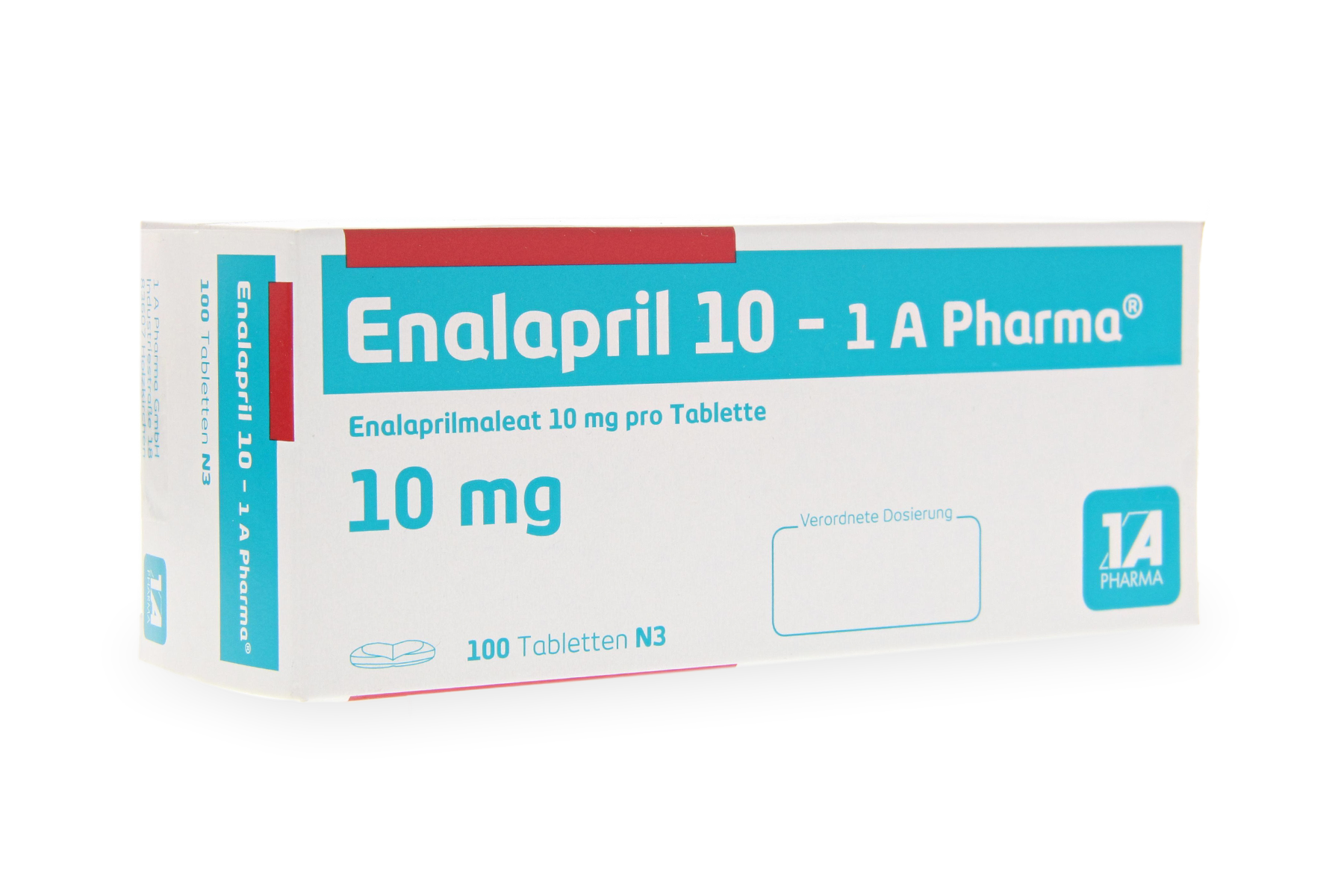
Enalapril
View Options
This website provides general information about medicines for educational purposes only. Always consult your doctor or pharmacist before taking any medication.
Choose Your Medicine
Select dosage and quantity
Online Consultation
Reviewed by a qualified physician
Fast, Discreet Delivery
Delivered to your door
Medical Information
About This Medicine
Enalapril is an angiotensin-converting enzyme (ACE) inhibitor widely used in the management of hypertension, heart failure, and asymptomatic left ventricular dysfunction. It is one of the most extensively studied medicines in cardiovascular medicine, supported by decades of large clinical trials that have established its efficacy in reducing blood pressure, improving heart failure outcomes, and decreasing the risk of cardiovascular events in high-risk patients.
Mechanism of Action
Enalapril is a prodrug that is hydrolysed after oral absorption to its active form, enalaprilat. Enalaprilat inhibits the angiotensin-converting enzyme, which is responsible for converting angiotensin I to angiotensin II. Angiotensin II is a potent vasoconstrictor that also stimulates aldosterone secretion, leading to sodium and water retention. By blocking ACE, enalapril reduces circulating angiotensin II levels, leading to vasodilation, reduced blood pressure, decreased aldosterone-mediated fluid retention, and, in heart failure, reduced preload and afterload on the failing ventricle.
Key Indications
Enalapril is licensed for the treatment of hypertension, symptomatic heart failure, and asymptomatic left ventricular dysfunction, a condition in which the heart pumps less efficiently than normal before overt heart failure symptoms develop. Evidence from the landmark CONSENSUS and SOLVD trials demonstrated that enalapril significantly reduces mortality in both symptomatic and asymptomatic heart failure, establishing ACE inhibitors as a cornerstone of heart failure management.
Place in Modern Practice
Enalapril remains widely prescribed, particularly for heart failure and hypertension, though it has been joined by newer ACE inhibitors such as ramipril and perindopril, as well as by angiotensin receptor blockers (ARBs), which may be preferred in patients who develop the troublesome dry cough associated with ACE inhibitor use.
Usage & Dosage
Enalapril is used for the treatment of hypertension, symptomatic heart failure, and asymptomatic left ventricular dysfunction. The treatment indication determines the starting dose and target dose.
Hypertension
For hypertension, enalapril is typically started at 5 mg once daily and titrated upward, based on blood pressure response, to a usual maintenance dose of 10 to 20 mg once daily. The maximum dose is 40 mg per day. Initial doses should be lower, typically 2.5 mg, in patients who are at risk of first-dose hypotension, including those on diuretics, those who are sodium- or volume-depleted, or those with renal impairment.
Heart Failure and Left Ventricular Dysfunction
In heart failure, enalapril is started at 2.5 mg twice daily and uptitrated cautiously to a target of 10 mg twice daily, as tolerated. Blood pressure, renal function, and electrolytes should be monitored closely during initiation and dose escalation. For asymptomatic left ventricular dysfunction, similar doses are used.
Enalapril may be taken with or without food. Blood pressure should be monitored regularly throughout treatment, and renal function and electrolytes should be checked before starting, within one to two weeks of initiating treatment or any dose change, and periodically thereafter.
Enalapril dosing varies by indication:
For hypertension: initial dose 5 mg once daily (2.5 mg if at risk of hypotension); usual maintenance 10 to 20 mg once daily; maximum 40 mg per day.
For heart failure: initial dose 2.5 mg twice daily; target maintenance dose 10 mg twice daily; uptitration should be gradual over weeks based on blood pressure and renal function response.
For asymptomatic left ventricular dysfunction: starting at 2.5 mg twice daily, titrated to 10 mg twice daily as tolerated.
Dose reduction is required in renal impairment. For creatinine clearance 30 to 80 ml/min, the starting dose is 5 mg once daily. For creatinine clearance below 30 ml/min or in patients on haemodialysis, the starting dose is 2.5 mg, adjusted according to response. Enalaprilat is dialysable and doses may need to be supplemented on dialysis days.
No specific dose adjustment is required in hepatic impairment, as enalaprilat is renally excreted, though the conversion of enalapril to enalaprilat may be impaired in severe hepatic disease.
Side Effects
Enalapril is generally well tolerated but has several well-recognised side effects that patients and prescribers should be aware of.
Common Side Effects
- Dry persistent cough: the most common reason for ACE inhibitor discontinuation, occurring in 10 to 20% of patients. It is caused by bradykinin accumulation and is reversible on stopping the medicine. Patients who cannot tolerate the cough should be switched to an ARB
- Dizziness or lightheadedness, particularly after the first dose or following dose increases, due to blood pressure reduction
- Headache
- Hyperkalaemia (raised potassium levels), which can be serious in patients with renal impairment or those taking potassium-sparing diuretics or potassium supplements
- Fatigue
Serious Side Effects
- Hypotension: significant blood pressure reduction can occur after the first dose, particularly in patients who are volume-depleted or on diuretics, monitor closely during initiation
- Acute kidney injury: ACE inhibitors reduce perfusion pressure to the kidneys and can precipitate or worsen renal impairment, particularly in patients with renal artery stenosis, dehydration, or heart failure with low cardiac output
- Angioedema: sudden swelling of the lips, tongue, throat, or face, which is a serious allergic-like reaction requiring immediate medical attention and permanent discontinuation of all ACE inhibitors
- Agranulocytosis and neutropenia (rare, but more common in patients with collagen vascular diseases)
- Teratogenicity: enalapril must not be used during pregnancy, as ACE inhibitors cause foetal harm, particularly in the second and third trimesters
Warnings & Precautions
Enalapril carries several clinically important warnings that must be considered in prescribing decisions and patient monitoring.
Renal Function and Hyperkalaemia
Renal function and serum electrolytes should be checked before starting enalapril and monitored regularly throughout treatment. ACE inhibitors can cause or worsen renal impairment, and this risk is significantly elevated in patients with bilateral renal artery stenosis or stenosis of the artery to a solitary functioning kidney. In such patients, ACE inhibitors should be avoided or used with extreme caution. Hyperkalaemia is a significant concern when enalapril is used alongside potassium-sparing diuretics (such as spironolactone or eplerenone), potassium supplements, or in patients with significant renal impairment.
Pregnancy: Absolute Contraindication
Enalapril must not be used during pregnancy. ACE inhibitor exposure during the second and third trimesters is associated with foetal renal tubular dysplasia, oligohydramnios, foetal growth restriction, limb contractures, pulmonary hypoplasia, and neonatal death. Women of childbearing potential using enalapril must use effective contraception and should be counselled to seek immediate medical advice if they become pregnant, so that enalapril can be switched to a safer alternative without delay.
Angioedema is a rare but life-threatening reaction; any patient who develops angioedema on any ACE inhibitor must not be re-challenged with enalapril or any other ACE inhibitor. NSAIDs, potassium-sparing diuretics, and lithium have clinically important interactions with enalapril that require monitoring or dose adjustment.
Contraindications
Enalapril must not be used in the following circumstances:
- Known hypersensitivity to enalapril, any other ACE inhibitor, or any excipient
- History of angioedema associated with previous ACE inhibitor treatment or hereditary/idiopathic angioedema
- Pregnancy (all trimesters) -- associated with serious foetal harm
- Concurrent use with aliskiren-containing products in patients with diabetes mellitus or renal impairment (creatinine clearance below 60 ml/min)
- Concurrent use with sacubitril/valsartan (Entresto) -- must allow a 36-hour washout period before switching
- Bilateral renal artery stenosis or unilateral renal artery stenosis in a patient with a single functioning kidney
- Severe aortic or mitral stenosis or hypertrophic obstructive cardiomyopathy (haemodynamically significant)
- Severe hepatic impairment where enalapril activation may be substantially impaired
Frequently Asked Questions
Why does enalapril cause a cough?
Can I take enalapril if I am pregnant or planning a pregnancy?
How long does it take for enalapril to lower blood pressure?
What should I do if I feel dizzy after taking enalapril?
Do I need regular blood tests while taking enalapril?
Dr. Ross Elledge
General Practitioner · General & Family Medicine
Verified Healthcare Professional
TopDoctors Profile