
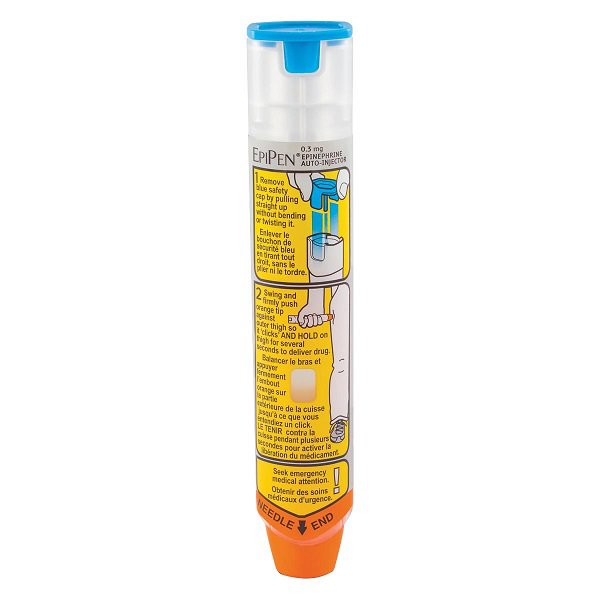
EpiPen Auto injector/ml im
This website provides general information about medicines for educational purposes only. Always consult your doctor or pharmacist before taking any medication.
Choose Your Medicine
Select dosage and quantity
Online Consultation
Reviewed by a qualified physician
Fast, Discreet Delivery
Delivered to your door
Medical Information
About This Medicine
EpiPen is a pre-filled auto-injector delivering adrenaline (epinephrine) for the emergency treatment of severe allergic reactions (anaphylaxis). Anaphylaxis can be triggered by foods, insect stings, medications, or latex and can be life-threatening if not treated promptly. Adrenaline reverses the effects of anaphylaxis by constricting blood vessels, relaxing the airways, and supporting cardiac output. The auto-injector design allows patients and carers to administer the drug quickly without medical training.
Usage & Dosage
How to Use an EpiPen
Remove the EpiPen from its carrier tube. Pull off the blue safety cap. Hold the orange tip pointing downward and press the orange tip firmly against the outer mid-thigh (you can inject through clothing if necessary). Press firmly and hold in place for 10 seconds after you hear the click. Remove the EpiPen and massage the injection site for 10 seconds. The window will darken when the injection is complete.
Call emergency services (999 or 112) immediately after use — adrenaline is a temporary measure and medical assessment is always required after anaphylaxis, even if symptoms improve. A second EpiPen may be used after 5 to 15 minutes if symptoms return or do not fully resolve.
After Use
Always seek emergency medical care even if you feel better after the injection. Symptoms of anaphylaxis can return (biphasic reaction) several hours later. Always carry two EpiPens at all times if prescribed.
EpiPen (adult): 300 mcg adrenaline per injection. EpiPen Junior (children 15 to 30 kg): 150 mcg. A second injection may be given after 5 to 15 minutes if symptoms do not improve. Always carry two auto-injectors.
Side Effects
Expected Effects After Injection
The following effects are normal responses to adrenaline and confirm the medicine is working:
- Rapid or strong heartbeat (palpitations)
- Tremor or shakiness
- Anxiety or a sense of urgency
- Pallor (pale skin)
- Headache
- Dizziness
Reassurance
These sensations are temporary and are the expected result of adrenaline releasing into the bloodstream. They generally settle within 15 to 30 minutes. If you have heart disease or are taking certain medicines (such as beta-blockers), the response may be different — discuss emergency planning with your doctor or allergy specialist. An EpiPen should never be withheld during a suspected anaphylactic reaction out of concern about these side effects.
Warnings & Precautions
Always call emergency services after using an EpiPen, even if symptoms improve, as anaphylaxis can recur (biphasic reaction). Check the expiry date regularly. Store at room temperature; do not refrigerate. Replace if the solution appears discoloured or contains particles.
Contraindications
There are no absolute contraindications in the setting of life-threatening anaphylaxis. Adrenaline is the only first-line treatment for anaphylaxis and should always be administered when anaphylaxis is suspected.
Frequently Asked Questions
Can I use an expired EpiPen in an emergency?
Dr. Ross Elledge
General Practitioner · General & Family Medicine
Verified Healthcare Professional
TopDoctors Profile