
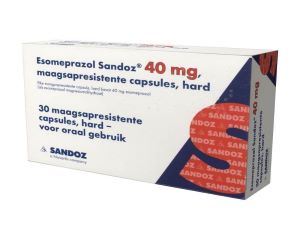
Esomeprazole
View Options
This website provides general information about medicines for educational purposes only. Always consult your doctor or pharmacist before taking any medication.
Choose Your Medicine
Select dosage and quantity
Online Consultation
Reviewed by a qualified physician
Fast, Discreet Delivery
Delivered to your door
Medical Information
About This Medicine
Esomeprazole is a proton pump inhibitor (PPI) used to reduce the amount of acid produced in the stomach. Available in the UK under brand names including Nexium and as a generic, it is one of the most widely prescribed medicines in the world, indicated for a range of conditions driven by excessive gastric acid. Esomeprazole is the S-enantiomer of omeprazole, meaning it is a refined form of an established compound that offers reliable and sustained acid suppression.
Conditions Treated by Esomeprazole
Esomeprazole is prescribed for gastro-oesophageal reflux disease (GORD), in which stomach acid repeatedly flows back into the oesophagus, causing heartburn, regurgitation, and in some cases damage to the oesophageal lining. It is also used to treat and prevent peptic ulcers in the stomach and duodenum, including those induced by non-steroidal anti-inflammatory drugs (NSAIDs). When Helicobacter pylori infection is diagnosed as the underlying cause of an ulcer, esomeprazole forms part of eradication triple therapy alongside two antibiotics. In rare cases, it is used to manage Zollinger-Ellison syndrome, a condition characterised by tumours that trigger extreme acid overproduction.
How Esomeprazole Works
Esomeprazole works by irreversibly blocking the hydrogen-potassium ATPase enzyme system, the "proton pump", in the stomach's parietal cells. This enzyme is responsible for the final step of acid secretion into the stomach. By inhibiting it, esomeprazole reduces both basal and stimulated acid output, raising the stomach's pH and allowing inflamed or ulcerated tissue to heal. The effect builds over several days of regular dosing, which is why the medicine is most effective when taken consistently each morning before food.
Usage & Dosage
Esomeprazole should be swallowed whole, at least 30 to 60 minutes before eating. This timing is critical because the drug is only active against proton pumps that are stimulated by a meal; taking it on an empty stomach before food ensures maximum efficacy.
Taking Esomeprazole Correctly
Swallow esomeprazole tablets or capsules whole with a glass of water. Do not crush, chew, or split the tablet, as doing so destroys the enteric coating that protects the drug from stomach acid. If you have difficulty swallowing, some formulations can be dispersed in water and the resulting suspension swallowed or administered through a nasogastric tube, consult your pharmacist about the appropriate formulation for your needs.
Duration of Treatment
For mild to moderate GORD, a four-week course is typically sufficient. Erosive oesophagitis or more severe reflux disease may require eight weeks of treatment, sometimes with ongoing maintenance dosing. For long-term NSAID users at risk of ulcers, esomeprazole may be prescribed indefinitely as prophylaxis. H. pylori eradication regimens are usually seven to fourteen days long. Avoid stopping treatment abruptly if you have been taking esomeprazole for more than eight weeks, as rebound acid hypersecretion can temporarily worsen symptoms; speak to your GP before discontinuing.
Standard adult doses of esomeprazole range from 20mg to 40mg once daily, depending on the condition being treated.
For symptomatic GORD without oesophageal erosions, 20mg once daily for four weeks is usual. Erosive oesophagitis typically requires 40mg once daily for four to eight weeks. NSAID-associated ulcer prevention is usually 20mg once daily. H. pylori eradication triple therapy uses 20mg twice daily for seven to fourteen days alongside two antibiotics. Zollinger-Ellison syndrome may require higher doses, up to 80-120mg daily, titrated under specialist supervision.
Patients with severe liver impairment should not exceed 20mg daily, as hepatic metabolism is reduced. No dose adjustment is required for kidney disease or in elderly patients. Esomeprazole is not licensed for routine use in children under 12, though paediatric indications exist under specialist guidance.
Side Effects
Common Side Effects
- Headache, often mild and transient
- Nausea or stomach discomfort
- Diarrhoea or constipation
- Flatulence and abdominal bloating
- Dry mouth
- Dizziness or light-headedness
- Raised liver enzymes on blood tests (usually without symptoms)
Serious Side Effects
- Severe allergic reaction including anaphylaxis, skin blistering (Stevens-Johnson syndrome or toxic epidermal necrolysis), stop immediately and seek emergency care
- Clostridium difficile-associated diarrhoea, particularly with prolonged use
- Hypomagnesaemia (low magnesium) with long-term use, causing muscle spasms, confusion, or irregular heartbeat
- Increased risk of bone fractures with prolonged high-dose treatment
- Acute interstitial nephritis (rare), presenting as sudden worsening of kidney function
Warnings & Precautions
Long-Term Use Considerations
Prolonged use of esomeprazole -- particularly at high doses -- is associated with several nutritional and structural risks. Gastric acid is necessary for absorbing vitamin B12, magnesium, calcium, and iron; patients on long-term PPI therapy should have regular blood tests to monitor magnesium levels and may need supplementation. Long-term use is also associated with a modestly increased risk of osteoporotic fractures, particularly of the hip, wrist, and spine, and patients with existing osteoporosis should discuss this risk with their prescriber.
Drug Interactions and Monitoring
Esomeprazole interacts with several important medicines. It raises the gastric pH, reducing the absorption of medicines that require an acidic environment, including ketoconazole, itraconazole, atazanavir, and erlotinib. It may increase levels of methotrexate, digoxin, and some antiepileptics. Clopidogrel's antiplatelet activity may be reduced by esomeprazole, though the clinical significance of this interaction is debated; patients taking clopidogrel post-cardiac event should discuss this with their cardiologist. Inform your prescriber of all medicines, supplements, and herbal preparations you are taking before starting esomeprazole.
Contraindications
- Known hypersensitivity to esomeprazole, other PPIs (substituted benzimidazoles), or any excipient
- Concurrent use with nelfinavir (HIV medicine)
- Concurrent use with atazanavir without specialist advice
- Severe hepatic impairment without dose adjustment
- Children under 1 year of age
- Pregnancy and breastfeeding (use only if clearly indicated and under medical supervision)
- Uninvestigated dyspepsia with alarm symptoms (weight loss, dysphagia, persistent vomiting) without prior endoscopy
Frequently Asked Questions
How quickly does esomeprazole relieve heartburn symptoms?
Is it safe to take esomeprazole every day long-term?
Can I take esomeprazole with ibuprofen or other anti-inflammatories?
What is the difference between esomeprazole and omeprazole?
Should I stop taking esomeprazole if my symptoms improve?
Dr. Ross Elledge
General Practitioner · General & Family Medicine
Verified Healthcare Professional
TopDoctors Profile