
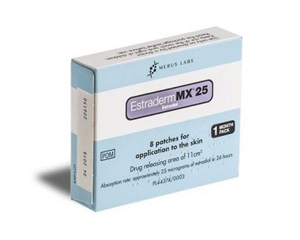
Estraderm MX
View Options
This website provides general information about medicines for educational purposes only. Always consult your doctor or pharmacist before taking any medication.
Choose Your Medicine
Select dosage and quantity
Online Consultation
Reviewed by a qualified physician
Fast, Discreet Delivery
Delivered to your door
Medical Information
About This Medicine
Estraderm MX is a transdermal hormone replacement therapy (HRT) patch that delivers estradiol, the body's primary natural oestrogen, directly through the skin into the bloodstream. Manufactured by Novartis, it is used to relieve the symptoms of the menopause and to prevent osteoporosis in postmenopausal women. The patch format bypasses the digestive system, which has significant advantages over oral oestrogen in terms of the risk profile and metabolic effects.
The Benefits of Transdermal Oestrogen
When oestrogen is taken orally, it is absorbed through the gut and passes directly to the liver before entering the general circulation, a process called the "first-pass effect." This hepatic processing elevates clotting factors and other proteins, contributing to an increased risk of venous thromboembolism (VTE) and stroke associated with oral HRT. Transdermal oestrogen, as delivered by Estraderm MX, bypasses the liver on first pass, resulting in lower clotting factor stimulation and a more favourable risk profile, particularly for women with cardiovascular risk factors. This makes Estraderm MX an important option for women for whom oral HRT may carry a higher degree of risk.
Indications and Patient Profile
Estraderm MX is available in four strengths, 25, 50, 75, and 100 micrograms per 24 hours, allowing treatment to be tailored to the individual's symptom burden and response. It is suitable for perimenopausal and postmenopausal women experiencing hot flushes, night sweats, mood disturbance, sleep disruption, vaginal dryness, and urinary symptoms related to falling oestrogen levels. Women who still have a uterus must use Estraderm MX alongside a progestogen to protect the endometrium from hyperplasia; a combined HRT patch or separate oral progestogen is required in this group.
Usage & Dosage
Estraderm MX patches are designed to be worn continuously for three to four days before being replaced. Each patch is changed twice weekly, and it is helpful to choose two consistent days of the week, for example, Monday and Thursday, to maintain a regular schedule.
Applying the Patch
Select a clean, dry, hairless area of skin below the waist, such as the lower abdomen, buttock, or upper thigh. Avoid the breasts, waistband area, or any skin that is irritated, broken, or oily. Open the foil pouch, peel away one half of the protective backing, apply the sticky side to the skin, then remove the remaining backing and press the patch firmly into place for at least 30 seconds, ensuring all edges adhere well. Rotate application sites with each change to reduce the risk of skin irritation; avoid reusing the same spot within one week.
Establishing a Routine
Bathing, swimming, and showering will not affect the patch's performance if it is properly applied to a flat area of skin. If a patch falls off, reapply it to a clean area or apply a new patch for the remainder of that application period, then continue with your usual schedule. Do not apply the patch to the same site within seven days of the previous application at that location.
Estraderm MX is prescribed at the lowest dose that effectively controls menopausal symptoms. Treatment is typically initiated at 50 micrograms per 24 hours, with the dose adjusted upward to 75 or 100 micrograms if symptoms remain inadequately controlled after three months.
Women who are perimenopausal or have recently undergone surgical menopause may require higher doses to achieve symptom relief. The 25 microgram patch may be appropriate for maintenance once symptoms are well controlled, or for women needing a lower systemic dose, particularly those using a vaginal oestrogen alongside.
HRT is generally reviewed annually by the prescribing clinician. The recommended duration varies based on individual risk-benefit assessment, but most guidelines advise using the lowest effective dose for the shortest period consistent with treatment goals. Dose patches are individually foil-wrapped and should be stored at room temperature, away from direct heat and sunlight.
Side Effects
Common Side Effects
- Skin irritation, redness, or itching at the patch application site
- Breast tenderness or swelling
- Headache, particularly during the first few weeks
- Nausea or abdominal discomfort
- Fluid retention causing ankle swelling or bloating
- Mood changes, including low mood or irritability
- Breakthrough bleeding or spotting (especially in perimenopause)
Serious Side Effects
- Venous thromboembolism (deep vein thrombosis or pulmonary embolism), seek emergency help for calf pain, leg swelling, or sudden breathlessness
- Stroke or arterial thrombosis, report sudden severe headache, facial drooping, or arm weakness immediately
- Breast cancer risk increases slightly with prolonged combined HRT use
- Abnormal vaginal bleeding that is unexplained should be investigated promptly
Warnings & Precautions
Breast Cancer and Gynaecological Monitoring
All women using HRT, including Estraderm MX, should attend regular breast screening in line with NHS guidance and be aware of any changes in their breasts. The risk of breast cancer associated with transdermal oestrogen alone is lower than that seen with combined oestrogen-progestogen HRT; however, any oestrogen-only treatment increases endometrial cancer risk if used without a progestogen in women with an intact uterus. Women who still have a uterus must take a progestogen alongside Estraderm MX. Regular gynaecological review and prompt investigation of any unexplained vaginal bleeding are essential.
Risk Factors and Contraindications
Before starting Estraderm MX, your prescriber will assess your personal and family history for conditions including blood clots, breast cancer, liver disease, cardiovascular disease, and migraine with aura. Smoking significantly increases cardiovascular risk when combined with HRT. Immobility, such as during long-haul flights or post-surgical recovery, increases the risk of VTE in women on HRT; compression stockings and keeping well hydrated are sensible precautions. Regular review of the continuing need for HRT is recommended, typically annually.
Contraindications
- Known, suspected, or previous breast cancer
- Known or suspected oestrogen-dependent malignancies (e.g. endometrial cancer)
- Undiagnosed vaginal bleeding
- Untreated endometrial hyperplasia
- Current or previous confirmed venous thromboembolism (DVT or pulmonary embolism)
- Active or recent arterial thromboembolic disease (e.g. angina, myocardial infarction, stroke)
- Acute liver disease or a history of liver disease where liver function tests have not returned to normal
- Known thrombophilic disorders (e.g. protein C or S deficiency, antiphospholipid syndrome)
- Pregnancy or breastfeeding
- Porphyria cutanea tarda
Frequently Asked Questions
How long does it take for Estraderm MX to relieve hot flushes?
Do I need to take a progestogen alongside Estraderm MX?
Is Estraderm MX safer than oral HRT?
Can I swim or shower whilst wearing an Estraderm MX patch?
How long can I stay on Estraderm MX?
Dr. Ross Elledge
General Practitioner · General & Family Medicine
Verified Healthcare Professional
TopDoctors Profile