
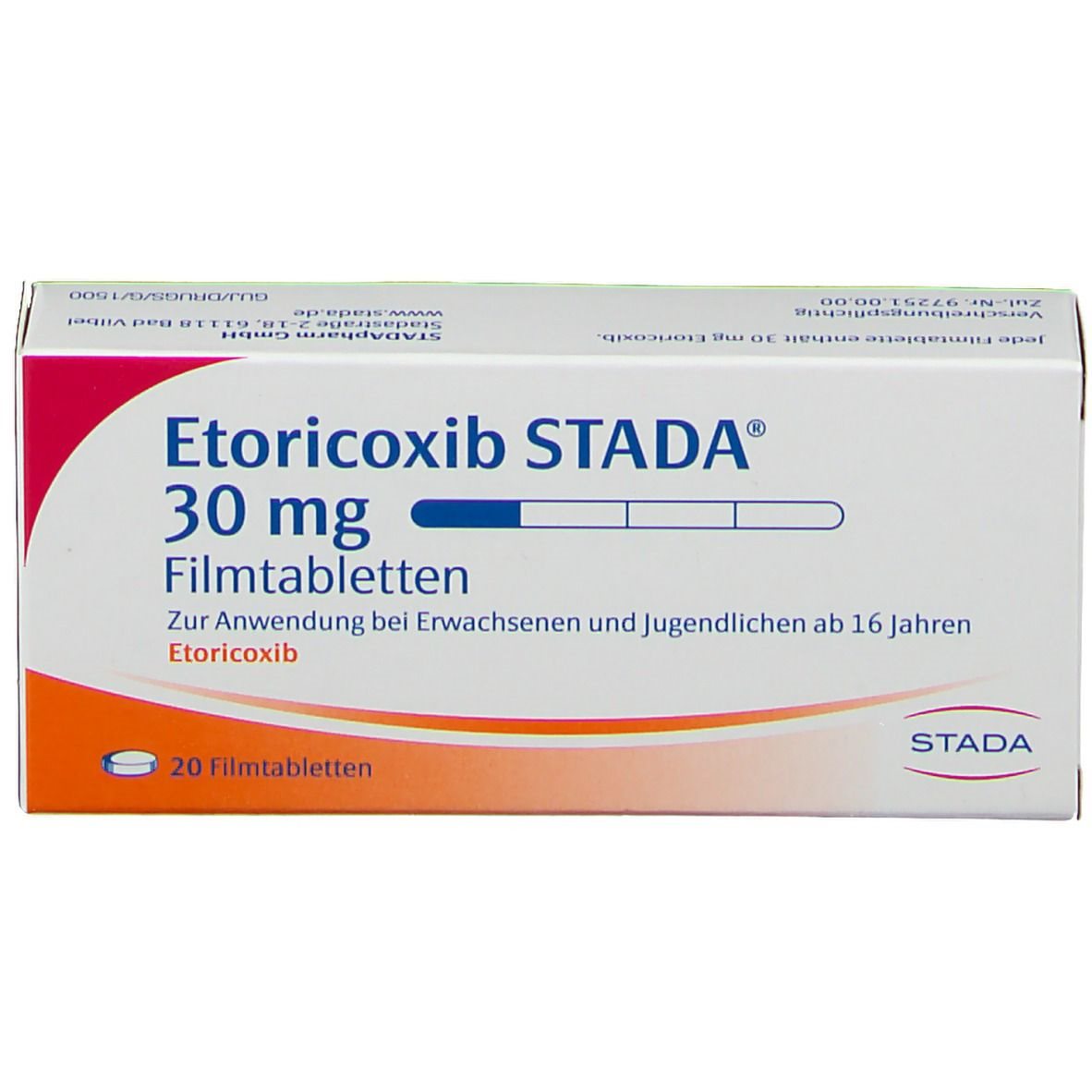
Etoricoxib
View Options
This website provides general information about medicines for educational purposes only. Always consult your doctor or pharmacist before taking any medication.
Choose Your Medicine
Select dosage and quantity
Online Consultation
Reviewed by a qualified physician
Fast, Discreet Delivery
Delivered to your door
Medical Information
About This Medicine
Etoricoxib is a selective cyclo-oxygenase-2 (COX-2) inhibitor, a class of non-steroidal anti-inflammatory drug (NSAID), used for the relief of pain and inflammation in a range of musculoskeletal and rheumatic conditions. Available in the UK as Arcoxia and as a generic, it is prescribed for osteoarthritis, rheumatoid arthritis, ankylosing spondylitis, and acute gout, as well as for the short-term treatment of moderate post-operative dental pain.
Mechanism of Action and Selectivity
Traditional NSAIDs, such as ibuprofen and naproxen, inhibit both COX-1 and COX-2 enzymes. COX-1 is expressed constitutively throughout the body and plays a protective role in the stomach lining and platelet function, whereas COX-2 is induced at sites of inflammation and is primarily responsible for producing the prostaglandins that drive pain, fever, and swelling. By selectively inhibiting COX-2, etoricoxib reduces inflammation with less direct suppression of COX-1-mediated gastric protection. This results in a lower rate of gastrointestinal ulceration and bleeding compared to non-selective NSAIDs, making it a preferred option for patients with a history of gastrointestinal intolerance.
Clinical Applications
Etoricoxib is particularly valued in conditions requiring long-term anti-inflammatory treatment, where the reduced gastrointestinal burden of COX-2 selective agents becomes clinically meaningful. In acute gout, it provides rapid and effective pain relief, and studies have shown it to be as effective as indomethacin with a better tolerability profile. Its once-daily dosing improves adherence compared to shorter-acting NSAIDs, and its efficacy across a wide range of inflammatory arthritides makes it a versatile option in rheumatology practice.
Usage & Dosage
Etoricoxib is taken orally as a tablet, once daily. It may be taken with or without food, as absorption is not significantly affected by meals. Taking it with food or milk can help if you experience mild stomach discomfort.
Condition-Specific Use
In osteoarthritis, etoricoxib at 30mg or 60mg once daily provides continuous background anti-inflammatory and analgesic cover. For rheumatoid arthritis and ankylosing spondylitis, 60mg or 90mg once daily is standard. Acute gout attacks are treated with 120mg once daily for up to eight days, the highest licensed dose, after which treatment should stop and the underlying uric acid level addressed with appropriate long-term therapy. Post-operative dental pain is also treated with 90mg once daily, for the shortest duration necessary.
Long-Term Use and Monitoring
Etoricoxib should be used at the lowest effective dose for the shortest duration that controls symptoms. For patients with chronic conditions requiring long-term treatment, regular review of cardiovascular and renal function is important. Blood pressure should be monitored regularly, as etoricoxib can cause fluid retention and hypertension. If blood pressure increases or oedema worsens, the treatment should be reassessed. Kidney function and liver enzymes should be checked periodically in patients on long-term treatment.
Adult doses of etoricoxib depend on the indication:
- Osteoarthritis: 30mg once daily (maximum 60mg if inadequate response)
- Rheumatoid arthritis and ankylosing spondylitis: 60mg once daily (maximum 90mg)
- Acute gout: 120mg once daily for up to 8 days only
- Post-operative dental pain: 90mg once daily for up to 3 days
Etoricoxib should not be used in patients with hepatic impairment above Child-Pugh score 9 (severe cirrhosis). In moderate hepatic impairment (Child-Pugh 7-9), the dose should not exceed 60mg daily. No dose adjustment is required for mild hepatic impairment or kidney disease with eGFR above 30mL/min, but etoricoxib is not recommended when eGFR falls below this threshold. Elderly patients may be more susceptible to adverse effects and should be monitored carefully.
Side Effects
Common Side Effects
- Headache or dizziness
- Oedema (ankle and leg swelling) due to fluid retention
- Raised blood pressure (hypertension)
- Nausea, dyspepsia, or abdominal pain
- Diarrhoea or constipation
- Fatigue or malaise
- Elevated liver enzymes on blood tests
- Influenza-like symptoms
Serious Side Effects
- Cardiovascular events: heart attack or stroke, risk increases with duration and dose; seek emergency care for chest pain, sudden numbness, or speech disturbance
- Serious gastrointestinal events: peptic ulceration, perforation, or haemorrhage, even without prior warning symptoms
- Severe skin reactions including Stevens-Johnson syndrome, stop immediately if widespread rash or blistering occurs
- Acute kidney injury, particularly in patients with pre-existing renal impairment or dehydration
Warnings & Precautions
Cardiovascular Risk
Etoricoxib carries a significant cardiovascular risk that must be discussed with every patient before prescribing. COX-2 selective inhibitors are associated with a higher rate of arterial thrombotic events -- including myocardial infarction and stroke -- compared to placebo, and possibly compared to some non-selective NSAIDs. Etoricoxib is contraindicated in patients with established ischaemic heart disease, peripheral arterial disease, cerebrovascular disease, and in those with uncontrolled hypertension. It should be used with caution in patients with cardiovascular risk factors including smoking, hyperlipidaemia, and diabetes. The lowest effective dose for the shortest possible duration should always be the guiding principle.
Renal and Hepatic Monitoring
Etoricoxib reduces renal prostaglandin synthesis, which can impair kidney function, particularly in patients who are dehydrated, elderly, or have underlying kidney disease. Patients should remain well hydrated during treatment and should stop etoricoxib and seek medical advice if they experience a significant reduction in urine output. In patients with liver disease, etoricoxib accumulates more slowly than in healthy individuals; dose adjustments and monitoring are required. Women of childbearing age should use contraception during treatment, as etoricoxib may impair female fertility and is not recommended in pregnancy.
Contraindications
- Active peptic ulceration or gastrointestinal bleeding
- Inflammatory bowel disease (Crohn's disease or ulcerative colitis)
- Established ischaemic heart disease, peripheral arterial disease, or cerebrovascular disease
- Uncontrolled hypertension (persistently above 140/90 mmHg despite treatment)
- Severe hepatic impairment (Child-Pugh score above 9)
- Severe renal impairment (eGFR below 30mL/min) not on dialysis
- Known hypersensitivity to etoricoxib or any NSAID, including aspirin-sensitive asthma
- Pregnancy (especially from 20 weeks gestation onward) and breastfeeding
- Children and adolescents under 16 years of age
- Concurrent use of two or more NSAIDs (including aspirin above 75mg)
Frequently Asked Questions
How quickly does etoricoxib work for gout?
Is etoricoxib safer for the stomach than ibuprofen or naproxen?
Can I take etoricoxib if I have high blood pressure?
Can I take etoricoxib with blood thinners such as warfarin?
How is etoricoxib different from standard ibuprofen?
Dr. Ross Elledge
General Practitioner · General & Family Medicine
Verified Healthcare Professional
TopDoctors Profile