
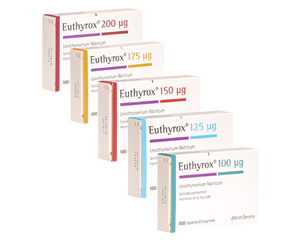
Euthyrox
This website provides general information about medicines for educational purposes only. Always consult your doctor or pharmacist before taking any medication.
Choose Your Medicine
Select dosage and quantity
Online Consultation
Reviewed by a qualified physician
Fast, Discreet Delivery
Delivered to your door
Medical Information
About This Medicine
Euthyrox is a branded levothyroxine preparation used for the treatment of hypothyroidism and thyroid hormone replacement. It contains synthetic T4 (thyroxine), which is identical to the hormone produced by the thyroid gland. Euthyrox is formulated for consistent bioavailability, and some patients find they respond more predictably to a specific brand. Switching between brands or generics may affect thyroid hormone levels and should be done with TSH monitoring.
Usage & Dosage
How to Take Euthyrox
Take one Euthyrox (levothyroxine) tablet once daily on an empty stomach, at least 30 to 60 minutes before breakfast, with a full glass of water. Taking it first thing in the morning, before eating or drinking anything other than water, gives the most consistent absorption. Levothyroxine absorption is significantly reduced by food, coffee, milk, calcium supplements, iron tablets, and many other medicines — separating it from all of these is important.
Take at the same time each day. Consistency matters because thyroid hormone levels need to remain stable over time.
Dose Adjustment
Your dose of Euthyrox will be established gradually, with TSH (thyroid-stimulating hormone) blood tests every six to eight weeks until levels are stable. Most adults with hypothyroidism end up on a maintenance dose of 50 to 200 mcg daily. Never adjust your dose without speaking to your doctor. Even small changes can significantly shift your thyroid levels.
Starting dose depends on age, weight, and severity: typically 25 to 50 mcg daily in adults, increasing by 25 mcg every 4 to 6 weeks based on TSH levels. Usual maintenance: 75 to 150 mcg daily.
Side Effects
Side Effects at the Correct Dose
At the correct dose, Euthyrox simply replaces a hormone your body is not making enough of, and side effects are uncommon. Side effects almost always indicate that the dose is slightly too high:
- Palpitations or a faster-than-usual heartbeat
- Tremor or shakiness
- Unexplained weight loss
- Feeling anxious, restless, or overheated
- Diarrhoea or loose stools
- Insomnia
Managing Over-replacement
If you experience these symptoms, tell your doctor and have your TSH level checked. A dose reduction usually resolves them. Do not stop Euthyrox suddenly without speaking to your doctor — untreated hypothyroidism has serious health consequences. Long-term over-replacement can also contribute to bone thinning (osteoporosis) and atrial fibrillation in older patients, which is why regular monitoring is important.
Warnings & Precautions
Do not take with calcium, iron, or antacid supplements within four hours, as they impair absorption. TSH should be checked six to eight weeks after any dose change. Sudden switching between brands may alter thyroid levels.
Contraindications
Contraindicated in untreated adrenal insufficiency, thyrotoxicosis, and acute myocardial infarction (without concurrent beta-blockade).
Frequently Asked Questions
Can I switch between levothyroxine brands?
Dr. Ross Elledge
General Practitioner · General & Family Medicine
Verified Healthcare Professional
TopDoctors Profile