
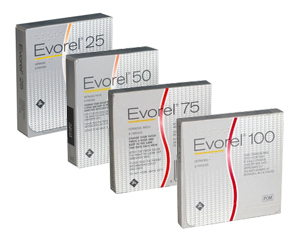
Evorel
View Options
This website provides general information about medicines for educational purposes only. Always consult your doctor or pharmacist before taking any medication.
Choose Your Medicine
Select dosage and quantity
Online Consultation
Reviewed by a qualified physician
Fast, Discreet Delivery
Delivered to your door
Medical Information
About This Medicine
Evorel is a transdermal oestrogen patch used as hormone replacement therapy (HRT) to relieve menopausal symptoms and protect against postmenopausal bone loss. Manufactured by Theramex, Evorel delivers estradiol, the body's principal natural oestrogen, continuously through the skin, providing a steady hormone level that avoids the peaks and troughs associated with oral tablets.
Conditions Treated by Evorel
Evorel is indicated for the relief of oestrogen deficiency symptoms in the perimenopause and postmenopause, including hot flushes, night sweats, sleep disturbance, mood changes, joint aches, and vaginal dryness. It is also used in younger women who have undergone surgical menopause (oophorectomy) or experienced premature ovarian insufficiency (POI), in whom oestrogen replacement is particularly important for bone health, cardiovascular protection, and cognitive wellbeing. Evorel is available in four strengths, 25, 50, 75, and 100 micrograms per 24 hours, allowing the dose to be tailored to individual symptom severity and adjusted over time.
Transdermal Delivery and Its Advantages
The skin delivery route of Evorel bypasses hepatic first-pass metabolism, meaning oestrogen reaches the systemic circulation without first being processed by the liver. This is clinically important because it avoids the liver-mediated rise in clotting factors and inflammatory proteins that occurs with oral oestrogen. Current evidence indicates that transdermal oestrogen, unlike oral HRT, is not associated with an increased risk of venous thromboembolism (VTE), making it the preferred route for women with a higher baseline VTE risk, such as those with obesity, varicose veins, or a family history of blood clots.
Usage & Dosage
Evorel patches are changed twice weekly, applied to clean, dry, hairless skin on the lower trunk, the buttocks, lower abdomen, or upper thigh are all suitable sites.
How to Apply an Evorel Patch
Open the sachet and peel away one half of the protective backing. Apply the exposed adhesive surface to the skin, then carefully remove the remaining backing and press the full patch firmly into place using the palm of your hand. Hold for at least 30 seconds, paying particular attention to the edges. Choose a flat, undamaged area of skin and avoid the waistband line where friction from clothing can loosen the patch. Do not apply to the breasts or irritated, broken, or oily skin.
Rotating Sites and Maintaining Schedule
Rotate the application site with each change to reduce local skin irritation. The same area of skin should not be used within seven days. Choose two regular days of the week and change the patch on those days regardless of when the previous patch was applied, to maintain consistent hormone delivery. If a patch falls off, reapply it or apply a new patch, then continue with the original schedule. Bathing, swimming, and light exercise do not affect patch adherence when applied correctly.
Evorel is initiated at the lowest dose likely to control symptoms, typically 50 micrograms per 24 hours. The dose is reviewed after three months and adjusted as needed.
Women with significant symptoms, those who have had a surgical menopause, or those with POI may require 75 or 100 micrograms per 24 hours for adequate symptom control. Conversely, once symptoms are well managed, the dose can often be reduced to 25 micrograms for long-term maintenance, particularly in women several years post-menopause.
Women with an intact uterus must use Evorel in combination with a progestogen to protect the endometrium. The progestogen may be prescribed as a separate oral preparation, a progestogen-releasing intrauterine system (such as the Mirena coil), or by switching to a combined patch such as Evorel Conti or Evorel Sequi. HRT should be reviewed at least annually by the prescribing clinician, with assessment of symptoms, tolerability, and continuing need.
Side Effects
Common Side Effects
- Skin irritation, redness, or itching at the patch site
- Breast tenderness or engorgement
- Headache, particularly in the first few weeks of treatment
- Nausea or abdominal bloating
- Fluid retention, ankle swelling or a sensation of puffiness
- Mood changes or irritability
- Irregular spotting or breakthrough bleeding (especially when starting treatment)
Serious Side Effects
- Venous thromboembolism (DVT or pulmonary embolism), though the risk with transdermal oestrogen is lower than with oral HRT, report calf pain, leg swelling, or sudden breathlessness immediately
- Stroke or myocardial infarction, seek emergency care for sudden severe headache, facial drooping, or chest pain
- Breast cancer: slightly elevated risk, particularly with combined oestrogen-progestogen HRT
- Unexplained vaginal bleeding in postmenopausal women requires urgent investigation
Warnings & Precautions
Combined HRT and Endometrial Protection
Women who have not had a hysterectomy must not use Evorel as oestrogen-only therapy without a concurrent progestogen. Unopposed oestrogen stimulates endometrial growth and over time causes hyperplasia and significantly increases the risk of endometrial cancer. The duration and type of progestogen needed varies by HRT regimen; your prescriber will advise whether sequential or continuous combined therapy is appropriate for you.
Risk Assessment and Regular Review
Before prescribing Evorel, your clinician should take a full personal and family history, including previous blood clots, breast cancer, cardiovascular disease, liver disease, and migraine with aura. Women with migraine with aura have an increased baseline stroke risk, and any HRT in this group requires careful consideration. Blood pressure should be checked before starting HRT and monitored regularly during treatment. Any new lumps in the breast, unexplained vaginal bleeding, or new neurological symptoms should be reported promptly and investigated without delay.
Contraindications
- Known, suspected, or previous breast cancer
- Known or suspected oestrogen-dependent malignancy
- Undiagnosed vaginal bleeding
- Untreated endometrial hyperplasia
- Active or previous confirmed VTE (DVT or pulmonary embolism) without anticoagulation
- Recent or active arterial thromboembolic disease (angina, MI, stroke)
- Active or recent liver disease with abnormal liver function
- Known thrombophilia (e.g. Factor V Leiden, protein C or S deficiency)
- Pregnancy or breastfeeding
- Porphyria cutanea tarda
Frequently Asked Questions
How is Evorel different from Estraderm MX?
Can Evorel be used for premature menopause?
Does the Evorel patch stay on when swimming or bathing?
Will Evorel cause weight gain?
How do I stop using Evorel when the time comes?
Dr. Ross Elledge
General Practitioner · General & Family Medicine
Verified Healthcare Professional
TopDoctors Profile