
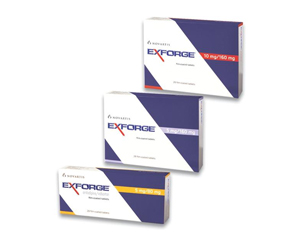
Exforge
View Options
This website provides general information about medicines for educational purposes only. Always consult your doctor or pharmacist before taking any medication.
Choose Your Medicine
Select dosage and quantity
Online Consultation
Reviewed by a qualified physician
Fast, Discreet Delivery
Delivered to your door
Medical Information
About This Medicine
Exforge is a combination antihypertensive medicine containing two active substances that work through distinct but complementary mechanisms to lower blood pressure. It brings together amlodipine, a calcium channel blocker, and valsartan, an angiotensin II receptor blocker (ARB), into a single once-daily tablet. This dual-action approach makes Exforge particularly effective for patients whose blood pressure is not adequately controlled by either agent alone.
How Exforge Works
Amlodipine relaxes the smooth muscle in artery walls by blocking the entry of calcium ions into muscle cells, causing blood vessels to widen and reducing the resistance the heart must pump against. Valsartan blocks the action of angiotensin II, a hormone that would otherwise cause blood vessels to constrict and stimulate the release of aldosterone, which raises blood pressure by increasing sodium and water retention. Together, these two mechanisms produce a greater reduction in blood pressure than either drug achieves individually, and the combination is well-established in clinical practice.
Available Strengths and Use
Exforge is available in four strengths: 5 mg/80 mg, 5 mg/160 mg, 10 mg/160 mg, and 10 mg/320 mg, representing the doses of amlodipine and valsartan respectively. Prescribers typically start patients at the lowest appropriate strength and adjust according to response. The medicine is taken once daily at the same time each day, with or without food, and the tablet should be swallowed whole with water.
Who Is It For?
Exforge is prescribed for adults with essential hypertension — persistently elevated blood pressure without an identifiable secondary cause — who require treatment with more than one antihypertensive medicine. It is also suitable for patients who are already stable on amlodipine and valsartan taken as separate tablets and who would benefit from the convenience of a single combined tablet. Women who are pregnant or planning pregnancy must not take Exforge, as the valsartan component carries a well-documented risk of foetal harm, particularly during the second and third trimesters. Patients should inform their doctor of all medicines they are taking, as several interactions are clinically significant.
Usage & Dosage
How to Take Exforge
Take Exforge (amlodipine / valsartan) once daily, at approximately the same time each day. It can be taken with or without food. Swallow the tablet whole with a glass of water.
Exforge combines two antihypertensive medicines: amlodipine (a calcium channel blocker) and valsartan (an angiotensin receptor blocker). It is prescribed when blood pressure is not adequately controlled on a single medicine alone, or as a convenient way to take both agents in one tablet.
Have your blood pressure checked regularly during treatment. Do not stop Exforge suddenly without speaking to your doctor — blood pressure can rise quickly after stopping. Continue taking it even when you feel well, as the protection it provides against stroke, heart attack, and kidney disease is ongoing.
Exforge is available in four strengths to allow flexible dosing: 5 mg/80 mg, 5 mg/160 mg, 10 mg/160 mg, and 10 mg/320 mg (amlodipine/valsartan). The standard starting dose for patients switching from separate tablets is the equivalent combined strength. Those not adequately controlled on a lower strength may have their dose increased by the prescriber after at least two weeks.
For patients with mild to moderate renal impairment, no dose adjustment is needed, but caution applies in severe impairment. Those with mild to moderate hepatic impairment should use lower strengths; Exforge is contraindicated in severe hepatic impairment. Elderly patients are not subject to specific dose restrictions but should be monitored closely as they may be more sensitive to blood pressure lowering.
The maximum daily dose is amlodipine 10 mg combined with valsartan 320 mg. Exforge is not recommended for use in children and adolescents under 18 years of age. The tablet should be taken once daily with water, at the same time each day, with or without food.
Side Effects
Common Side Effects
The most frequently reported effects are mainly related to the vasodilatory action of amlodipine:
- Swelling of the ankles or lower legs (peripheral oedema — very common with amlodipine)
- Headache
- Dizziness
- Flushing and warmth
- Fatigue
Important Warnings
Do not take Exforge if you are pregnant or trying to conceive. Valsartan (an ARB) is harmful to a developing baby and must be stopped before or at the earliest sign of pregnancy. If you become pregnant while taking Exforge, contact your doctor immediately. Regular monitoring of kidney function, blood pressure, and electrolytes (particularly potassium) is recommended during long-term treatment.
Warnings & Precautions
Pregnancy and Fertility
Exforge must not be used during pregnancy. The valsartan component belongs to a drug class that is known to cause foetal and neonatal harm, including renal dysplasia, oligohydramnios, limb contractures, skull hypoplasia, and death, particularly when used in the second or third trimester. Women of childbearing potential should use effective contraception during treatment. If pregnancy is detected, Exforge should be discontinued immediately and an alternative antihypertensive initiated.
Blood Pressure, Fluid, and Electrolyte Balance
Patients who are volume-depleted (for example, due to diuretic therapy, dietary salt restriction, diarrhoea, or vomiting) are at increased risk of symptomatic hypotension when starting Exforge. This should be corrected before treatment begins where possible. Exforge can cause hyperkalaemia, particularly in patients with renal impairment or diabetes, or those taking potassium-sparing diuretics, potassium supplements, or other agents that raise potassium. Regular monitoring of serum potassium and renal function is advisable.
Renal and Hepatic Considerations
Caution is required in patients with renal artery stenosis, as ARBs can worsen renal function in this setting. Exforge should not be used in severe hepatic impairment or biliary obstruction. Patients with moderate hepatic impairment should use the lowest available strength and be monitored carefully. Concomitant use of lithium is generally not recommended without close monitoring of serum lithium levels.
Contraindications
Exforge must not be used in the following situations:
- Hypersensitivity to amlodipine, valsartan, or any excipient in the formulation
- Pregnancy (second and third trimesters in particular; use in first trimester is also strongly discouraged)
- Severe hepatic impairment, biliary cirrhosis, or cholestasis
- Severe renal impairment (creatinine clearance below 30 mL/min) — use of the valsartan component requires caution
- Concomitant use with aliskiren-containing products in patients with diabetes mellitus or renal impairment (GFR below 60 mL/min/1.73 m2)
- Cardiogenic shock or haemodynamically significant aortic stenosis
- Hypotension or haemodynamic instability
- Children and adolescents under 18 years of age
Frequently Asked Questions
Can I take Exforge if I am already on amlodipine and valsartan as separate tablets?
Why does Exforge cause ankle swelling and what can I do about it?
Is it safe to drink alcohol while taking Exforge?
What should I do if I miss a dose of Exforge?
How long does it take for Exforge to lower my blood pressure?
Dr. Ross Elledge
General Practitioner · General & Family Medicine
Verified Healthcare Professional
TopDoctors Profile