
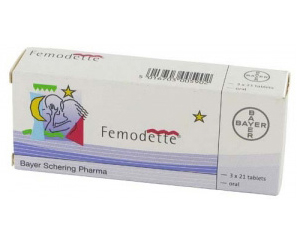
Femodette
View Options
This website provides general information about medicines for educational purposes only. Always consult your doctor or pharmacist before taking any medication.
Choose Your Medicine
Select dosage and quantity
Online Consultation
Reviewed by a qualified physician
Fast, Discreet Delivery
Delivered to your door
Medical Information
About This Medicine
Femodette is a low-dose combined oral contraceptive pill (COC) containing gestodene and ethinylestradiol. It is closely related to Femodene but uses a lower dose of the oestrogen component — ethinylestradiol 20 micrograms rather than 30 micrograms — making it one of the lower-dose combined pills available in the UK. This reduced oestrogen content makes Femodette a suitable option for women who experience oestrogen-related side effects on standard-dose pills or who prefer to minimise their overall hormone exposure while maintaining effective contraception.
Formulation and Hormonal Profile
Femodette is a monophasic pill, meaning every active tablet in the pack contains the same quantities of both hormones: gestodene 60 micrograms and ethinylestradiol 20 micrograms. Gestodene is a third-generation progestogen notable for its high potency and low androgenic activity. At 60 micrograms — slightly less than the 75 micrograms in Femodene — it still provides robust ovulation suppression while contributing to the reduced overall hormonal load of Femodette.
Mechanism of Action
Like all combined oral contraceptives, Femodette works primarily by suppressing ovulation through inhibition of the hypothalamic-pituitary-ovarian axis, preventing the LH surge that would otherwise trigger egg release. Cervical mucus thickening and endometrial changes provide additional contraceptive effects. When taken correctly and consistently, Femodette is over 99% effective at preventing pregnancy.
Who Is Femodette Suitable For?
Femodette is particularly appropriate for women who have experienced troublesome side effects on higher-oestrogen combined pills, such as nausea, breast tenderness, bloating, or fluid retention, and who wish to continue with a combined pill rather than switching to a progestogen-only method. It is also preferred by women and prescribers who favour using the lowest effective hormonal dose. As with all combined pills, it carries a VTE risk and is subject to the same prescribing considerations as other COCs.
Usage & Dosage
How to Take Femodette
Femodette is taken once daily for 21 consecutive days, followed by a seven-day hormone-free break. A withdrawal bleed usually occurs during the break. Start a new pack on the day after the break, on the same day of the week as the first tablet of the previous pack, whether or not bleeding has finished.
If starting for the first time, begin on day 1 of your period for immediate contraceptive protection. If starting on days 2 to 5, use condoms for the first seven days. If a tablet is missed by more than 12 hours, take it as soon as you remember, continue the pack, and use additional contraception for the next seven days.
Low-dose Formulation
Femodette contains a lower dose of oestrogen (20 mcg ethinylestradiol) than standard-dose combined pills. This may result in slightly less breakthrough bleeding for some women, though irregular spotting is still common in the first few cycles.
Each Femodette tablet contains gestodene 60 micrograms and ethinylestradiol 20 micrograms. One tablet is taken at the same time each day for 21 consecutive days, followed by a 7-day tablet-free break. The withdrawal bleed typically begins two to three days into the break. The next pack begins on day 8, the same day of the week as the first tablet of the previous pack.
Femodette tablets should be swallowed whole with water. A consistent daily time should be chosen and maintained. Missing a pill by more than 12 hours reduces contraceptive efficacy, and backup contraception should be used for seven days thereafter.
Femodette is not suitable during pregnancy or breastfeeding. It is not recommended in women with severe hepatic disease or those with the contraindications applicable to combined oral contraceptives generally. No dose modification is made based on body weight or age within the standard prescribing range, though risks and benefits should be reviewed annually, particularly in women approaching the age of 35.
Side Effects
Common Side Effects
The side effect profile is broadly similar to other combined oral contraceptives, though oestrogen-related effects may be less pronounced due to the lower dose:
- Nausea, particularly in the early weeks
- Headache or migraine
- Breast tenderness
- Mood changes, including low mood
- Reduced sex drive
- Breakthrough spotting or irregular bleeding in the first months
Serious Risks
All combined pills carry a small increased risk of blood clots, stroke, and cardiovascular complications. These risks are low for healthy, non-smoking young women but increase with age, smoking, and cardiovascular risk factors. Do not take Femodette if you smoke and are over 35. Seek urgent attention if you develop sudden leg swelling, chest pain, shortness of breath, or a severe headache.
Warnings & Precautions
VTE Risk and Third-Generation Progestogen
As with Femodene and other gestodene-containing pills, Femodette carries a slightly higher venous thromboembolism risk than second-generation combined pills containing levonorgestrel. This is a small absolute risk — estimated at approximately 9 to 12 events per 10,000 women per year compared with 5 to 7 per 10,000 for levonorgestrel pills — but it should be taken into account when prescribing, especially for women with additional VTE risk factors. All patients should be counselled on VTE risk, symptoms, and the importance of seeking urgent help if they occur.
Cycle Control and Missed Pills
The lower oestrogen dose in Femodette means that cycle control may be less robust than with standard-dose pills. Breakthrough bleeding is somewhat more common, particularly in the first few cycles. Women should be advised that this does not indicate contraceptive failure provided pills are taken correctly. If bleeding is persistent or heavy, alternative causes should be excluded and a higher-dose pill considered.
Drug Interactions
Enzyme-inducing medicines can substantially reduce the efficacy of Femodette by accelerating the metabolism of its hormonal components. Commonly prescribed enzyme inducers include rifampicin, carbamazepine, phenytoin, and St John's Wort. Women requiring these medicines alongside a combined pill should discuss appropriate contraceptive management with their prescriber, as the low hormone dose of Femodette makes it particularly vulnerable to interaction effects.
Contraindications
Femodette must not be used in women who:
- Have a current or past history of venous or arterial thromboembolism (DVT, PE, stroke, myocardial infarction)
- Have known hereditary or acquired thrombophilia (e.g., Factor V Leiden, antiphospholipid syndrome)
- Experience migraine with aura
- Have severe or uncontrolled hypertension
- Have diabetes mellitus with vascular complications
- Are pregnant or potentially pregnant
- Are breastfeeding within the first six weeks postpartum
- Have severe hepatic impairment or hepatic tumour (benign or malignant)
- Have unexplained vaginal bleeding
- Have or have had oestrogen-sensitive cancers (breast or endometrial)
- Are heavy smokers aged 35 or over
Frequently Asked Questions
Why is Femodette prescribed instead of Femodene?
Is breakthrough bleeding normal on Femodette?
Can I take Femodette if I have a history of acne?
What happens if I take Femodette continuously without a break?
Dr. Ross Elledge
General Practitioner · General & Family Medicine
Verified Healthcare Professional
TopDoctors Profile