
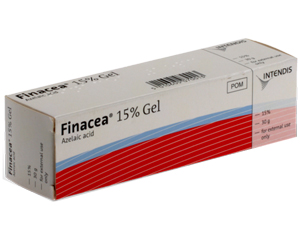
Finacea
View Options
This website provides general information about medicines for educational purposes only. Always consult your doctor or pharmacist before taking any medication.
Choose Your Medicine
Select dosage and quantity
Online Consultation
Reviewed by a qualified physician
Fast, Discreet Delivery
Delivered to your door
Medical Information
About This Medicine
Finacea is a topical gel containing azelaic acid 15%, prescribed primarily for the treatment of rosacea in adults. Rosacea is a chronic inflammatory skin condition characterised by facial redness, visible blood vessels, papules, and pustules, and Finacea addresses these symptoms through a combination of anti-inflammatory, antibacterial, and keratolytic mechanisms. It is available on prescription in the UK and is considered a first-line treatment option for mild to moderate papulopustular rosacea.
How Finacea Works
Azelaic acid exerts its therapeutic effects through several complementary pathways. It reduces the production of reactive oxygen species by neutrophils, which are responsible for much of the inflammatory damage in rosacea-affected skin. It also inhibits the growth of Cutibacterium acnes and other bacteria on the skin surface, reducing the microbial component that can trigger or worsen rosacea flares. Additionally, azelaic acid has a mild keratolytic action, helping to normalise skin cell turnover and reduce the formation of comedones. This multifaceted activity makes it particularly well-suited to managing the diverse manifestations of rosacea.
What to Expect During Treatment
Finacea gel is applied twice daily to the affected areas of the face after gentle cleansing. Most patients begin to notice improvements in redness and pustule count within four to eight weeks of consistent use, though the full benefit of treatment may not be apparent until after twelve weeks. It is important to continue using Finacea even once initial improvements are seen, as rosacea requires ongoing management to prevent relapse.
When first starting treatment, it is common to experience mild tingling, burning, or stinging at the application site. These sensations are typically transient and diminish as the skin adjusts to the medication over the first one to two weeks. Using a gentle, fragrance-free moisturiser before or after application can help to soothe early irritation. Sun protection is particularly important during treatment, as UV exposure is a major trigger for rosacea and azelaic acid may increase skin sensitivity.
Finacea is suitable for long-term use and can be an effective component of a broader rosacea management plan that includes identifying and avoiding personal triggers, using appropriate skincare, and protecting against environmental stressors.
Usage & Dosage
How to Apply Finacea
Apply Finacea (azelaic acid 15%) gel to the affected areas of the face twice daily (morning and evening). Before applying, wash your face gently with a mild, non-abrasive cleanser and pat dry. Using clean fingertips, apply a thin layer across the entire affected area rather than just to individual spots, and massage in gently until fully absorbed. Avoid contact with the eyes, mouth, and nostrils — if it gets into the eyes, rinse thoroughly with water.
Wash your hands after applying. After the gel has absorbed, you can apply sunscreen and cosmetics — protecting the skin from sun exposure is particularly important in rosacea management, as sun can trigger and worsen flares.
How Long Until It Works
Visible improvement in redness and inflammatory lesions usually begins within four weeks, with the full response assessed after twelve weeks. Continue using Finacea as directed even if you see early improvement, to maintain and build the effect.
Finacea gel 15% is applied topically to the face twice daily. There is no systemic dose, as the gel is formulated for local skin application only. A small amount, approximately half a centimetre of gel, is sufficient to cover the entire affected facial area at each application.
Treatment should be continued for a minimum of twelve weeks to assess full efficacy. If no improvement is seen after this period, reassessment by a clinician is appropriate. In patients who respond well, treatment may be continued long-term under medical supervision.
For patients experiencing significant initial irritation, a once-daily application schedule may be adopted initially, with escalation to twice daily once the skin has acclimatised. No dose adjustment is required based on age in adults, though Finacea is not licensed for use in children under the age of eighteen for rosacea. Renal or hepatic impairment does not affect dosing, as systemic absorption of azelaic acid from the gel is minimal.
Side Effects
Common Side Effects
The most frequently reported effects are local skin reactions, which tend to be most pronounced in the first few weeks of treatment as the skin adjusts:
- Burning and stinging on application (very common initially)
- Itching at the treated area
- Dry skin and scaling
- Redness or skin irritation
Managing Initial Irritation
These reactions usually decrease significantly after the first two weeks of use as the skin adapts. If irritation is severe, reducing application to once daily temporarily can help, then increasing back to twice daily as tolerance improves. Seek advice if irritation is severe, persists beyond a month, or if you develop a widespread rash — this may indicate a contact allergy to azelaic acid, which is uncommon but possible.
Warnings & Precautions
Before Starting Finacea
Inform your prescribing clinician of any known allergies, particularly to azelaic acid or any of the gel's excipients, which include propylene glycol. Finacea is not suitable for patients with known hypersensitivity to any component of the formulation. Patients with very sensitive skin conditions such as perioral dermatitis or contact dermatitis should discuss the appropriateness of Finacea with their doctor before starting treatment.
Although systemic absorption is low, patients who are pregnant or breastfeeding should discuss the use of Finacea with their doctor or pharmacist before starting treatment. Azelaic acid is generally considered to have a favourable safety profile in pregnancy, but any medicine use during this time should be guided by a healthcare professional.
Precautions During Treatment
Avoid applying Finacea to the areas around the eyes and mouth, and keep the gel away from mucous membranes. If accidental contact occurs with these areas, rinse promptly with water. Patients should minimise exposure to extreme cold or strong sunlight during treatment, as these can exacerbate rosacea independently of the medication. Daily use of a broad-spectrum sunscreen with SPF 30 or higher is strongly recommended.
Patients with darker skin tones should be aware of the small risk of hypopigmentation and discuss this with their clinician. Avoid using harsh exfoliants, peels, or abrasive skincare products concurrently with Finacea, as these can increase irritation. If Finacea is used alongside other topical treatments for rosacea, allow each product to absorb fully before applying the next.
Contraindications
Finacea is contraindicated in the following situations:
- Known hypersensitivity or allergy to azelaic acid
- Allergy to propylene glycol or any other excipient in the gel formulation
- Children under the age of 18 years (not licensed for this age group for rosacea)
- Application to open wounds, broken skin, or acutely inflamed lesions
- Contact with the eyes or mucous membranes (regional contraindication)
- Use on areas of skin with active infection requiring systemic treatment without concurrent appropriate antimicrobial therapy
Finacea should be used with caution and only under medical supervision in patients with known skin hypersensitivity conditions. It is not intended for use on non-facial areas unless specifically directed by a clinician.
Frequently Asked Questions
How long does Finacea take to work for rosacea?
Is the tingling and burning when applying Finacea normal?
Can I wear make-up whilst using Finacea gel?
Can Finacea be used long-term for rosacea management?
Can Finacea change the colour of my skin?
Dr. Ross Elledge
General Practitioner · General & Family Medicine
Verified Healthcare Professional
TopDoctors Profile