
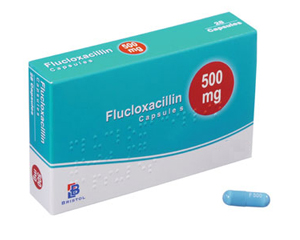
Flukloxacillin 40 kaps
This website provides general information about medicines for educational purposes only. Always consult your doctor or pharmacist before taking any medication.
Choose Your Medicine
Select dosage and quantity
Online Consultation
Reviewed by a qualified physician
Fast, Discreet Delivery
Delivered to your door
Medical Information
About This Medicine
Flucloxacillin is a narrow-spectrum penicillin that is resistant to degradation by staphylococcal penicillinase (beta-lactamase). This makes it the first-line antibiotic for staphylococcal skin and soft tissue infections, including cellulitis, wound infections, abscesses, and mastitis. It is also used for bone and joint infections caused by susceptible staphylococci.
Usage & Dosage
How to Take Flucloxacillin
Flucloxacillin must be taken on an empty stomach — at least one hour before or two hours after food. Food significantly reduces absorption, so taking it with meals means you may not get the full dose into your bloodstream. Swallow capsules whole with a full glass of water.
Space doses evenly throughout the day. The usual adult dose is 250 to 500 mg four times daily (every six hours). For more serious or deep-seated skin infections, higher doses may be prescribed. Always complete the full prescribed course, even if you start to feel better before it ends.
Storing and Handling
Flucloxacillin liquid (for children or those who cannot swallow capsules) must be stored in a refrigerator after preparation and used within seven days. Shake well before each dose and measure carefully.
250 mg to 500 mg four times daily (every six hours). For severe infections: up to 1 g four times daily. Take on an empty stomach. Usual course: 5 to 7 days for skin infections, longer for bone infections.
Side Effects
Common Side Effects
- Nausea and stomach discomfort (taking on an empty stomach can make this slightly more noticeable — if very troublesome, ask your doctor about dosing options)
- Diarrhoea
- Skin rash
- Abdominal cramps
Cholestatic Jaundice
A rare but important side effect of flucloxacillin is cholestatic jaundice (bile flow disruption causing yellowing of the skin and eyes), which can appear days to weeks after starting treatment or even after finishing the course. It is more likely with prolonged use or in older patients. Tell your doctor immediately if you notice yellowing of the skin or eyes, very dark urine, pale stools, or severe itching. This reaction usually resolves after stopping the antibiotic but should be assessed promptly.
Warnings & Precautions
Flucloxacillin is associated with a rare but serious risk of cholestatic hepatitis, which can occur during or up to several weeks after treatment. Risk increases with courses longer than 14 days, age over 55, and female sex. Report jaundice or dark urine immediately.
Contraindications
Contraindicated in penicillin allergy and previous flucloxacillin-associated jaundice or hepatic dysfunction.
Frequently Asked Questions
Why must I take flucloxacillin on an empty stomach?
Dr. Ross Elledge
General Practitioner · General & Family Medicine
Verified Healthcare Professional
TopDoctors Profile