
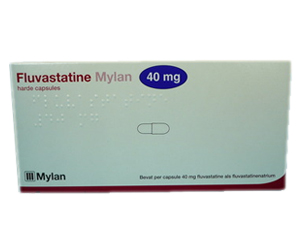
Fluvastatin
View Options
This website provides general information about medicines for educational purposes only. Always consult your doctor or pharmacist before taking any medication.
Choose Your Medicine
Select dosage and quantity
Online Consultation
Reviewed by a qualified physician
Fast, Discreet Delivery
Delivered to your door
Medical Information
About This Medicine
Fluvastatin is a member of the statin class of medicines, used for the treatment of hypercholesterolaemia (raised blood cholesterol) and mixed dyslipidaemia in adults. It is available in both an immediate-release formulation (20mg and 40mg capsules) and an extended-release formulation (80mg tablet, branded as Lescol XL), and is prescribed to reduce low-density lipoprotein cholesterol (LDL-C), total cholesterol, and triglyceride levels, while modestly raising high-density lipoprotein cholesterol (HDL-C). Although fluvastatin is less potent than more widely used statins such as atorvastatin, rosuvastatin, or simvastatin, it occupies a useful clinical niche due to its distinct pharmacokinetic profile and comparatively low interaction potential.
How Fluvastatin Works
Like all statins, fluvastatin inhibits the enzyme 3-hydroxy-3-methylglutaryl coenzyme A reductase (HMG-CoA reductase), which catalyses the rate-limiting step in hepatic cholesterol biosynthesis. By reducing intracellular cholesterol production, fluvastatin upregulates LDL receptors on the surface of hepatocytes, leading to increased clearance of LDL-C from the circulation and a consequent reduction in plasma LDL-C levels. Fluvastatin 80mg extended-release typically reduces LDL-C by approximately 36-40%, which is modest compared with the 50-60% reductions achievable with high-intensity statins.
A Distinct Drug Interaction Profile
One of fluvastatin's most clinically relevant characteristics is that it is metabolised primarily by the cytochrome P450 enzyme CYP2C9, rather than CYP3A4 as is the case for simvastatin and atorvastatin. This means it is subject to far fewer clinically significant drug interactions compared with CYP3A4-metabolised statins. In particular, the interactions with common CYP3A4 inhibitors such as clarithromycin, azithromycin, itraconazole, diltiazem, and grapefruit juice that are a concern with other statins are of less clinical significance with fluvastatin. This pharmacokinetic advantage can make fluvastatin a preferred choice in patients with complex polypharmacy where CYP3A4-mediated interactions are a concern.
Usage & Dosage
How to Take Fluvastatin
Fluvastatin immediate-release capsules (20 mg or 40 mg) should be taken once daily in the evening, as the liver produces most cholesterol overnight and evening dosing maximises the drug's effect. The capsules can be taken with or without food. Patients who need a higher dose (40 mg twice daily) take capsules morning and evening.
Fluvastatin 80 mg extended-release tablets (Lescol XL) are taken once daily in the evening and can be taken with or without food. Extended-release tablets should be swallowed whole — do not break, crush, or chew them.
Long-term Use
Fluvastatin is a long-term or lifelong medication for most patients. Cholesterol levels return to pre-treatment values within weeks of stopping. Do not stop without speaking to your doctor, even if you feel well. Diet and lifestyle changes work alongside the medication and should be maintained throughout treatment.
Adults: starting dose is typically 20-40mg once daily in the evening (immediate-release). The dose may be increased to 40mg twice daily (immediate-release) or 80mg once daily (extended-release, Lescol XL) based on lipid response and tolerance.
Maximum dose: 80mg per day (as either the extended-release tablet or 40mg immediate-release twice daily).
Dose adjustment in renal impairment: fluvastatin is predominantly excreted via the biliary route and does not require dose adjustment in patients with mild to moderate renal impairment. Caution is advised in severe renal impairment. No dose adjustment is required in elderly patients based on age alone. In patients with significant hepatic impairment, fluvastatin is contraindicated, as it is extensively hepatically metabolised and active liver disease impairs drug clearance.
Side Effects
Common Side Effects
Fluvastatin is generally well tolerated, and most patients experience no significant side effects. Those that occur are often mild:
- Headache
- Nausea or digestive discomfort
- Insomnia or disturbed sleep
- Mild muscle aching (myalgia)
- Joint pain (arthralgia)
Muscle Effects
Tell your doctor immediately if you develop unexplained muscle pain, weakness, or tenderness — especially if accompanied by dark-coloured urine. This combination of symptoms may indicate a serious muscle condition called rhabdomyolysis, which is rare but requires prompt medical assessment. The risk is higher if fluvastatin is taken alongside certain other medicines, including some antifungals and fibrates. Have liver and kidney function monitored periodically during treatment.
Warnings & Precautions
Muscle Symptoms and Rhabdomyolysis
All patients prescribed fluvastatin should be advised to report any unexplained muscle pain, weakness, or tenderness promptly, particularly if associated with malaise, fever, or dark urine. These symptoms may indicate myopathy or, in severe cases, rhabdomyolysis, a serious condition in which muscle breakdown releases proteins into the bloodstream that can cause acute kidney injury. The risk of myopathy is increased by factors including high statin dose, advanced age, renal impairment, hypothyroidism, and the concomitant use of fibrates (particularly gemfibrozil) or nicotinic acid. Fluvastatin should be discontinued immediately if myopathy is suspected.
Liver Function and Contraindications
Liver function tests should be performed before starting fluvastatin and if symptoms of liver disease develop during treatment. Fluvastatin should not be used in patients with active liver disease or unexplained persistent elevations in liver enzymes. Alcohol consumption should be moderated during statin therapy. Patients who develop jaundice, significant fatigue, or right upper quadrant discomfort during treatment should seek prompt medical review.
Fluvastatin is teratogenic and must not be used during pregnancy. Women of childbearing potential must use effective contraception during treatment, and fluvastatin must be discontinued immediately if pregnancy is confirmed or planned.
Contraindications
Fluvastatin is contraindicated in the following circumstances:
- Known hypersensitivity to fluvastatin or any capsule or tablet excipient
- Active liver disease or unexplained persistent elevations in serum liver enzymes
- Pregnancy (teratogenic)
- Breastfeeding (risk of neonatal exposure via breast milk)
- Women of childbearing potential who are not using effective contraception
- Concomitant use with fusidic acid (systemic) - risk of severe myopathy; use with ciclosporin requires dose adjustment
- Patients with a personal or family history of muscle disease who are at high risk of myopathy
Frequently Asked Questions
How does fluvastatin compare with atorvastatin for lowering cholesterol?
Why should fluvastatin be taken in the evening?
Can I take fluvastatin with other medicines?
Is it safe to stop taking fluvastatin?
Can I eat grapefruit whilst taking fluvastatin?
Dr. Ross Elledge
General Practitioner · General & Family Medicine
Verified Healthcare Professional
TopDoctors Profile