
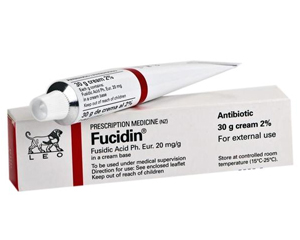
Fucidin
View Options
This website provides general information about medicines for educational purposes only. Always consult your doctor or pharmacist before taking any medication.
Choose Your Medicine
Select dosage and quantity
Online Consultation
Reviewed by a qualified physician
Fast, Discreet Delivery
Delivered to your door
Medical Information
About This Medicine
Fucidin is an antibiotic medicine containing fusidic acid, used for the treatment of bacterial skin infections and, in its systemic formulation, for serious infections of bones, joints, and other deep tissues. Topically, Fucidin is available as a 2% cream and a 2% ointment, and is commonly used for infections including impetigo, infected eczema, infected wounds, and folliculitis. Systemically, fusidic acid 250mg tablets are used for staphylococcal infections that cannot be adequately managed topically, including osteomyelitis, septic arthritis, and endocarditis caused by susceptible organisms.
How Fucidin Works
Fusidic acid exerts its antibacterial effect by inhibiting bacterial protein synthesis at the level of elongation factor G (EF-G), preventing the translocation step of protein elongation on the ribosome. This mechanism is distinct from that of other antibiotics, and there is no cross-resistance with beta-lactams, macrolides, or aminoglycosides, meaning fusidic acid can be effective against organisms resistant to these other classes. Fusidic acid has excellent activity against Staphylococcus aureus, including many strains of meticillin-sensitive Staphylococcus aureus (MSSA), and good penetration into bone, soft tissue, and abscesses.
The Critical Issue of Resistance
A clinically important limitation of fusidic acid is that resistance develops rapidly, particularly when it is used as monotherapy. Single-step mutations in the gene encoding EF-G can confer high-level resistance, and these mutants are readily selected during treatment. For this reason, fusidic acid should never be used as sole systemic therapy for serious infections; it must always be combined with another antistaphylococcal antibiotic such as flucloxacillin or rifampicin for systemic use. For topical treatment of skin infections, short courses are recommended to minimise the emergence of resistant organisms, which is of particular concern given rising rates of fusidic acid resistance in community Staphylococcus aureus isolates across the UK.
Usage & Dosage
Topical Use of Fucidin
Apply Fucidin (fusidic acid) cream or ointment in a thin layer to the affected area of skin three times daily, typically for five to seven days. Clean the skin gently before applying. A thin layer is all that is needed — applying more does not improve the effect and increases the chance of resistance developing. Fucidin cream is water-washable and suitable for moist or weeping skin. The ointment is greasier and better suited for dry or scaly patches.
Wash your hands after applying unless the hands are the area being treated. A light dressing may be placed over the area if needed.
Do Not Use Long-term
Do not use Fucidin cream for more than two weeks without medical review. Prolonged use on the same area can promote bacterial resistance to fusidic acid, which is an antibiotic of significant importance. If the skin infection has not improved after seven days of treatment, see your doctor.
Topical Fucidin 2% cream or ointment: apply a thin layer to the affected area three to four times daily for five to seven days. Prolonged topical use beyond seven days is discouraged due to the risk of resistance development.
Systemic fusidic acid (250mg tablets): adults and children over 12 years: 500mg (2 tablets) three times daily with food. Children's dosing is calculated by body weight. For serious deep-seated infections, higher doses may be used under specialist guidance.
Dose reduction may be required in patients with biliary obstruction or severe hepatic impairment, as fusidic acid is excreted primarily via the bile. No routine dose adjustment is required based on renal function, as renal excretion is minimal. Elderly patients do not require dose adjustment based on age alone, though hepatic function should be considered.
Side Effects
Common Side Effects
For topical Fucidin, side effects are usually mild and local:
- Mild skin irritation, redness, or burning at the application site
- Itching or rash
- Dryness or peeling of the skin
These are usually brief and settle with continued use. Contact dermatitis (an allergic reaction to fusidic acid itself) is uncommon but possible — if irritation increases rather than improves, stop the cream and see your doctor.
For Oral Fucidin
When taken by mouth, side effects are more common and include nausea, vomiting, abdominal discomfort, and diarrhoea. Jaundice and liver function abnormalities have been reported, particularly with high doses or prolonged oral treatment. Tell your doctor if you develop yellowing of the skin or eyes, dark urine, or severe abdominal pain.
Warnings & Precautions
Resistance - Use Antibiotics Responsibly
Resistance to fusidic acid develops rapidly, particularly when it is used as monotherapy. For serious systemic infections, fusidic acid must always be prescribed alongside another antistaphylococcal antibiotic. Even for topical treatment, prolonged or repeated courses should be avoided wherever possible, as fusidic acid-resistant Staphylococcus aureus is an increasing problem in UK communities. If topical treatment is needed for longer than seven days, clinical review is recommended to reassess the diagnosis and the need for continued antibiotic treatment.
Statin Interaction - Critical Warning
Systemic fusidic acid must not be used concurrently with statin therapy. Co-administration of fusidic acid with statins has been associated with cases of rhabdomyolysis (severe muscle breakdown), which can lead to acute kidney injury and, in rare cases, death. If a patient on a statin requires a course of systemic fusidic acid, the statin should be suspended for the duration of the fusidic acid course, with a gap of at least seven days before the statin is restarted. This interaction applies to all statins and is a contraindication, not merely a caution.
Liver Monitoring
Liver function tests should be performed before initiating systemic fusidic acid and monitored regularly during prolonged courses. Patients with pre-existing liver disease or biliary obstruction require particular care, as hepatic impairment significantly affects drug excretion.
Contraindications
Fucidin is contraindicated in the following circumstances:
- Known hypersensitivity to fusidic acid or any formulation excipient
- Concomitant systemic use with statins (risk of rhabdomyolysis - interaction contraindication)
- Application to the eyes (topical cream/ointment)
- Patients with jaundice or significant biliary obstruction (systemic tablets)
- Severely impaired hepatic function without appropriate dose adjustment and monitoring
- Neonates receiving parenteral formulations with certain diluents (neonatal-specific formulation concerns)
- Use as sole antibiotic therapy for systemic staphylococcal infections due to rapid resistance development
Frequently Asked Questions
How long does Fucidin cream take to work for impetigo?
Why can't I use Fucidin cream for longer than a week?
Can I take Fucidin tablets if I am on a statin?
Is Fucidin cream safe to use on infected eczema?
Can Fucidin be used during pregnancy?
Dr. Ross Elledge
General Practitioner · General & Family Medicine
Verified Healthcare Professional
TopDoctors Profile