
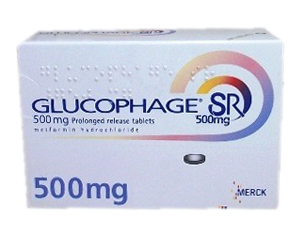
Glucophage
View Options
This website provides general information about medicines for educational purposes only. Always consult your doctor or pharmacist before taking any medication.
Choose Your Medicine
Select dosage and quantity
Online Consultation
Reviewed by a qualified physician
Fast, Discreet Delivery
Delivered to your door
Medical Information
About This Medicine
What Is Glucophage?
Glucophage is the brand name for metformin hydrochloride, a biguanide oral antidiabetic medicine used as a first-line treatment for type 2 diabetes mellitus in adults and children aged 10 years and over. Metformin has been used clinically for over 60 years and remains the most widely prescribed glucose-lowering medicine in the world, recommended by all major diabetes guidelines as the preferred initial pharmacological therapy for most patients with type 2 diabetes, alongside lifestyle modifications including dietary changes and increased physical activity.
Unlike many other antidiabetic medicines, Glucophage works primarily by reducing hepatic glucose production — the liver's tendency to release excessive glucose into the bloodstream, particularly overnight and between meals. This mechanism, combined with its ability to improve insulin sensitivity in peripheral tissues, effectively lowers both fasting and postprandial (after-meal) blood glucose levels without causing hypoglycaemia (dangerously low blood sugar) when used as monotherapy.
Weight-Neutral Profile
One of the significant advantages of Glucophage is its weight-neutral or even modest weight-reducing effect. Unlike sulphonylureas and insulin, which often cause weight gain, metformin does not promote fat storage or stimulate appetite. This makes it particularly suitable for overweight and obese patients with type 2 diabetes, in whom it has also been shown to reduce cardiovascular mortality, as demonstrated in the landmark UK Prospective Diabetes Study (UKPDS).
Formulations Available
Glucophage is available as standard tablets (500 mg, 850 mg, and 1000 mg) and as Glucophage SR, a modified-release formulation that releases the drug more slowly, reducing gastrointestinal side effects. The tablets must be taken with or immediately after food to minimise nausea and GI upset. Metformin is also available as an oral solution (Riomet) for patients who have difficulty swallowing tablets.
Usage & Dosage
How to Take Glucophage
Glucophage tablets should always be taken with food or immediately after a meal. This is not optional — taking metformin on an empty stomach significantly increases the likelihood of gastrointestinal side effects including nausea, vomiting, diarrhoea, and abdominal discomfort. The tablets should be swallowed whole with a drink of water and not crushed or chewed, as this may alter the release characteristics of the tablet.
Treatment is typically started at a low dose (500 mg once or twice daily) and increased slowly over several weeks, allowing the gastrointestinal system to adapt and minimising side effects. This gradual dose escalation is important — rushing to the full therapeutic dose too quickly is the most common cause of patients discontinuing metformin due to poor tolerability.
Important Precautions
Glucophage must be temporarily stopped before undergoing procedures involving iodinated contrast dye (such as CT scans, angiography, or cardiac catheterisation), as contrast dye can acutely impair renal function. If the kidneys fail to clear metformin adequately, it can accumulate and cause a rare but serious complication called lactic acidosis. Metformin should also be held on the day of any major surgery and reinitiated once renal function has been confirmed to be stable post-procedure. Similarly, it should be temporarily stopped during episodes of acute illness associated with dehydration, diarrhoea, vomiting, or severe infection.
The standard adult starting dose of Glucophage is 500 mg taken two or three times daily with meals, or 850 mg once or twice daily. The dose is typically increased gradually — no faster than every 10 to 15 days — to minimise gastrointestinal side effects. The usual maintenance dose is 1500 to 2000 mg daily in divided doses, and the maximum recommended dose is 3000 mg daily. The Glucophage SR (slow-release) formulation may be taken once daily with the evening meal, which some patients find more convenient and better tolerated than multiple daily doses.
In patients with type 2 diabetes aged 10 to 16 years, the starting dose is 500 mg or 850 mg once daily, increased if necessary to a maximum of 2000 mg daily in divided doses. Renal function (eGFR) must be checked before starting and at least annually during treatment. Glucophage should be dose-reduced if eGFR falls below 45 mL/min/1.73m2 and discontinued if eGFR falls below 30 mL/min/1.73m2, due to the risk of metformin accumulation.
Side Effects
Glucophage is generally well tolerated but gastrointestinal side effects are common, particularly at the start of treatment. These often improve with time and with adherence to the guidance to take the medicine with food.
Common Side Effects
- Nausea and vomiting, particularly when treatment is first started or the dose is increased
- Diarrhoea and loose stools, which may be persistent in some patients
- Abdominal pain, cramping, bloating, and flatulence
- Metallic taste in the mouth, which usually resolves within a few weeks
- Loss of appetite (which can be a beneficial effect in overweight patients)
- Vitamin B12 deficiency with long-term use (metformin reduces B12 absorption; periodic monitoring is recommended)
- Mild reduction in folate levels
Serious Side Effects
- Lactic acidosis: a rare but potentially life-threatening complication characterised by muscle pain, weakness, difficulty breathing, nausea, vomiting, stomach pain, feeling cold, dizziness, and slow or irregular heartbeat — seek emergency medical care immediately if these symptoms occur
- Severe hypoglycaemia is not caused by Glucophage alone, but can occur if combined with insulin or sulphonylureas
- Severe allergic reactions (rash, urticaria, angioedema) are rare but require immediate medical attention
- Megaloblastic anaemia due to severe vitamin B12 deficiency (uncommon but reported with prolonged use)
Warnings & Precautions
Lactic Acidosis Risk
The most serious — though rare — complication associated with Glucophage is lactic acidosis, a build-up of lactic acid in the blood caused by impaired mitochondrial metabolism. The risk is very low in patients with normal renal function, but rises substantially if metformin accumulates due to impaired renal excretion. Glucophage must be withheld in any situation where renal function may be acutely compromised, including: before procedures using iodinated contrast dye, during or after major surgery, during acute dehydration, severe diarrhoea or vomiting, and in the context of acute illness or infection that is severe enough to cause haemodynamic instability. Patients should be clearly counselled on this point and advised to stop the medicine and seek medical advice if they become seriously unwell.
Excessive alcohol intake increases the risk of lactic acidosis and should be avoided. Alcohol can also cause hypoglycaemia in people with diabetes and should be consumed in moderation, with food.
Renal Function Monitoring
Renal function must be checked at least annually in all patients taking Glucophage, and more frequently in those with progressive renal disease or other risk factors. As the eGFR declines, dose adjustment or discontinuation is required to prevent accumulation. Patients should also be monitored for vitamin B12 deficiency with long-term use, as metformin impairs the absorption of this essential vitamin in the terminal ileum.
Contraindications
Glucophage is contraindicated in the following situations:
- eGFR below 30 mL/min/1.73m2 (severe renal impairment or renal failure)
- Acute or chronic conditions that may impair renal function, including dehydration, severe infection, or shock
- Hepatic impairment (liver failure), as lactic acid clearance is dependent on normal liver function
- Diabetic ketoacidosis (DKA) or pre-coma — insulin therapy is required in this situation
- Before and within 48 hours of procedures using iodinated contrast media, where renal function may be compromised
- Excessive alcohol consumption or alcoholism
- Breastfeeding (metformin passes into breast milk; the decision requires risk-benefit assessment)
- Known hypersensitivity or allergy to metformin or any excipient in the tablet formulation
- Acute heart failure or haemodynamic instability where renal perfusion is significantly compromised
Frequently Asked Questions
Why do I need to stop Glucophage before having a CT scan?
Will Glucophage cause my blood sugar to drop too low?
How long do the stomach side effects of Glucophage last?
Does Glucophage cause weight loss?
Do I need to have my vitamin B12 levels checked while on Glucophage?
Dr. Ross Elledge
General Practitioner · General & Family Medicine
Verified Healthcare Professional
TopDoctors Profile