
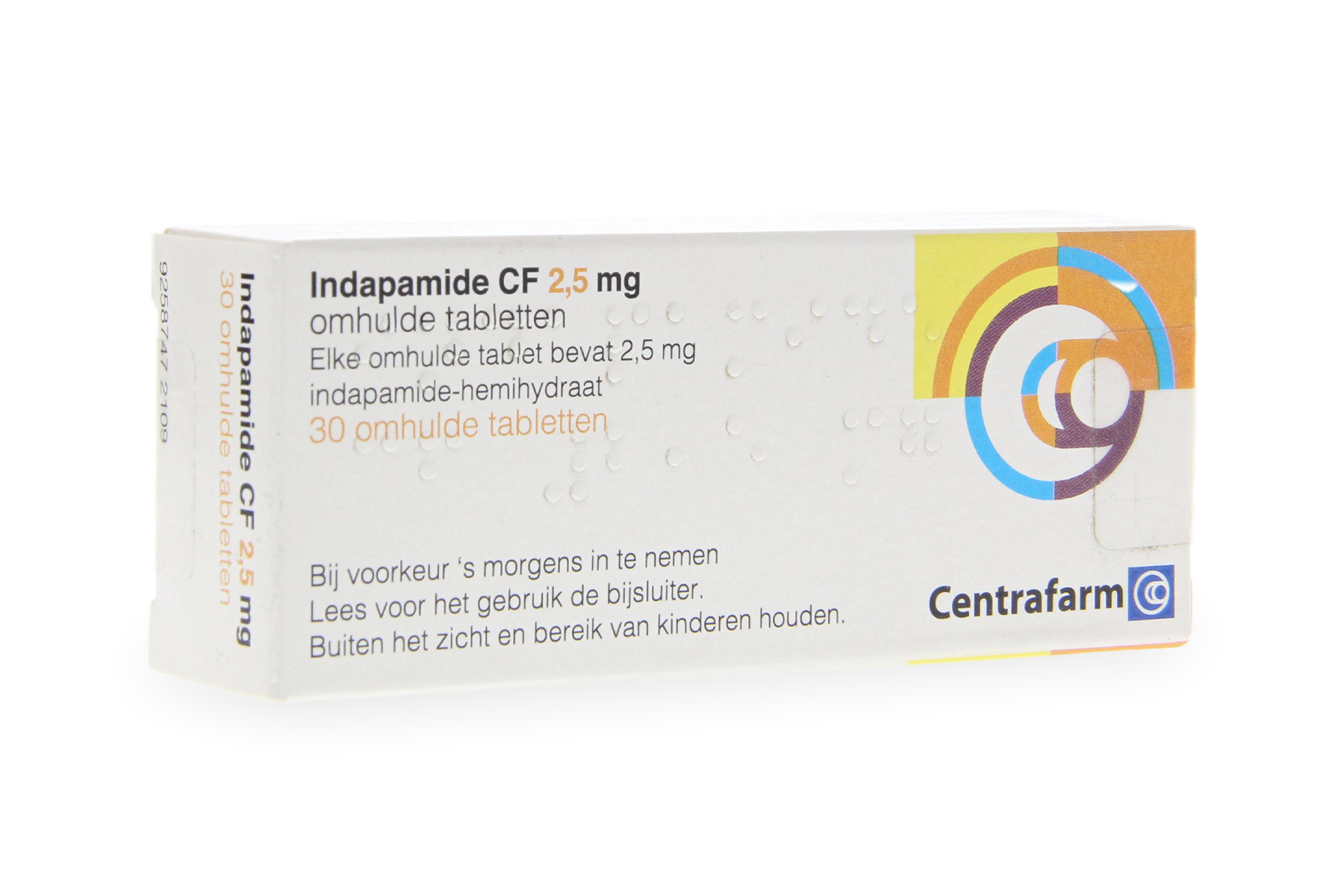
Indapamide
View Options
This website provides general information about medicines for educational purposes only. Always consult your doctor or pharmacist before taking any medication.
Choose Your Medicine
Select dosage and quantity
Online Consultation
Reviewed by a qualified physician
Fast, Discreet Delivery
Delivered to your door
Medical Information
About This Medicine
Indapamide is a thiazide-like diuretic primarily prescribed for the management of high blood pressure (hypertension). Unlike conventional thiazide diuretics, indapamide has a dual mechanism of action, combining mild diuretic properties with a direct vasodilatory effect on blood vessel walls. This combination makes it particularly effective at lowering blood pressure whilst minimising some of the metabolic side effects associated with older thiazide medicines.
How Indapamide Works
Indapamide acts on the distal convoluted tubule of the kidney, inhibiting sodium and chloride reabsorption. This leads to a modest increase in urine output and a reduction in fluid volume within the circulation. Simultaneously, indapamide relaxes the smooth muscle in arterial walls, reducing peripheral vascular resistance. The net result is a sustained and predictable reduction in both systolic and diastolic blood pressure. These combined actions set indapamide apart from pure diuretics and contribute to its favourable cardiovascular profile.
Clinical Evidence and Benefits
Indapamide has been the subject of extensive clinical research. The landmark HYVET (Hypertension in the Very Elderly Trial) study demonstrated that indapamide-based treatment significantly reduced stroke rates and cardiovascular mortality in patients aged 80 and over, a finding that had a substantial impact on prescribing guidelines for elderly patients with hypertension. This evidence of benefit in vulnerable populations has reinforced indapamide's position as a first-line antihypertensive option in UK clinical practice.
Indapamide is available in two formulations: a standard 2.5mg immediate-release tablet and a 1.5mg modified-release (SR) tablet. The SR formulation delivers the active ingredient more gradually throughout the day, which can result in a smoother blood pressure profile and is often preferred for its convenience and tolerability.
Monitoring and Long-Term Use
Because indapamide affects electrolyte handling in the kidney, regular monitoring of blood electrolytes — particularly potassium, sodium, and magnesium — is recommended during treatment. Blood glucose and uric acid levels should also be checked periodically, as thiazide-like diuretics can have a modest effect on these parameters. Indapamide is well-tolerated by most patients and is suitable for long-term use when monitored appropriately, making it a valuable cornerstone medicine in the management of hypertension.
Usage & Dosage
Indapamide is used primarily for the treatment of hypertension (high blood pressure) in adults. It may be used alone as monotherapy or combined with other antihypertensive agents such as ACE inhibitors or angiotensin receptor blockers to achieve optimal blood pressure control.
How to Take Indapamide
Indapamide tablets should be taken once daily, preferably in the morning. Taking the medicine in the morning helps to avoid the need to urinate during the night (nocturia), which can be disruptive to sleep. The tablet should be swallowed whole with a glass of water. Indapamide may be taken with or without food. It is important to take indapamide at the same time each day to maintain steady blood levels and consistent blood pressure control. If a dose is missed, it should be taken as soon as remembered, unless it is close to the time for the next dose, in which case the missed dose should be skipped.
Duration of Treatment
Indapamide is usually prescribed as a long-term treatment for hypertension. Blood pressure reduction typically becomes apparent within one to two weeks of starting treatment, with full effect established after a few weeks. Patients should not stop taking indapamide without speaking to their doctor, as stopping abruptly may cause blood pressure to rise again. Regular blood pressure monitoring and periodic blood tests to check electrolytes and kidney function are an important part of ongoing management during treatment with indapamide.
The standard adult dose of indapamide for hypertension is 2.5mg once daily using the immediate-release formulation, or 1.5mg once daily using the modified-release (SR) formulation. Both doses are clinically equivalent in terms of blood pressure reduction, but the SR formulation may offer a more gradual release profile. Higher doses of indapamide do not generally provide additional blood pressure benefit and are associated with a greater risk of electrolyte disturbances; the dose is therefore not routinely increased beyond the standard therapeutic dose.
Indapamide is taken once daily in the morning. No dose adjustment is typically required for mild to moderate renal impairment, but indapamide should be used with caution in patients with severe renal impairment and is generally avoided when creatinine clearance falls below 30 mL/min. In elderly patients, the standard dose is used but closer monitoring of electrolytes and renal function is recommended. Indapamide is not recommended for use in children or adolescents under 18 years of age.
Side Effects
Common Side Effects
- Hypokalaemia (low potassium) — particularly with prolonged use
- Hyponatraemia (low sodium)
- Dizziness or lightheadedness, particularly on standing up
- Headache
- Fatigue or weakness
- Muscle cramps, related to electrolyte changes
- Nausea or mild gastrointestinal discomfort
- Increased urination, especially in the first few days of treatment
- Skin rash or photosensitivity (increased sensitivity to sunlight)
Serious Side Effects
- Severe hypokalaemia — can cause heart rhythm disturbances; seek urgent medical attention if experiencing palpitations or muscle weakness
- Hyponatraemia — very low sodium levels can cause confusion, seizures, or coma; seek immediate medical attention
- Severe allergic reactions (anaphylaxis) — rash, swelling of the face, lips or throat, difficulty breathing
- Worsening of existing gout due to increased uric acid levels
- Elevated blood glucose — particularly relevant in patients with diabetes or pre-diabetes
- Rare: severe skin reactions including Stevens-Johnson syndrome
- Hepatic encephalopathy in patients with pre-existing liver disease
- Acute angle-closure glaucoma — sudden painful vision changes require emergency assessment
Warnings & Precautions
Important Warnings Before Taking Indapamide
Electrolyte imbalances are among the most important considerations with indapamide. The medicine can cause low potassium (hypokalaemia), low sodium (hyponatraemia), and low magnesium levels. Patients should have regular blood tests to monitor electrolytes, especially if they are also taking digoxin, certain antiarrhythmic medicines, or corticosteroids, as low potassium can increase the risk of dangerous heart rhythms in these situations.
Patients with a history of gout should use indapamide with caution, as it may raise uric acid levels. Similarly, indapamide can slightly impair glucose tolerance, so patients with diabetes require closer monitoring of blood sugar levels during treatment. In patients with severe renal impairment or hepatic failure, indapamide is generally contraindicated or requires specialist supervision.
Drug Interactions and Special Populations
Indapamide may interact with lithium (risk of toxicity), non-steroidal anti-inflammatory drugs (NSAIDs, which can reduce the diuretic effect and impair renal function), and other antihypertensives (additive blood pressure lowering). Alcohol should be used with caution, as it can enhance the blood pressure-lowering effect. Patients should protect skin from excessive sunlight exposure due to the risk of photosensitivity reactions. Indapamide is not recommended during pregnancy or breastfeeding and should be discontinued prior to conception if possible.
Contraindications
Indapamide must not be used in patients with any of the following conditions:
- Known hypersensitivity to indapamide, sulphonamide derivatives, or any excipient in the formulation
- Severe renal impairment (creatinine clearance below 30 mL/min)
- Severe hepatic impairment or hepatic encephalopathy
- Hypokalaemia (low potassium) at baseline prior to starting treatment
- Pregnancy — indapamide is contraindicated throughout pregnancy
- Breastfeeding — the drug passes into breast milk
- Children and adolescents under 18 years (safety and efficacy not established)
- Concomitant use with non-antiarrhythmic medicines known to cause torsades de pointes, due to risk of QT prolongation when combined with hypokalaemia
Frequently Asked Questions
What is the difference between indapamide 2.5mg and indapamide 1.5mg SR?
How long does it take for indapamide to lower blood pressure?
Can I take indapamide if I have diabetes?
What foods or drinks should I avoid whilst taking indapamide?
Is it safe to take indapamide long term?
Dr. Ross Elledge
General Practitioner · General & Family Medicine
Verified Healthcare Professional
TopDoctors Profile