
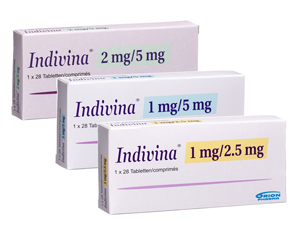
Indivina
View Options
This website provides general information about medicines for educational purposes only. Always consult your doctor or pharmacist before taking any medication.
Choose Your Medicine
Select dosage and quantity
Online Consultation
Reviewed by a qualified physician
Fast, Discreet Delivery
Delivered to your door
Medical Information
About This Medicine
Indivina is a combined hormone replacement therapy (HRT) preparation containing estradiol valerate and medroxyprogesterone acetate (MPA). It is used for continuous combined HRT in postmenopausal women who have not had a period for at least twelve months and who have an intact uterus. The progestogen component (MPA) protects the endometrium against hyperplasia that would otherwise result from unopposed oestrogen therapy.
How Indivina Works
Estradiol valerate is converted to estradiol after absorption, replacing the oestrogen that declines during and after menopause. Medroxyprogesterone acetate counteracts the proliferative effects of oestrogen on the uterine lining, maintaining endometrial safety. The continuous combined regimen means both hormones are taken every day without a break, which in most women produces amenorrhoea (no periods) after the first few months of treatment — a benefit many women value.
Symptoms Treated
Indivina is effective for moderate to severe menopausal symptoms including hot flushes, night sweats, sleep disturbances, urogenital symptoms (vaginal dryness, dyspareunia), and mood changes. It also helps to maintain bone mineral density and reduce the risk of osteoporotic fractures.
Usage & Dosage
How to Take Indivina
Take one Indivina tablet daily without interruption, at the same time each day. Swallow the tablet whole with water, with or without food. Move immediately from one pack to the next without any break between packs.
Indivina is a continuous combined HRT preparation, meaning both oestrogen (estradiol valerate) and progestogen (medroxyprogesterone acetate) are taken every day. No tablet-free interval is taken and no planned withdrawal bleed is expected — in most women, periods stop entirely after the first few months of treatment. This makes it suitable for postmenopausal women, typically those who are at least 12 months past their last natural period.
Managing Initial Bleeding
Irregular spotting or light bleeding is common during the first three to six months as the uterine lining adjusts. This is expected and usually settles. Report any bleeding that starts or recurs after six months, or any bleeding that is heavier than a light period, as this should be investigated.
Indivina is available in three strengths: 1 mg/2.5 mg, 1 mg/5 mg, and 2 mg/5 mg (estradiol valerate mg/medroxyprogesterone acetate mg). Treatment typically begins at the lowest effective dose. Dose adjustments are guided by symptom control and tolerability. Available in packs of 84 tablets.
Side Effects
Common Side Effects
- Breast tenderness or enlargement
- Nausea
- Headache
- Mood changes, including low mood or irritability
- Fluid retention (bloating, ankle swelling)
- Irregular vaginal spotting or bleeding (particularly in the first few months)
- Weight changes
These tend to improve as the body adjusts to the hormones over the first few months.
Long-term Risks
Combined HRT (oestrogen plus progestogen) is associated with a small increased risk of breast cancer with prolonged use, and a small increased risk of blood clots (venous thromboembolism) and stroke. The absolute risk for any individual woman is low and depends on age, health, and duration of use. Report new breast lumps, persistent leg pain or swelling, chest pain, or a sudden severe headache promptly. Your doctor will review your Indivina treatment at least annually.
Warnings & Precautions
Indivina should not be used as the sole contraceptive — it does not reliably prevent pregnancy in perimenopausal women. Annual breast examination and mammography screening are recommended. Undiagnosed vaginal bleeding must be investigated before starting HRT. Regular review of the ongoing need for HRT is essential. If you develop signs of VTE (leg pain or swelling, breathlessness), seek immediate medical attention.
Contraindications
Contraindicated in women with known or suspected breast cancer, known or suspected oestrogen-dependent malignancies, undiagnosed vaginal bleeding, untreated endometrial hyperplasia, active or recent thromboembolic disease, active liver disease, porphyria, and known hypersensitivity to any component. Indivina is not suitable for women who have had a hysterectomy (oestrogen-only HRT is preferable).
Frequently Asked Questions
Why does Indivina stop periods in most women?
Is Indivina suitable for recently menopausal women?
How does Indivina compare to other combined HRT options?
Dr. Ross Elledge
General Practitioner · General & Family Medicine
Verified Healthcare Professional
TopDoctors Profile