
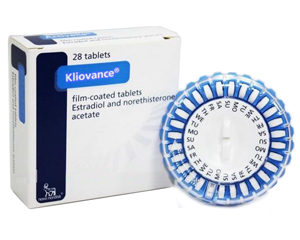
Kliovance
View Options
This website provides general information about medicines for educational purposes only. Always consult your doctor or pharmacist before taking any medication.
Choose Your Medicine
Select dosage and quantity
Online Consultation
Reviewed by a qualified physician
Fast, Discreet Delivery
Delivered to your door
Medical Information
About This Medicine
Kliovance (also known as Activelle in some markets) is a continuous combined hormone replacement therapy (HRT) containing estradiol 1 mg and norethisterone acetate (NETA) 0.5 mg per tablet. It is indicated for the treatment of oestrogen-deficiency symptoms in postmenopausal women more than one year after their last natural period who still have their uterus. The progestogen component (NETA) protects the endometrium from hyperplasia caused by unopposed oestrogen.
Continuous Combined HRT
Unlike sequential HRT, which produces a monthly withdrawal bleed, Kliovance is taken every day without a break. Most women become amenorrhoeic (period-free) within the first few months of treatment as the endometrium becomes atrophic. This makes Kliovance particularly suitable for women who are clearly postmenopausal and do not wish to continue having monthly bleeds.
Benefits of Treatment
Kliovance relieves moderate to severe menopausal symptoms including hot flushes, night sweats, sleep disturbances, vaginal dryness, urinary symptoms, and mood changes. It also helps to preserve bone density and reduce the risk of osteoporotic fractures in postmenopausal women.
Usage & Dosage
How to Take Kliovance
Take one Kliovance tablet daily without interruption, at the same time each day. Swallow the tablet whole with water, with or without food. Move immediately from one pack to the next — there is no break between packs.
Kliovance is a continuous combined HRT preparation containing estradiol 1 mg and norethisterone acetate 0.5 mg in every tablet. It is designed for postmenopausal women (typically at least 12 months past their last natural period). Because both hormones are taken continuously, no monthly progestogen phase or planned withdrawal bleed occurs — most women on Kliovance have no bleeding after the first few months.
Managing Initial Irregular Bleeding
Irregular spotting or light bleeding is common during the first three to six months as the uterine lining adapts to continuous combined hormonal exposure. This is expected and usually resolves. Any bleeding that starts or increases after six months, or any bleeding that is heavier than light spotting, should be reported to your doctor for assessment.
Kliovance tablets each contain estradiol 1 mg and norethisterone acetate 0.5 mg. Available in packs of 28 tablets (one month supply). Take one tablet daily continuously. This is a low-dose continuous combined HRT. A higher dose option (estradiol 2 mg / NETA 1 mg) is available as Kliofem for women with more severe symptoms requiring higher oestrogen exposure.
Side Effects
Common Side Effects
- Irregular bleeding or spotting (particularly in the first few months)
- Breast tenderness or enlargement
- Nausea
- Headache
- Fluid retention (bloating, ankle swelling)
- Mood changes, including low mood or irritability
These effects often improve as the body adjusts over the first two to three months.
Long-term Risks
Combined HRT carries a small increased risk of breast cancer with prolonged use, and a small increased risk of blood clots and stroke. The absolute risk depends on your age, health, and how long you take HRT. Your doctor will review your treatment at least annually. Report new breast lumps, unexplained leg swelling, chest pain, or sudden severe headache promptly.
Warnings & Precautions
Kliovance must not be used in women who do not have a uterus; oestrogen-only HRT is preferred after hysterectomy. Regular breast examination and mammography participation is important during HRT. Report any undiagnosed vaginal bleeding before starting. All women taking HRT should be reviewed at least annually. Stop HRT and seek urgent medical advice if signs of thromboembolism occur (sudden chest pain, breathlessness, leg swelling). NETA-containing HRT is associated with a small increase in androgenic side effects in some women.
Contraindications
Contraindicated in women with known or suspected breast cancer or other hormone-sensitive malignancies, undiagnosed vaginal bleeding, untreated endometrial hyperplasia, active or recent thromboembolic disease, active liver disease, porphyria cutanea tarda, and known hypersensitivity to any component.
Frequently Asked Questions
Why do I still have spotting after several months on Kliovance?
What is the difference between Kliovance and Kliofem?
Can I start Kliovance straight after stopping a sequential HRT?
Dr. Ross Elledge
General Practitioner · General & Family Medicine
Verified Healthcare Professional
TopDoctors Profile