
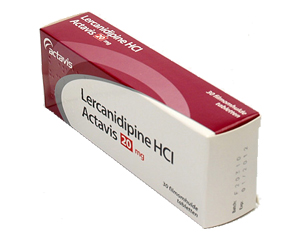
Lercanidipine
View Options
This website provides general information about medicines for educational purposes only. Always consult your doctor or pharmacist before taking any medication.
Choose Your Medicine
Select dosage and quantity
Online Consultation
Reviewed by a qualified physician
Fast, Discreet Delivery
Delivered to your door
Medical Information
About This Medicine
Lercanidipine (brand names: Zanidip, Lercan) is a third-generation, highly lipophilic dihydropyridine calcium channel blocker used for the treatment of mild to moderate hypertension (high blood pressure) in adults. Its unique pharmacokinetic properties — particularly its high lipophilicity and slow onset of action — distinguish it from earlier dihydropyridines like nifedipine and amlodipine.
Pharmacological Advantages
Lercanidipine partitions extensively into lipid bilayers of vascular smooth muscle cell membranes before binding to calcium channels. This results in a gradual onset of action, a prolonged effect lasting 24 hours from a once-daily dose, and importantly, a significantly lower incidence of ankle oedema compared to amlodipine or nifedipine. The smooth onset also reduces reflex tachycardia and flushing, side effects that are more pronounced with rapid-onset dihydropyridines.
Clinical Use
Lercanidipine is an excellent option for patients who experience troublesome ankle oedema or flushing with amlodipine. It has demonstrated comparable blood pressure reduction to amlodipine in clinical trials, with a more favourable tolerability profile.
Usage & Dosage
How to Take Lercanidipine
Take lercanidipine once daily, at least 15 minutes before the main meal of the day (usually breakfast). Food — especially high-fat meals — significantly increases the absorption of lercanidipine, which can lead to excessive blood pressure lowering and side effects. Taking it before food avoids this interaction. Swallow the tablet whole with water.
Dose
Treatment begins at 10 mg once daily. If blood pressure remains inadequately controlled after two weeks, the dose may be increased to 20 mg once daily. Do not exceed 20 mg per day. Allow at least two weeks at each dose before assessing the need for adjustment, as lercanidipine has a gradual onset.
Lercanidipine tablets are available in 10 mg and 20 mg strengths. Take once daily before a meal. Maximum dose is 20 mg daily. Available as Zanidip and generic brands. Store below 25°C, protected from light.
Side Effects
Common Side Effects
The tolerability advantage of lercanidipine is well documented. Ankle oedema is significantly less common than with amlodipine, occurring in roughly 2–5% of patients compared to 10% or more with amlodipine. Flushing and headache are also less pronounced. Palpitations, dizziness, and gastrointestinal upset (nausea, dyspepsia) may occur, particularly at the start of treatment.
Drug Interactions
Lercanidipine is metabolised by CYP3A4. Strong CYP3A4 inhibitors (ketoconazole, itraconazole, erythromycin, ciclosporin, ritonavir) significantly increase lercanidipine plasma levels and are contraindicated or require great caution. Grapefruit juice also inhibits CYP3A4 and must be avoided. Strong inducers (rifampicin) can reduce lercanidipine efficacy.
Warnings & Precautions
Do not take with grapefruit juice. Avoid ciclosporin co-administration if possible; if unavoidable, monitor blood pressure and ciclosporin levels closely. Use with caution in patients with sick sinus syndrome, severe hepatic or renal impairment, and unstable angina or within one month of a myocardial infarction. Lercanidipine is not recommended in heart failure or significant left ventricular dysfunction.
Contraindications
Contraindicated in patients with known hypersensitivity to lercanidipine or other dihydropyridines. Contraindicated with strong CYP3A4 inhibitors (e.g. ketoconazole, itraconazole, erythromycin, ciclosporin). Not for use in severe hepatic or renal impairment, cardiogenic shock, or unstable angina. Use in pregnancy and breastfeeding is not recommended.
Frequently Asked Questions
Why is lercanidipine taken before food rather than with food?
Can I switch from amlodipine to lercanidipine?
Can I drink alcohol while taking lercanidipine?
Dr. Ross Elledge
General Practitioner · General & Family Medicine
Verified Healthcare Professional
TopDoctors Profile