
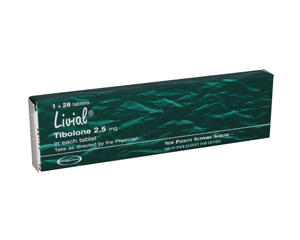
Livial
View Options
This website provides general information about medicines for educational purposes only. Always consult your doctor or pharmacist before taking any medication.
Choose Your Medicine
Select dosage and quantity
Online Consultation
Reviewed by a qualified physician
Fast, Discreet Delivery
Delivered to your door
Medical Information
About This Medicine
Livial is a HRT preparation containing tibolone 2.5mg, a synthetic steroid that has unique properties distinguishing it from conventional oestrogen-progestogen HRT. After being absorbed and metabolised, tibolone produces metabolites with oestrogenic, progestogenic, and mildly androgenic activity, allowing a single compound to address multiple menopausal symptoms. Unlike conventional combined HRT, Livial is taken continuously and does not induce a regular monthly withdrawal bleed in most postmenopausal women.
How Livial Works
Tibolone is converted in the body into three active metabolites. Two have predominantly oestrogenic effects, acting on the hypothalamus, vaginal tissue, and bone to relieve hot flushes, improve vaginal lubrication, and maintain bone density. The third metabolite has progestogenic activity, which protects the uterine lining from oestrogen-driven overstimulation. The mild androgenic action may contribute to improvements in libido and energy that some women report during Livial treatment. This multi-faceted pharmacological profile allows Livial to provide comprehensive symptom relief without the need for a separate progestogen.
Indications
Livial is licensed for the relief of symptoms caused by natural or surgical menopause in postmenopausal women, and for the prevention of osteoporosis in postmenopausal women at increased risk of fracture who cannot tolerate or are unsuitable for other osteoporosis treatments. It is particularly suited to women who are at least twelve months past their last natural menstrual period and wish to avoid the monthly bleeding associated with cyclical HRT.
Important Distinction from Conventional HRT
Because tibolone has progestogenic activity in the endometrium, it does not generally stimulate endometrial proliferation, and most women do not experience regular withdrawal bleeds. However, any bleeding that occurs during Livial treatment should be investigated promptly, as it can be a sign of endometrial pathology.
Usage & Dosage
Livial is taken as one 2.5mg tablet once daily, continuously, without any tablet-free intervals or breaks. It is suitable only for postmenopausal women, meaning those whose last natural period was at least twelve months ago. It is not appropriate for perimenopausal women or those who are still menstruating, and should not be started until the menopause is well established, as premature use in perimenopausal women can cause irregular and unpredictable bleeding.
Timing and Administration
Livial tablets should be swallowed whole with water. They can be taken at any time of day, but taking them at the same time each day establishes a consistent habit and helps avoid missed doses. If a dose is missed, it should be taken as soon as possible on the same day. If it is not remembered until the next day, the missed tablet should be skipped and the normal schedule resumed; a double dose should never be taken.
Monitoring During Treatment
Women taking Livial should attend annual review appointments where their symptoms, quality of life, and ongoing risk factors are reassessed. Any unexpected vaginal bleeding, particularly if it begins after several months of bleed-free use, should be investigated without delay to exclude endometrial pathology. Mammography screening should be attended as per standard NHS recommendations. Liver function may need periodic monitoring in women with a history of liver disease.
The dose of Livial is one 2.5mg tablet taken orally once daily, continuously. There is a single licensed dose for postmenopausal women; dose titration is not generally applicable.
Treatment should only begin once at least twelve months have elapsed since the last natural menstrual period. If starting Livial when switching from another form of HRT, any withdrawal bleed from the previous preparation should be allowed to complete before Livial is commenced. Livial is not appropriate for premenopausal women, pregnant women, or breastfeeding women. In women with hepatic impairment, Livial should be used with caution; it is not recommended in severe liver disease. No specific dose adjustment is required for mild to moderate renal impairment. The need for continued treatment should be reassessed at least annually.
Side Effects
Common Side Effects
- Vaginal bleeding or spotting (particularly in the first few months of use)
- Weight gain
- Bloating or abdominal discomfort
- Breast tenderness
- Headache
- Dizziness
- Skin reactions including itching or rash
- Increased facial or body hair (due to mild androgenic activity)
Serious Side Effects
- Breast cancer: Livial is associated with an increased risk of breast cancer with prolonged use; do not use Livial if you have or have had breast cancer
- Venous thromboembolism: risk of DVT and pulmonary embolism, though lower than with some conventional combined oral HRT
- Stroke: particularly in older postmenopausal women; the risk appears to increase with age
- Endometrial effects: any vaginal bleeding after months of bleed-free use requires urgent investigation to exclude endometrial cancer
- Liver dysfunction: rare cases of liver enzyme elevation have been reported
Warnings & Precautions
Livial carries important clinical warnings and must be used with care in certain patient groups.
Cancer Risk
Livial is associated with an increased risk of breast cancer, similar to other forms of combined HRT. It must not be used in women who have or have recently had breast cancer. In women with a strong family history of breast cancer or known BRCA mutations, the risk-benefit balance should be carefully considered with specialist input. Unexplained vaginal bleeding occurring at any time during Livial treatment requires prompt investigation, including endometrial assessment where appropriate, to exclude uterine cancer.
Cardiovascular and Other Risks
Livial is associated with an increased risk of stroke, particularly in women aged 60 and over. Women with pre-existing cardiovascular risk factors, uncontrolled hypertension, or a history of stroke or TIA should not use Livial. The VTE risk with tibolone is generally considered lower than with oral oestrogen-progestogen HRT, but women with a history of thrombosis, known thrombophilia, or significant obesity should still discuss the risk with their doctor. Livial is not suitable for women with severe hepatic disease, unexplained vaginal bleeding, or known or suspected oestrogen- or progestogen-dependent malignancies. Regular clinical review is essential for all women taking Livial, and the benefit-risk balance should be reassessed at least annually.
Contraindications
- Diagnosed or suspected breast cancer or history of breast cancer
- Known or suspected other hormone-dependent malignancies
- Undiagnosed vaginal bleeding
- Untreated endometrial hyperplasia
- History of or current venous thromboembolism (DVT or pulmonary embolism)
- History of or current arterial thromboembolic disease (stroke, angina, myocardial infarction)
- Severe liver disease or impaired liver function
- Porphyria
- Pregnancy or breastfeeding
- Premenopausal women (not established in menopause)
Frequently Asked Questions
Will I have periods when taking Livial?
Is Livial the same as standard HRT?
Can Livial be taken if I have had breast cancer?
Does Livial help with low libido in the menopause?
How does Livial compare to other HRT for osteoporosis?
Dr. Ross Elledge
General Practitioner · General & Family Medicine
Verified Healthcare Professional
TopDoctors Profile