
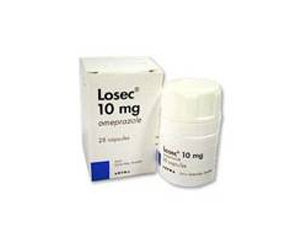
Losec
View Options
This website provides general information about medicines for educational purposes only. Always consult your doctor or pharmacist before taking any medication.
Choose Your Medicine
Select dosage and quantity
Online Consultation
Reviewed by a qualified physician
Fast, Discreet Delivery
Delivered to your door
Medical Information
About This Medicine
Losec (omeprazole) is one of the most recognised branded proton pump inhibitors (PPIs) available in the UK and internationally. Omeprazole was the first PPI to be developed and remains a cornerstone treatment for acid-related gastrointestinal conditions, including gastro-oesophageal reflux disease (GORD), peptic ulcers, and the eradication of Helicobacter pylori. The Losec brand encompasses both standard capsules and the MUPS (multiple-unit pellet system) tablet formulation, offering flexibility for different patient needs.
Mechanism of Action
Omeprazole is a prodrug that is activated in the acidic environment of the stomach's parietal cell canaliculi. Once activated, it forms a covalent bond with the H+/K+ ATPase enzyme, the proton pump, and irreversibly inhibits it. This prevents the secretion of hydrogen ions into the stomach lumen, thereby dramatically reducing gastric acid production. Because the inhibition is irreversible, the duration of acid suppression extends well beyond the drug's relatively short plasma half-life, with acid secretion recovering only as new proton pumps are synthesised, typically over 24 to 48 hours.
Therapeutic Applications
Losec omeprazole is indicated across a broad range of acid-related conditions. In GORD, it heals inflamed oesophageal tissue and controls symptoms of heartburn and regurgitation. For gastric and duodenal ulcers, it promotes healing and, when used with appropriate antibiotics, enables eradication of H. pylori to prevent recurrence. In Zollinger-Ellison syndrome, where the stomach produces excessive acid due to a gastrin-secreting tumour, high doses of omeprazole provide effective long-term control. It is also used prophylactically in patients on NSAIDs or aspirin who are at risk of peptic ulceration.
Availability and Forms
Losec is available in 10mg and 20mg capsules as well as the dispersible MUPS tablet format. Both capsule and MUPS formulations contain enteric-coated pellets or granules that protect the drug from stomach acid until it reaches the small intestine, where absorption occurs. This design ensures reliable bioavailability and consistent therapeutic effect. Generic omeprazole is widely available and interchangeable with Losec in most clinical settings.
Usage & Dosage
Losec omeprazole should be taken once daily, ideally thirty to sixty minutes before the first meal of the day. Taking it before eating maximises the drug's effectiveness, as proton pumps are most active during meals. For most indications, once-daily dosing provides sufficient acid suppression over a 24-hour period.
Swallowing and Administration
Losec capsules should be swallowed whole with water; they must not be chewed, as this destroys the enteric coating on the pellets inside. Alternatively, the capsule can be opened and the pellets mixed with a small amount of slightly acidic fluid such as fruit juice or yoghurt, and swallowed immediately without chewing. The MUPS tablet variant can be dispersed in water for patients who cannot swallow tablets, or administered via nasogastric tube. Any prepared suspension should be used straight away and not stored.
Completing the Course
It is important to complete the full prescribed course of Losec, even if symptoms resolve earlier. For H. pylori eradication, completing the full combination course is essential to avoid antibiotic resistance. For ulcers and oesophagitis, premature discontinuation may result in incomplete healing and symptom relapse. Patients using omeprazole for ongoing management of GORD should have their treatment reviewed by a doctor at least annually to assess whether continued PPI therapy is appropriate.
GORD (symptomatic): 20mg once daily for four weeks, extending to eight weeks if needed; maintenance 10-20mg daily.
Erosive oesophagitis: 20-40mg once daily for four to eight weeks.
Gastric and duodenal ulcers: 20-40mg once daily for four to eight weeks.
H. pylori eradication (triple therapy): Omeprazole 20mg twice daily + two antibiotics (e.g. amoxicillin and clarithromycin) for seven to fourteen days.
NSAID-associated ulcers (treatment): 20mg once daily for four to eight weeks.
NSAID-associated ulcers (prevention): 20mg once daily during NSAID therapy.
Zollinger-Ellison syndrome: 60mg daily initially; titrate to 20-120mg daily (doses above 80mg divided twice daily).
Elderly: No routine dose adjustment; hepatic dose cap applies.
Hepatic impairment: Maximum 20mg daily.
Side Effects
Common Side Effects
- Headache (most frequently reported)
- Nausea, vomiting, or abdominal pain
- Diarrhoea or constipation
- Flatulence
- Dizziness
- Raised liver enzymes (usually asymptomatic, transient)
- Peripheral oedema (swelling of the ankles)
Serious Side Effects
- Severe hypomagnesaemia (long-term use): muscle spasms, confusion, arrhythmias, requires magnesium supplementation or discontinuation
- Clostridium difficile-associated diarrhoea: prolonged watery stools with abdominal pain, medical review needed urgently
- Stevens-Johnson syndrome / toxic epidermal necrolysis (very rare): severe blistering skin reaction, stop immediately and seek emergency care
- Acute interstitial nephritis: unexplained reduction in kidney function
- Severe allergic reaction (anaphylaxis)
Warnings & Precautions
Alarm symptoms must be investigated before starting omeprazole. Dyspepsia associated with unexplained weight loss, anaemia, progressive dysphagia, persistent vomiting, or signs of gastrointestinal bleeding should prompt endoscopy to exclude gastric malignancy. Starting omeprazole without investigation in these patients risks delaying the diagnosis of oesophageal or gastric cancer.
Interaction with Clopidogrel
Omeprazole inhibits CYP2C19, the enzyme responsible for converting clopidogrel (an antiplatelet drug) into its active form. Concurrent use may reduce the cardiovascular protective effect of clopidogrel. Where gastroprotection is required alongside clopidogrel, an alternative PPI with less CYP2C19 inhibition -- such as pantoprazole -- is often preferred. This decision should be made in consultation with the prescribing physician.
Bone Health and Electrolytes
Long-term PPI use has been associated with reduced bone mineral density and an increased risk of osteoporotic fractures, particularly in older patients and those taking high doses for extended periods. Adequate dietary intake of calcium and vitamin D is important for patients on long-term therapy. Serum magnesium should be checked before initiating long-term treatment and periodically during treatment, as hypomagnesaemia may develop insidiously.
Contraindications
- Known hypersensitivity to omeprazole, other PPIs, or any excipient
- Concurrent use with nelfinavir (HIV medication)
- Concurrent use with atazanavir (significantly reduced antiretroviral drug levels)
- Concurrent use with St John's Wort (herbal -- reduces omeprazole efficacy)
- Undiagnosed dyspepsia with alarm symptoms without prior endoscopic evaluation
- Severe hepatic impairment at standard or higher doses (dose-capping required)
- Children under 1 year old (safety not established)
- Known hypomagnesaemia not amenable to correction (relative -- risk of exacerbation)
Frequently Asked Questions
Is Losec the same as omeprazole?
When is the best time to take Losec omeprazole?
Can I stop taking Losec omeprazole suddenly?
Does Losec omeprazole affect the absorption of other medicines?
How long can I take Losec omeprazole for?
Dr. Ross Elledge
General Practitioner · General & Family Medicine
Verified Healthcare Professional
TopDoctors Profile