
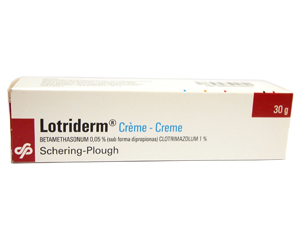
Lotriderm
View Options
This website provides general information about medicines for educational purposes only. Always consult your doctor or pharmacist before taking any medication.
Choose Your Medicine
Select dosage and quantity
Online Consultation
Reviewed by a qualified physician
Fast, Discreet Delivery
Delivered to your door
Medical Information
About This Medicine
Lotriderm is a combination topical cream containing two active ingredients: betamethasone dipropionate 0.05% (a potent corticosteroid) and clotrimazole 1% (an antifungal agent). It is prescribed for the treatment of inflamed fungal skin infections where both inflammation and the underlying fungal cause need to be addressed simultaneously. The combination makes it particularly useful in conditions where itching, redness, and swelling are prominent alongside confirmed or strongly suspected fungal infection.
How Lotriderm Works
Clotrimazole acts against dermatophytes, yeasts, and some other fungi by disrupting the synthesis of ergosterol, a key component of the fungal cell membrane. Without ergosterol, the cell membrane becomes porous and the fungal organism cannot survive. Betamethasone dipropionate, a fluorinated corticosteroid, suppresses the inflammatory response in the skin by inhibiting the release of pro-inflammatory mediators. Together, these two components address both the cause (the fungus) and the symptoms (inflammation, pruritus) of the infection. The corticosteroid component provides rapid relief from itching and discomfort, while clotrimazole works to eliminate the infection.
Conditions Treated
Lotriderm is used for inflamed tinea pedis (athlete's foot), tinea cruris (jock itch), and tinea corporis (ringworm) where inflammation is a clinically significant feature. It is also appropriate for inflamed cutaneous candidiasis. It is important to note that Lotriderm is not suitable for use in purely inflammatory conditions without an infectious component, for those situations, a plain corticosteroid cream would be more appropriate. The cream should only be used when a fungal diagnosis has been confirmed or is strongly clinically suspected.
Treatment Duration
Due to the potent corticosteroid component, Lotriderm should not be used for more than two weeks continuously. Prolonged use of potent topical steroids can lead to skin atrophy, telangiectasia, striae, and other local side effects. If the infection has not resolved within two weeks, the patient should be reassessed by a clinician.
Usage & Dosage
Lotriderm cream is applied thinly and evenly to the affected area of skin twice daily, once in the morning and once in the evening. Before applying, the skin should be gently cleaned and dried thoroughly, particularly in skin folds and between the toes, where moisture promotes fungal growth. Only a small amount of cream is needed; it should be rubbed in gently until absorbed.
Application Technique
Apply Lotriderm only to the affected areas and a small margin of surrounding skin. Avoid applying to unaffected skin unnecessarily, as the corticosteroid component carries risks with excessive or prolonged use. Hands should be washed after applying the cream unless the hands themselves are being treated. The cream should not be applied under occlusive dressings (such as bandages or cling film) unless specifically directed by a doctor, as this significantly increases the absorption of the corticosteroid component and raises the risk of systemic effects and local skin damage.
Duration and Follow-Up
Treatment should continue for the full prescribed course, even if symptoms improve quickly, stopping early may allow the fungal infection to recur. The maximum recommended treatment duration is two weeks. If symptoms are not resolving by the end of the second week, or if they worsen at any point, the patient should seek medical review. Continuing antifungal therapy with a non-steroid-containing product (such as plain clotrimazole cream) may be appropriate after the Lotriderm course to ensure complete eradication of the fungus.
Adults and children over 12 years: Apply a thin layer to the affected skin twice daily (morning and evening) for up to two weeks.
Maximum treatment duration: Two weeks. Do not exceed this without medical supervision.
Children under 12 years: Not recommended due to the potent corticosteroid component and increased risk of systemic absorption in children.
Face, groin, and axillae: Use with particular caution in these areas and for the shortest possible time due to increased risk of skin thinning and systemic absorption.
Elderly patients: Use with caution; the skin is thinner and more susceptible to corticosteroid-induced atrophy.
Do not use under occlusive dressings. Apply only to affected skin. Wash hands before and after application (unless treating the hands). Do not apply to eyes, mucous membranes, or broken skin.
Side Effects
Common Side Effects
- Burning or stinging sensation at the site of application (usually transient)
- Itching or skin irritation
- Dryness or peeling of treated skin
- Erythema (redness) at the application site
- Skin thinning with extended or overuse
- Folliculitis (hair follicle inflammation)
Serious Side Effects
- Skin atrophy and striae (stretch marks): associated with prolonged or excessive use, especially in skin folds
- Hypothalamic-pituitary-adrenal (HPA) axis suppression: with extensive or prolonged use, particularly in children; symptoms include fatigue, weight gain, Cushing features
- Contact dermatitis: allergic reaction to either active ingredient, discontinue and seek review
- Tinea incognito: masked appearance of fungal infection due to steroid component, diagnosis may be obscured
Warnings & Precautions
Lotriderm must not be used for longer than two weeks. The potent corticosteroid component (betamethasone dipropionate 0.05%) carries a significant risk of causing skin thinning, striae, and other local adverse effects if used beyond the recommended duration. This risk is heightened in skin folds such as the groin and axillae, where natural occlusion increases absorption.
Avoiding Inappropriate Use
Lotriderm is not appropriate for all skin infections. It should not be used for purely bacterial skin infections, rosacea, perioral dermatitis, viral skin infections (such as cold sores or chickenpox), or acne. Using a potent steroid in these conditions can worsen the underlying problem. It must not be used near the eyes, as it can cause glaucoma or cataracts with repeated exposure.
Use in Children and Pregnancy
Lotriderm is not recommended for children under 12 years of age, as systemic absorption of the corticosteroid through immature skin is proportionally greater. In pregnancy, the safety of potent topical corticosteroids has not been fully established; use should be limited to the smallest area and shortest duration possible, avoiding the first trimester where alternatives exist. Breastfeeding mothers should not apply Lotriderm to the breast or nipple area.
Contraindications
- Hypersensitivity to betamethasone, clotrimazole, or any excipient
- Untreated bacterial skin infections (e.g. impetigo, infected wounds)
- Viral skin infections (herpes simplex, varicella, vaccinia)
- Rosacea and perioral dermatitis
- Acne vulgaris
- Skin tuberculosis or syphilitic skin lesions
- Application to the eye or periorbital skin (risk of glaucoma and cataract)
- Children under 12 years of age
- Use under occlusive dressings (unless under medical supervision)
- Fungal infections without significant inflammatory component (use plain antifungal instead)
Frequently Asked Questions
How quickly does Lotriderm cream work?
Can I use Lotriderm on my face?
What is the difference between Lotriderm and plain clotrimazole cream?
Can I use Lotriderm in my groin or between the toes?
Is Lotriderm safe to use in pregnancy?
Dr. Ross Elledge
General Practitioner · General & Family Medicine
Verified Healthcare Professional
TopDoctors Profile