
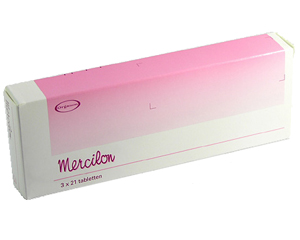
Mercilon
View Options
This website provides general information about medicines for educational purposes only. Always consult your doctor or pharmacist before taking any medication.
Choose Your Medicine
Select dosage and quantity
Online Consultation
Reviewed by a qualified physician
Fast, Discreet Delivery
Delivered to your door
Medical Information
About This Medicine
Mercilon is a combined oral contraceptive (COC) pill containing desogestrel 150 micrograms and ethinylestradiol 20 micrograms. It is closely related to Marvelon, both contain the same progestogen (desogestrel) at the same dose, but Mercilon uses a lower oestrogen content of 20mcg rather than 30mcg. This makes it a lower-dose oestrogen COC, sometimes described as a "low-dose pill", and it is often preferred for women who experience oestrogen-related side effects on standard 30mcg pills.
A Lower-Dose Oestrogen Option
The oestrogen component of combined pills is responsible for many of the side effects that cause women to discontinue their contraceptive, including nausea, breast tenderness, bloating, and headaches. By reducing the ethinylestradiol dose from 30mcg to 20mcg, Mercilon aims to reduce the incidence of these side effects while maintaining reliable contraceptive efficacy. The tradeoff is that lower oestrogen can lead to a slightly higher rate of breakthrough bleeding (irregular spotting between periods), particularly in the first few months of use, as the endometrium adjusts to the lower hormonal environment.
Desogestrel: Third-Generation Progestogen
Desogestrel is a third-generation progestogen selected for its highly selective progestogenic activity and minimal androgenic properties. It provides strong ovulation suppression whilst having a lower tendency to cause androgen-related side effects such as acne, seborrhoea, and hirsutism compared with older progestogens. Women who have noticed skin problems on levonorgestrel-containing pills may find Mercilon better suited to their needs.
Efficacy and Use
Mercilon is a monophasic pill taken on a traditional 21-day active pill, 7-day pill-free interval schedule. When taken correctly and consistently, it is over 99% effective at preventing pregnancy. Like all COCs, it works by suppressing ovulation, thickening cervical mucus, and altering the endometrium.
Usage & Dosage
Mercilon is taken orally, one tablet daily for 21 consecutive days, followed by a 7-day pill-free break during which a withdrawal bleed typically occurs. The next pack is started on day 8, regardless of whether the withdrawal bleed has finished. Tablets should be taken at the same time each day, in the order indicated on the blister pack, with water.
Starting Mercilon
For immediate contraceptive protection, Mercilon should be started on the first day of menstruation. If started on days 2 to 5, additional barrier contraception is required for the first seven days. When switching from another combined pill, Mercilon should be started on the day after the last active tablet of the previous pack, without a hormone-free interval between packs. When switching from a progestogen-only pill, Mercilon can be started on any day, and additional contraception should be used for the first seven days.
Managing Breakthrough Bleeding
Because of the lower oestrogen dose, some women on Mercilon, particularly in the first two to three months, notice spotting or breakthrough bleeding between periods. This usually settles with time. It is important not to stop the pill because of spotting, as this will not address the cause and may leave the woman unprotected against pregnancy. If bleeding persists beyond the first three months or is heavy, a doctor should be consulted, as switching to a slightly higher oestrogen pill or an alternative formulation may be more appropriate.
Adults and adolescents (post-menarche): One tablet daily for 21 days, then a 7-day break. Begin the next pack on day 8 after the break.
Starting day: Day 1 of menstruation (immediate protection). Days 2-5: additional barrier contraception for 7 days required.
Missed pill (fewer than 12 hours late): Take immediately; continue at usual time. No additional contraception needed.
Missed pill (more than 12 hours late): Take most recently missed pill immediately; use condoms for next 7 days; follow package leaflet guidance depending on when in the cycle the pill was missed.
Switching from a 30mcg COC: Start Mercilon immediately after finishing the last active tablet of the previous pack.
After childbirth (not breastfeeding): Start three to four weeks postpartum; immediate contraceptive protection if started on day 21-28 post-delivery.
Contraindicated in significant hepatic impairment and other standard COC contraindications.
Side Effects
Common Side Effects
- Headache (may be related to lower oestrogen)
- Nausea, particularly in the first cycle
- Breakthrough bleeding or spotting (more common than with 30mcg pills)
- Breast tenderness or soreness
- Mood changes, including low mood or anxiety
- Reduced libido
- Contact lens intolerance (due to fluid retention and corneal curvature changes)
Serious Side Effects
- Venous thromboembolism: blood clots in the legs or lungs, seek emergency medical care if sudden leg pain and swelling, breathlessness, or chest pain occurs
- Arterial thrombosis: heart attack or stroke, risk increased with smoking, hypertension, or migraine with aura
- Cervical cancer: small increased risk with prolonged use; regular cervical screening remains important
- Severe depression or mood disorders: any new or worsening psychological symptoms should prompt medical review
- Hypertension: COCs can raise blood pressure, regular monitoring recommended
Warnings & Precautions
Like all combined hormonal contraceptives, Mercilon carries a risk of venous thromboembolism (VTE). Although the absolute risk is low in healthy young women, it is approximately three times higher in COC users than in non-users. Desogestrel-containing pills (including Mercilon) carry a slightly higher estimated VTE risk than pills containing levonorgestrel, though the absolute difference is small. Women with personal or strong family histories of blood clots, or those with inherited thrombophilic conditions such as Factor V Leiden, should discuss whether combined hormonal contraception is appropriate for them.
Migraine with Aura
Women who develop migraine with aura while taking Mercilon must stop the pill immediately and seek medical advice, as migraine with aura is an independent risk factor for ischaemic stroke, and this risk is substantially compounded by oestrogen-containing contraceptives. Women with a pre-existing history of migraine with aura should not use combined hormonal contraceptives.
Lower Oestrogen and Breakthrough Bleeding
The 20mcg oestrogen dose in Mercilon is associated with a higher incidence of breakthrough bleeding and spotting than 30mcg pills, particularly in the first few months. While this is not medically harmful, it is a common reason for discontinuation. Women should be counselled about this expected side effect before starting Mercilon and reassured that it usually resolves within two to three cycles.
Contraindications
- Personal history of or current venous thromboembolism (DVT or PE)
- Personal history of or current arterial thromboembolism (myocardial infarction, stroke, TIA)
- Migraine with aura (current or past history)
- Multiple risk factors for arterial or venous thrombosis (e.g. hypertension + smoking + obesity)
- Women aged over 35 who smoke
- Known thrombophilic disorders (e.g. Factor V Leiden, antiphospholipid syndrome)
- Severe hepatic disease or liver tumours (benign or malignant)
- Hormone-sensitive malignancies (e.g. breast cancer)
- Undiagnosed vaginal bleeding
- Pregnancy
- Breastfeeding in the first 6 weeks postpartum
- Hypersensitivity to desogestrel, ethinylestradiol, or any excipient
Frequently Asked Questions
What is the difference between Mercilon and Marvelon?
Is Mercilon suitable if I have oestrogen sensitivity?
Why am I getting spotting on Mercilon?
Can I take Mercilon if I get migraines?
Does Mercilon affect future fertility?
Dr. Ross Elledge
General Practitioner · General & Family Medicine
Verified Healthcare Professional
TopDoctors Profile