
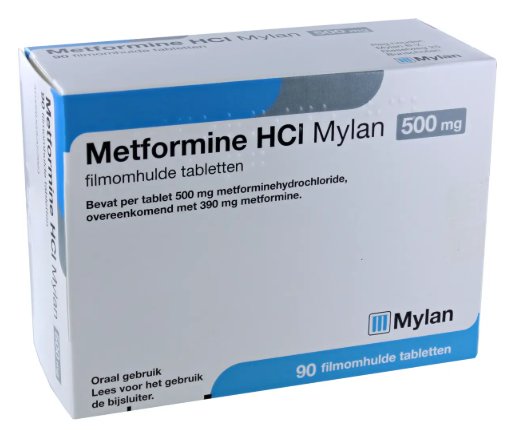
Metformin
View Options
This website provides general information about medicines for educational purposes only. Always consult your doctor or pharmacist before taking any medication.
Choose Your Medicine
Select dosage and quantity
Online Consultation
Reviewed by a qualified physician
Fast, Discreet Delivery
Delivered to your door
Medical Information
About This Medicine
Metformin is a biguanide oral antidiabetic medicine and is the first-line pharmacological treatment for type 2 diabetes in adults and children over ten years of age. It works primarily by reducing glucose production in the liver (hepatic gluconeogenesis) and improving insulin sensitivity in peripheral tissues, thereby lowering blood glucose levels without causing hypoglycaemia when used alone.
Benefits of Metformin
Unlike sulfonylureas and insulin, metformin does not stimulate insulin secretion directly, which means it does not cause weight gain and carries a very low risk of hypoglycaemia as monotherapy. It has a well-established safety record spanning over sixty years of clinical use and is included on the WHO Model List of Essential Medicines. Metformin may also have modest cardiovascular protective effects, making it particularly suitable for patients with type 2 diabetes who are at elevated cardiovascular risk.
Uses Beyond Diabetes
Although primarily a diabetes medication, metformin is also used off-label in the management of polycystic ovary syndrome (PCOS) to improve insulin resistance and restore ovulation in women who do not respond to lifestyle changes alone.
Usage & Dosage
How to Take Metformin
Take metformin with or immediately after meals to reduce gastrointestinal side effects. Swallow tablets whole with a glass of water. Standard tablets are usually taken two to three times daily. Modified-release (prolonged-release) tablets are taken once or twice daily with the evening meal and tend to cause fewer stomach side effects.
Starting Treatment
Treatment is typically started at a low dose (500 mg once or twice daily) and increased gradually over several weeks. The usual maintenance dose is 1500 to 3000 mg daily in divided doses. The maximum dose is 3000 mg per day. Never adjust your dose without speaking to your doctor first.
Metformin tablets are available in 500 mg and 850 mg standard-release strengths, and 500 mg, 750 mg, and 1,000 mg as modified-release preparations. The maximum recommended daily dose is 3,000 mg. Doses should be taken with food. Modified-release tablets must not be crushed or chewed.
Side Effects
Common Side Effects
Gastrointestinal symptoms are the most frequently reported side effects and include nausea, vomiting, diarrhoea, stomach pain, and a metallic taste in the mouth. These are usually most pronounced at the start of treatment and tend to improve over time. Taking metformin with food and starting on a low dose helps to minimise these effects.
Serious but Rare Side Effect
Lactic acidosis is a rare but potentially life-threatening complication. Risk is highest in patients with significant renal impairment, liver disease, or conditions that reduce tissue oxygenation. Symptoms include muscle pain, weakness, difficulty breathing, stomach discomfort, feeling cold, dizziness, or a slow or irregular heartbeat. Seek immediate medical attention if these occur. A very small number of patients develop vitamin B12 deficiency with long-term use; your doctor may monitor B12 levels periodically.
Warnings & Precautions
Metformin must be temporarily stopped before and after procedures involving iodinated contrast dye (e.g. CT scans with contrast) due to the risk of contrast-induced nephropathy increasing lactic acidosis risk. It should be withheld during illness with vomiting, diarrhoea, or dehydration. Use is contraindicated in eGFR below 30 mL/min/1.73m². Alcohol can increase the risk of lactic acidosis and hypoglycaemia; limit alcohol intake during treatment.
Contraindications
Metformin is contraindicated in patients with eGFR below 30 mL/min/1.73m², acute or chronic metabolic acidosis including diabetic ketoacidosis, and known hypersensitivity to metformin. Caution is required in patients with eGFR 30–45 mL/min/1.73m². Use should be reviewed in patients with hepatic impairment, cardiac failure, or respiratory insufficiency.
Frequently Asked Questions
Does metformin cause weight loss?
Can I take metformin if I have kidney problems?
How long does it take for metformin to lower blood sugar?
Dr. Ross Elledge
General Practitioner · General & Family Medicine
Verified Healthcare Professional
TopDoctors Profile