
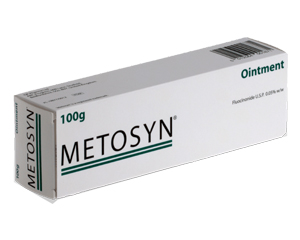
Metosyn
View Options
This website provides general information about medicines for educational purposes only. Always consult your doctor or pharmacist before taking any medication.
Choose Your Medicine
Select dosage and quantity
Online Consultation
Reviewed by a qualified physician
Fast, Discreet Delivery
Delivered to your door
Medical Information
About This Medicine
Metosyn contains fluocinonide 0.05%, a potent fluorinated corticosteroid used topically for the treatment of inflammatory and pruritic skin conditions that are responsive to corticosteroid therapy. It is classified as a potent topical steroid in the UK classification system, placing it in the second-strongest category below very potent preparations such as clobetasol propionate.
Conditions Treated
Metosyn is indicated for a range of steroid-responsive dermatoses including severe eczema, contact dermatitis, psoriasis (excluding widespread plaque psoriasis), discoid lupus erythematosus, necrobiosis lipoidica, and hypertrophic lichen planus. Its high potency makes it particularly suitable for thickened, lichenified areas of skin or for conditions on areas of the body resistant to milder preparations.
How It Works
Fluocinonide exerts anti-inflammatory, antipruritic, and vasoconstrictive effects by binding to intracellular glucocorticoid receptors and reducing the release of pro-inflammatory mediators. This reduces redness, swelling, itching, and discomfort in affected areas.
Usage & Dosage
How to Apply Metosyn
Apply a thin layer of Metosyn (fluocinonide) cream or ointment to the affected area once or twice daily, massaging gently into the skin. Use the least amount and lowest frequency needed to achieve good control. Wash your hands after application unless your hands are the treated area.
Areas Requiring Extra Caution
Do not apply Metosyn to the face, armpits, groin, or genitals without specific medical guidance, as potent steroids carry a higher risk of skin thinning in these areas. Covering the treated area with an airtight dressing significantly increases steroid absorption and should only be done under medical supervision. Treatment should not exceed four weeks of continuous use without reassessment by a doctor.
Metosyn is available as a 0.05% cream and ointment in 25 g and 100 g tubes. Apply thinly once or twice daily. Treatment courses should generally be limited to two to four weeks. The ointment formulation is more occlusive and may be more effective for dry, lichenified lesions, while the cream is preferred for acute or weeping skin conditions.
Side Effects
Local Side Effects
With prolonged or extensive use, potent topical corticosteroids can cause local skin changes including skin thinning (atrophy), striae (stretch marks), telangiectasia (visible blood vessels), perioral dermatitis, and steroid-induced acne or rosacea. These effects are more likely with inappropriate use on the face, flexures, or under occlusion.
Systemic Side Effects
Significant systemic absorption can occur, particularly with potent steroids applied to large body surface areas, under occlusion, or on thin skin. This can cause hypothalamic-pituitary-adrenal (HPA) axis suppression, leading to features of Cushing's syndrome or growth retardation in children. Adrenal suppression is a particular concern in children; use the lowest effective potency for the shortest duration.
Warnings & Precautions
Do not use Metosyn on infected skin without concurrent appropriate antimicrobial therapy. Avoid contact with the eyes. Do not use on rosacea or perioral dermatitis. Use with extreme caution in children; potent steroids should only be used briefly in children under close medical supervision. If skin infection develops during treatment, appropriate antifungal or antibacterial therapy should be started and the steroid may need to be discontinued.
Contraindications
Contraindicated in patients with hypersensitivity to fluocinonide or any excipient. Not for use in primary skin infections (bacterial, fungal, viral including herpes simplex or chickenpox), rosacea, perioral dermatitis, acne vulgaris, or undiagnosed dermatoses. Do not apply to the face without specialist advice.
Frequently Asked Questions
How strong is Metosyn compared to other topical steroids?
Can I use Metosyn on my face?
What is the maximum duration I can use Metosyn?
Dr. Ross Elledge
General Practitioner · General & Family Medicine
Verified Healthcare Professional
TopDoctors Profile