
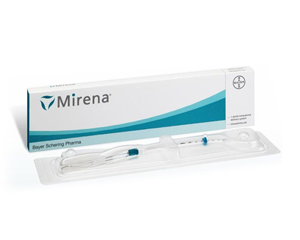
Mirena IUS
This website provides general information about medicines for educational purposes only. Always consult your doctor or pharmacist before taking any medication.
Choose Your Medicine
Select dosage and quantity
Online Consultation
Reviewed by a qualified physician
Fast, Discreet Delivery
Delivered to your door
Medical Information
About This Medicine
Mirena is an intrauterine system (IUS) that releases levonorgestrel directly into the uterus for up to five years. It is used for contraception, management of heavy menstrual bleeding, and as the progestogen component of HRT. The local progestogen release thins the endometrium, thickens cervical mucus, and partially suppresses ovulation. Most women experience significantly lighter periods or amenorrhoea, making Mirena particularly valuable for women with heavy menstrual bleeding.
Usage & Dosage
How Mirena Works and How It Is Used
Mirena is inserted into the uterus by a trained healthcare professional, it is not taken orally. Once fitted, it is effective for up to 5 years for contraception and for the management of heavy periods. It can also be used for up to 5 years for endometrial protection as part of hormone replacement therapy.
The insertion appointment takes only a few minutes but can cause cramping and discomfort. Paracetamol or ibuprofen taken an hour before the procedure can help. You should be able to check the threads at home each month to confirm the device is still in place.
Releases approximately 20 mcg levonorgestrel per 24 hours initially, declining to approximately 10 mcg at 5 years. Effective for up to 5 years.
Side Effects
Common Side Effects
Common side effects include:
- Irregular bleeding or spotting (especially in the first 3 to 6 months, very common and usually settles)
- Headache
- Acne
- Breast tenderness
- Mood changes
- Ovarian cysts (usually have no symptoms and go away on their own)
Irregular bleeding in the early months is normal and does not mean the Mirena is not working. Many women find their periods become lighter or stop altogether over time, which is a welcome effect for most. If you develop persistent pelvic pain, heavy bleeding, or fever, see a doctor to rule out displacement or infection.
Warnings & Precautions
Irregular bleeding is very common in the first months but usually improves. Check the threads monthly. Expulsion is more common in the first year and during menstruation. Perforation at insertion is rare.
Contraindications
Contraindicated in pregnancy, current PID or STI, cervical or uterine cancer, unexplained vaginal bleeding, uterine abnormalities, and known hypersensitivity to levonorgestrel.
Frequently Asked Questions
Will Mirena stop my periods?
Dr. Ross Elledge
General Practitioner · General & Family Medicine
Verified Healthcare Professional
TopDoctors Profile