
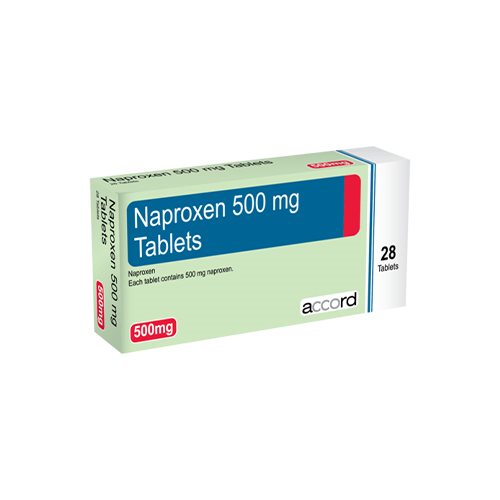
Naproxen
View Options
This website provides general information about medicines for educational purposes only. Always consult your doctor or pharmacist before taking any medication.
Choose Your Medicine
Select dosage and quantity
Online Consultation
Reviewed by a qualified physician
Fast, Discreet Delivery
Delivered to your door
Medical Information
About This Medicine
Naproxen is a non-steroidal anti-inflammatory drug (NSAID) widely used to relieve pain, reduce inflammation, and lower fever. It is available both as a prescription medicine and, at lower strengths, over the counter, making it one of the most commonly used analgesics in the UK. Naproxen is marketed under brand names including Naprosyn, Stirlescent, and Feminax Ultra.
Conditions Treated
Naproxen is indicated for a broad range of painful and inflammatory conditions. It is effective in the management of rheumatoid arthritis, osteoarthritis, ankylosing spondylitis, and other musculoskeletal disorders where both pain relief and anti-inflammatory action are required. It is also used for acute gout, primary dysmenorrhoea (period pain), and short-term relief of mild to moderate pain including headache, dental pain, and soft tissue injuries.
Compared with ibuprofen at equivalent anti-inflammatory doses, naproxen is associated with somewhat better gastrointestinal tolerability in some studies, though both drugs carry a risk of GI upset. Naproxen's longer half-life (12-17 hours) means it can be taken twice daily rather than three or four times a day, which may help with adherence.
How Naproxen Works
Naproxen works by inhibiting cyclo-oxygenase (COX-1 and COX-2) enzymes, which are responsible for producing prostaglandins - lipid mediators that sensitise pain receptors, promote inflammation, and contribute to fever. By reducing prostaglandin synthesis, naproxen decreases pain sensitivity, limits the inflammatory response in tissues, and helps normalise elevated body temperature.
Safe Use
Naproxen should always be taken with food or milk to reduce the risk of stomach irritation. It should be used at the lowest effective dose for the shortest duration necessary. Long-term or high-dose use increases the risk of serious cardiovascular, gastrointestinal, and renal complications. Patients with a history of peptic ulcer disease, cardiovascular disease, or kidney problems should discuss the risks with their doctor before using naproxen.
Usage & Dosage
How to Take Naproxen
Always take naproxen with food or milk to reduce the risk of stomach irritation. The usual adult dose for pain and inflammation is 250 mg to 500 mg twice daily, or as directed by your prescriber.
For period pain, starting one to two days before your period begins and continuing for the first two to three days can significantly reduce pain severity. For long-term inflammatory conditions such as rheumatoid arthritis, take at regular intervals to maintain consistent anti-inflammatory levels. Do not combine naproxen with other NSAIDs or ibuprofen, as this increases the risk of gastrointestinal bleeding without added benefit. Use the lowest effective dose for the shortest time needed.
For adults, the standard dose of naproxen for musculoskeletal pain and arthritis is 250 mg to 500 mg twice daily. The maximum recommended daily dose for prescription use is 1,250 mg on the first day followed by 1,000 mg per day thereafter for acute conditions, though long-term use should be at the lowest effective dose. For acute gout, higher short-term doses (750 mg initially, then 250 mg every 8 hours) may be used under medical supervision.
For period pain, 500 mg is taken initially, followed by 250 mg every 6-8 hours as needed. Over-the-counter naproxen (220 mg) is taken as one or two tablets with a glass of water, up to three times daily. Naproxen is not recommended in children under 16 years except under specialist supervision. In elderly patients and those with renal or hepatic impairment, lower doses and more careful monitoring are required. All doses should be taken with food or milk.
Side Effects
Common Side Effects
The following side effects occur with some frequency and are related to naproxen's inhibition of prostaglandin synthesis:
- Gastrointestinal discomfort including nausea, indigestion, heartburn, and abdominal pain
- Diarrhoea or constipation
- Headache and dizziness
- Drowsiness or fatigue
- Fluid retention causing ankle swelling
- Skin rash or itching
- Tinnitus (ringing in the ears) at higher doses
- Elevated blood pressure
Serious Side Effects
The following serious adverse effects require immediate medical attention:
- Gastrointestinal bleeding or ulceration - symptoms include vomiting blood, passing black or bloody stools, or sudden severe abdominal pain; this is a medical emergency
- Cardiovascular events - prolonged use increases the risk of heart attack and stroke, particularly in patients with existing cardiovascular risk factors
- Severe allergic reactions including anaphylaxis, bronchospasm (particularly in patients with aspirin-sensitive asthma), and angioedema
- Renal impairment or acute kidney injury, particularly in patients with pre-existing kidney disease, heart failure, or dehydration
- Serious skin reactions (Stevens-Johnson syndrome, toxic epidermal necrolysis) - rare but potentially life-threatening
- Liver damage, indicated by jaundice, dark urine, or abdominal pain - rare
Warnings & Precautions
Gastrointestinal and Cardiovascular Risks
Naproxen carries significant risks of gastrointestinal bleeding and ulceration, which can occur without warning symptoms, particularly in elderly patients. To reduce this risk, naproxen should always be taken with food or milk, and a proton pump inhibitor (such as omeprazole) should be co-prescribed in patients at elevated GI risk - including those over 65, those with a history of peptic ulcer disease, or those taking anticoagulants or corticosteroids. NSAIDs including naproxen are associated with an increased risk of heart attack and stroke, particularly with long-term high-dose use. Patients with established cardiovascular disease, uncontrolled hypertension, or peripheral arterial disease should use naproxen only with medical supervision and at the lowest effective dose.
Interactions and Special Populations
Naproxen interacts with anticoagulants (warfarin, direct oral anticoagulants), increasing bleeding risk. It can reduce the effectiveness of antihypertensives and diuretics. Concurrent use with other NSAIDs or high-dose aspirin is not recommended. It should not be combined with lithium or methotrexate without careful monitoring, as naproxen can increase plasma levels of both. Naproxen should be avoided in the third trimester of pregnancy due to the risk of premature closure of the ductus arteriosus and inhibition of labour. Breastfeeding mothers should exercise caution, though brief use of naproxen is considered compatible with breastfeeding by some authorities. Alcohol increases the risk of gastrointestinal bleeding and should be avoided during naproxen treatment.
Contraindications
Naproxen must not be used in patients with:
- Known hypersensitivity to naproxen, aspirin, or any other NSAID
- Active peptic ulcer disease or a history of recurrent gastrointestinal bleeding or ulceration
- Severe heart failure (NYHA Class III-IV)
- Severe renal impairment (estimated GFR below 30 mL/min)
- Severe hepatic impairment or active liver disease
- Third trimester of pregnancy (risk of premature ductus arteriosus closure and inhibition of uterine contractions)
- Aspirin-exacerbated respiratory disease (aspirin-sensitive asthma or nasal polyps with bronchospasm triggered by NSAIDs)
- Cerebrovascular disease or established ischaemic heart disease where NSAID use is contraindicated
- Children under 16 years (except under specialist supervision for specific indications such as juvenile arthritis)
Frequently Asked Questions
Should I take naproxen with food?
How is naproxen different from ibuprofen?
Can I take naproxen for period pain?
Is naproxen safe to take long term?
Can I drink alcohol while taking naproxen?
Dr. Ross Elledge
General Practitioner · General & Family Medicine
Verified Healthcare Professional
TopDoctors Profile