
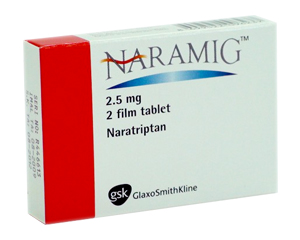
Naramig
View Options
This website provides general information about medicines for educational purposes only. Always consult your doctor or pharmacist before taking any medication.
Choose Your Medicine
Select dosage and quantity
Online Consultation
Reviewed by a qualified physician
Fast, Discreet Delivery
Delivered to your door
Medical Information
About This Medicine
Naramig is a prescription medicine containing naratriptan 2.5 mg, used for the acute treatment of migraine attacks with or without aura in adults. It belongs to the triptan class of medicines - selective serotonin receptor agonists specifically developed for migraine. Naramig is manufactured by GlaxoSmithKline and is available as film-coated tablets.
A Different Kind of Triptan
Naramig is distinctive among triptans for its longer half-life of approximately six hours, compared to just two hours for sumatriptan. This means its effects last longer in the body, which translates to a slower onset of action but a more sustained therapeutic effect. While it may take longer to begin working than faster-acting triptans, Naramig is particularly valued for its lower rate of headache recurrence - the return of migraine within 24 hours after initial relief is less common with naratriptan than with shorter-acting agents.
Naramig is generally considered to produce fewer and milder side effects than sumatriptan, making it a useful option for patients who have found other triptans intolerable or who have experienced significant chest tightness or other vasospastic effects.
When to Use Naramig
Naramig is best suited to patients with slow-onset migraines, those who experience early morning migraines, or those who suffer from menstrual migraines - where prolonged duration of action provides a clinical advantage. It should be taken as early as possible during a migraine attack once the headache phase has begun (not during the aura phase, if present), to achieve the best therapeutic effect.
Naramig is not suitable for preventing migraines and should not be taken regularly to reduce attack frequency. It is intended for acute symptomatic treatment only.
Usage & Dosage
How to Take Naramig
Take one Naramig (naratriptan) 2.5 mg tablet as early as possible after the start of the headache phase of a migraine attack. Do not take it during the aura before the headache begins. If the first tablet provides partial relief but the migraine returns or persists, a second dose may be taken provided at least four hours have elapsed. The maximum dose is two tablets (5 mg) in any 24-hour period.
Naramig is particularly well-suited for migraines that build slowly over several hours, and for women who experience menstrual migraine, as its longer duration of action provides sustained coverage. Do not use within 24 hours of taking another triptan.
The recommended dose of Naramig is one 2.5 mg tablet taken with water at the onset of the headache phase of a migraine attack. If the migraine responds initially but returns within 24 hours, a second tablet may be taken, provided at least four hours have passed since the first dose. The maximum dose is 5 mg (two tablets) in any 24-hour period.
If the initial dose produces no effect, a second dose should not be taken for the same attack, as it is unlikely to provide additional benefit if the first tablet was ineffective.
In patients with mild to moderate renal or hepatic impairment, the maximum dose should be reduced to 2.5 mg in 24 hours, and Naramig is contraindicated in severe renal or hepatic impairment. Naramig is not recommended for use in patients under 18 or over 65 years of age. Tablets should be swallowed whole with water and may be taken with or without food.
Side Effects
Common Side Effects
The following side effects are reported with naratriptan and tend to be mild and transient, resolving without treatment:
- Sensation of warmth, tingling, or flushing affecting the face, limbs, or chest
- Fatigue or drowsiness
- Nausea and, less commonly, vomiting
- Dizziness
- Feeling of heaviness, pressure, or tightness - typically in the chest, neck, or limbs but rarely indicating cardiac origin
- Dry mouth
- Visual disturbances (uncommon)
- Palpitations
Serious Side Effects
Though uncommon, the following effects warrant urgent medical attention:
- Chest pain or tightness with accompanying shortness of breath, sweating, or jaw pain may indicate myocardial ischaemia - seek emergency help immediately
- Serious hypersensitivity reactions including angioedema (facial swelling) and anaphylaxis
- Stroke or transient ischaemic attack - symptoms include sudden weakness of the face, arm or leg, speech disturbance, or loss of vision
- Severe hypertension (blood pressure crisis), particularly in patients with undiagnosed cardiovascular risk
- Serotonin syndrome when combined with other serotonergic medicines - presents with agitation, confusion, rapid heart rate, and muscle rigidity
Warnings & Precautions
Cardiovascular Considerations
Naramig should not be used in patients with significant cardiovascular disease, including ischaemic heart disease, previous heart attack or stroke, peripheral arterial disease, or uncontrolled hypertension. All triptans, including naratriptan, cause vasoconstriction and should be used with caution in patients with cardiovascular risk factors. The chest sensations (tightness, pressure) commonly reported after triptan use are typically musculoskeletal or vasospastic rather than cardiac in origin, but any symptoms that may represent cardiac ischaemia should be evaluated promptly.
Drug Interactions and Overuse
Naramig must not be combined with ergotamine or ergotamine derivatives (such as dihydroergotamine or methysergide) as this can cause sustained vasospasm. Other triptans should not be used within 24 hours of taking Naramig. SSRIs and SNRIs (including fluoxetine, citalopram, venlafaxine) used concurrently with triptans may rarely cause serotonin syndrome - patients should report any unusual agitation, tremor, or confusion. Overuse of Naramig (taking it on 10 or more days per month) can lead to medication overuse headache - a chronic daily headache that is paradoxically worsened by frequent triptan use. Patients who find themselves reaching for Naramig increasingly frequently should discuss this pattern with their doctor or neurologist. Naramig is not recommended during pregnancy or breastfeeding.
Contraindications
Naramig must not be used in patients with:
- Ischaemic heart disease (angina, previous myocardial infarction, documented silent ischaemia)
- Previous stroke or transient ischaemic attack
- Peripheral arterial disease
- Uncontrolled or severe hypertension
- Severe renal impairment (creatinine clearance below 15 mL/min)
- Severe hepatic impairment (Child-Pugh grade C)
- Haemiplegic, basilar, or ophthalmoplegic migraine (atypical migraine subtypes with higher neurological risk)
- Concurrent or recent (within 24 hours) use of ergotamine, ergotamine derivatives, or other triptans
- Known hypersensitivity to naratriptan or any excipient in the formulation
- Patients under 18 or over 65 years of age (limited safety and efficacy data)
Frequently Asked Questions
How is Naramig different from sumatriptan?
When is the best time to take Naramig during a migraine?
Can I take Naramig for menstrual migraine?
Can I use Naramig if I am taking antidepressants?
How often can I take Naramig?
Dr. Ross Elledge
General Practitioner · General & Family Medicine
Verified Healthcare Professional
TopDoctors Profile