
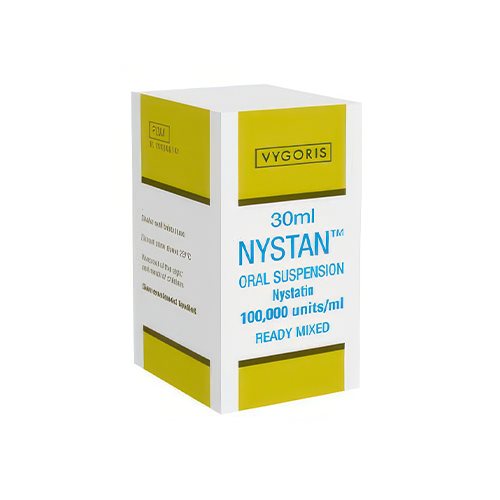
Nystan
View Options
This website provides general information about medicines for educational purposes only. Always consult your doctor or pharmacist before taking any medication.
Choose Your Medicine
Select dosage and quantity
Online Consultation
Reviewed by a qualified physician
Fast, Discreet Delivery
Delivered to your door
Medical Information
About This Medicine
Nystatin is a polyene antifungal antibiotic active against a wide range of yeasts and yeast-like fungi, including Candida species. It is used topically and orally to treat fungal infections caused by Candida, including oral thrush (oropharyngeal candidiasis), intestinal candidiasis, and skin and mucous membrane infections. Nystatin is not absorbed from the gut to any significant degree, which both limits its systemic toxicity and confines its action to the gastrointestinal mucosa and topical surfaces.
How Nystatin Works
Nystatin binds to ergosterol, a sterol found specifically in fungal cell membranes. This binding creates pores in the membrane, causing leakage of intracellular contents and leading to the death of the fungal organism. Because human cell membranes contain cholesterol rather than ergosterol, nystatin is highly selective for fungal cells, resulting in minimal toxicity to human tissue.
Available Formulations
Nystatin is available as oral suspension (100,000 units/mL), pastilles, tablets, cream, ointment, and pessaries. Each formulation is matched to the site of infection: oral suspension for oral and gastrointestinal candidiasis, and topical preparations for skin and vaginal infections.
Usage & Dosage
Oral Suspension for Oral Thrush
For oral candidiasis, nystatin oral suspension (100,000 units/mL) is used. The standard adult dose is 1 to 2 mL (100,000 to 200,000 units) four times daily. Swill the suspension around your mouth and hold it there for as long as possible before swallowing, to maximise contact with infected surfaces. Continue for at least 48 hours after symptoms resolve, usually for a total of 7 to 14 days.
Topical Use for Skin and Vaginal Infections
For skin candidiasis, apply nystatin cream or ointment to the affected area two to four times daily. For vaginal thrush, nystatin pessaries are used once daily at bedtime for 14 nights. Continue the full course even if symptoms improve before it is finished. Nystatin is not absorbed into the bloodstream in meaningful amounts, so it is safe for use in pregnancy under medical guidance.
Nystatin oral suspension: 100,000 units/mL; standard dose 1–2 mL four times daily. Nystatin tablets: 500,000 units; one tablet three times daily for intestinal candidiasis. Topical cream/ointment: 100,000 units/g; apply 2–4 times daily. Pessaries: 100,000 units each. Treatment duration: typically 7–14 days depending on the site and severity of infection.
Side Effects
Common Side Effects
Nystatin is generally very well tolerated because it is not absorbed into the bloodstream. Side effects are mostly mild and local:
- Nausea, diarrhoea, or stomach upset (with oral suspension or tablets)
- Unpleasant taste with the oral suspension
- Mild local irritation, itching, or burning at the application site (topical or vaginal use)
- Skin rash (uncommon)
When to Seek Advice
If symptoms do not improve after completing the course, speak to your doctor. Recurrent oral or vaginal thrush may indicate an underlying cause such as diabetes, a weakened immune system, or antibiotic use that needs addressing alongside the antifungal treatment.
Warnings & Precautions
Nystatin oral suspension contains sucrose and should be used with caution in patients with diabetes mellitus or sucrose intolerance. For denture wearers, the dentures should be removed and cleaned before applying nystatin oral suspension, and should not be worn during sleep. If there is no improvement after 14 days of treatment, consider whether the infection may be caused by a resistant Candida species or a non-fungal pathogen, and seek further medical assessment.
Contraindications
Nystatin is contraindicated in patients with known hypersensitivity to nystatin or any excipient. It is not absorbed systemically and is not used for systemic fungal infections (invasive candidiasis requires systemic antifungals such as fluconazole or amphotericin B).
Frequently Asked Questions
Why do I need to hold the nystatin suspension in my mouth before swallowing?
Is nystatin stronger than fluconazole for oral thrush?
Can I use nystatin if I am pregnant?
Dr. Ross Elledge
General Practitioner · General & Family Medicine
Verified Healthcare Professional
TopDoctors Profile